 Librería Samer Atenea
 Kálamo Books
 Librería Elías (Asturias)
 Librería Kolima (Madrid)
 Librería Proteo (Málaga)
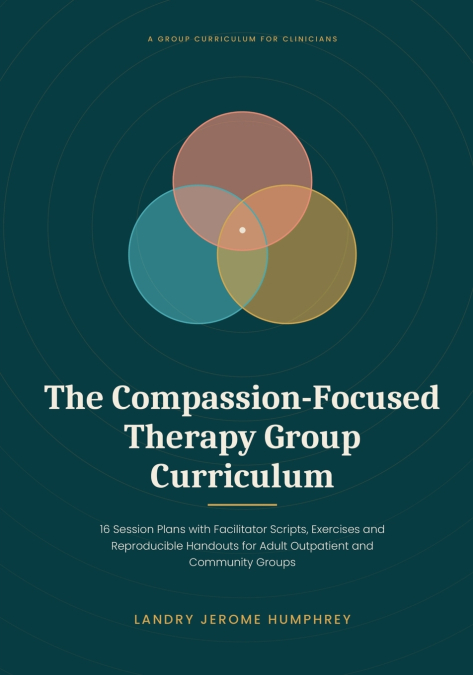
Running a compassion-focused therapy group often starts with a folder of borrowed handouts and a hope that they will add up to a coherent course. Then a member says in week three that kindness is for weak people, attendance thins, and the facilitator rebuilds next week’s plan on a Sunday evening. This curriculum puts the folder in order. Sixteen sessions, already planned The Compassion-Focused Therapy Group Curriculum gives clinicians a full sequence of sixteen sessions for adult outpatient and community groups. Each plan sets out the aim, materials, timings for a two-hour session with guidance for trimming to ninety minutes, a facilitator script, a core exercise offered at three levels of intensity, discussion prompts, home practice, and a handout to copy for your own group. The sequence moves through four phases: building safeness and a shared understanding of the tricky brain and the three emotion systems, developing the compassionate self, meeting the self-critic, shame, and guilt, and then turning outward to relationships, setbacks, and endings. Built around what makes groups succeed or stall Published evaluations of compassion-focused groups report that some members leave early and that many arrive wary of self-compassion. This book treats those realities as part of the work. It includes a screening interview and suitability checklist, a preparation meeting, an attendance agreement, a full session on fears, blocks, and resistances, and a troubleshooting chapter covering strong reactions to kindness, acute distress, skepticism, missed sessions, and conflict between members. Further chapters cover outcome measurement, a facilitator fidelity self-check, eight reproducible forms, and maps for twelve-session, eight-session, rolling, and online formats. Research claims are referenced, and the limits of the evidence are stated plainly. Who will use it This book is for readers who are therapists, counselors, psychologists, clinical social workers, or psychiatric nurses planning a first compassion-focused group; who already run groups and want a structured sequence with scripts they can adapt; who supervise trainees learning to facilitate; or who lead services and need a group pathway for adults living with shame and self-criticism. It assumes a core professional qualification and an introduction to the model, and it recommends supervision and formal training alongside. A steadier way to run the group The session plans are original and consistent with the published model. This particular sequence has not been tested in a clinical trial, so the book shows readers how to measure their own outcomes. If you want to walk into each session knowing what you will say, what you will hand out, and what you will do when compassion work becomes difficult, this curriculum offers a clear place to begin.