

 Librería Samer Atenea
 Kálamo Books
 Librería Elías (Asturias)
 Librería Kolima (Madrid)
 Librería Proteo (Málaga)
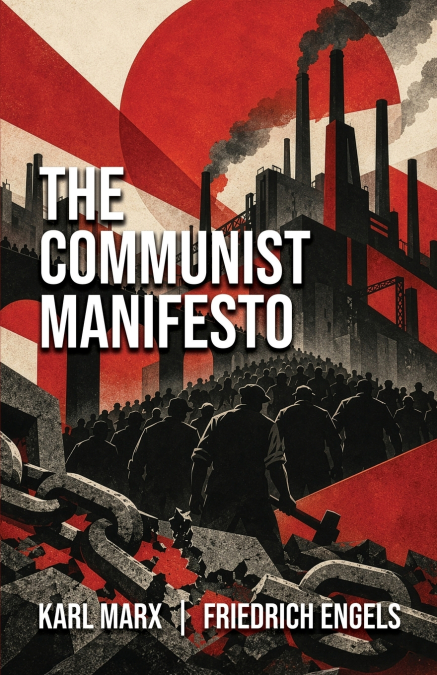
What happens when history is understood as a struggle between social classes? In The Communist Manifesto, Karl Marx and Friedrich Engels argue that modern society is shaped by conflict between those who own the means of production and those who must sell their labor to survive.Written for the Communist League and first published in German in 1848, the manifesto traces the rise of the bourgeoisie, the expansion of capitalism, and the emergence of an industrial working class. Marx and Engels describe capitalism as a force that transforms production, draws distant societies into a world market, and overturns established ways of life. They also argue that the same processes generate exploitation, economic crises, and resistance.The work combines historical interpretation with a call to political action. Its authors challenge the permanence of existing property relations and urge workers to organize across national boundaries. Their argument moves from an account of how capitalism developed to a revolutionary demand for its replacement.The manifesto also explains the relationship between communists and other working-class movements, answers objections to communist aims, and attacks rival socialist doctrines. These disputes reveal a political landscape more varied than a simple opposition between capitalism and communism suggests. Marx and Engels are arguing with potential allies as well as declared opponents.Its compressed form gives the text much of its force. Broad historical claims, vivid descriptions of economic change, and uncompromising political demands follow one another with the urgency of a document intended to intervene in events.For readers of political philosophy, economic history, and revolutionary movements, The Communist Manifesto offers a direct encounter with an argument that helped shape modern ideological conflict. Read for its historical significance or its continuing challenges to capitalism, it brings questions of ownership, labor, power, and collective action into a brief and confrontational statement of purpose.








