

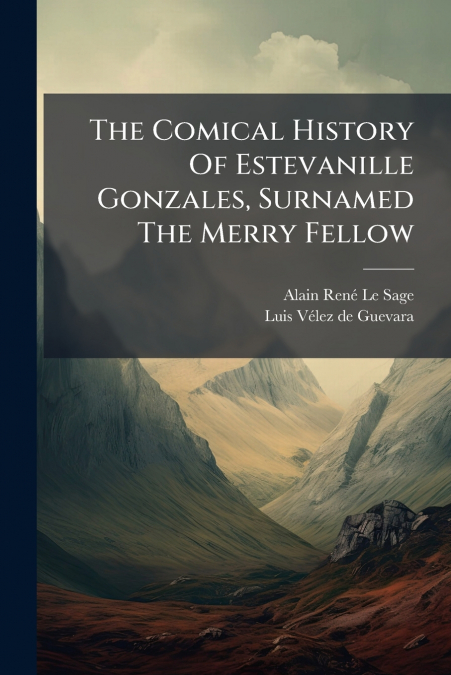
Alain René Le Sage / Luis Vélez de Guevara
 Librería Samer Atenea
 Kálamo Books
 Librería Elías (Asturias)
 Librería Kolima (Madrid)
 Librería Proteo (Málaga)
'The Comical History Of Estevanille Gonzales, Surnamed The Merry Fellow' is a picaresque novel that recounts the adventures of Estevanille Gonzales, a witty and resourceful rogue, through the vibrant and often harsh landscapes of 17th-century Spain. Written in the tradition of Spanish Golden Age literature, this humorous tale follows Estevanille as he navigates various social strata, encountering a colorful cast of characters and engaging in a series of comical escapades. Originally penned by Luis Vélez de Guevara and later adapted by Alain René Le Sage, this classic offers a satirical commentary on society, class, and human nature. With its lively prose and entertaining narrative, 'The Comical History' provides both amusement and insight into the cultural milieu of its time, making it a delightful read for those interested in historical fiction and classic literature.This work has been selected by scholars as being culturally important, and is part of the knowledge base of civilization as we know it. This work was reproduced from the original artifact, and remains as true to the original work as possible. Therefore, you will see the original copyright references, library stamps (as most of these works have been housed in our most important libraries around the world), and other notations in the work.This work is in the public domain in the United States of America, and possibly other nations. Within the United States, you may freely copy and distribute this work, as no entity (individual or corporate) has a copyright on the body of the work.As a reproduction of a historical artifact, this work may contain missing or blurred pages, poor pictures, errant marks, etc. Scholars believe, and we concur, that this work is important enough to be preserved, reproduced, and made generally available to the public. We appreciate your support of the preservation process, and thank you for being an important part of keeping this knowledge alive and relevant.





