
Inicio > Humanidades > Historia > Historia regional y nacional > Historia de África > The Collapse of a Pastoral Economy - The Datoga of Central and Northern Tanzania From the 1830s to the 2000s
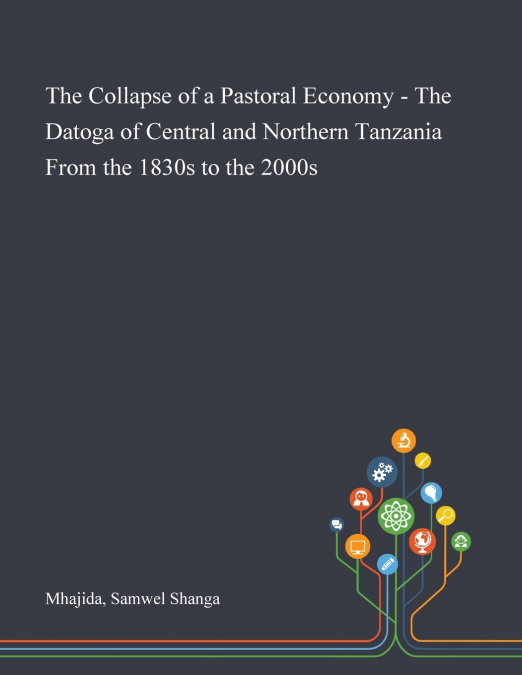
The Collapse of a Pastoral Economy - The Datoga of Central and Northern Tanzania From the 1830s to the 2000s

The Collapse of a Pastoral Economy - The Datoga of Central and Northern Tanzania From the 1830s to the 2000s

Samwel Shanga Mhajida

53,29 €
IVA incluido
Disponible
Editorial:
Creative Media Partners, LLC
Año de edición:
2020
Materia
Historia de África
ISBN:
9781013292743
53,29 €
IVA incluido
Disponible

Selecciona una librería:

  • Librería Samer Atenea
  • Librería Aciertas (Toledo)
  • Kálamo Books
  • Librería Perelló (Valencia)
  • Librería Elías (Asturias)
  • Donde los libros
  • Librería Kolima (Madrid)
  • Librería Proteo (Málaga)

This research unravels the economic collapse of the Datoga pastoralists of central and northern Tanzania from the 1830s to the beginning of the 21st century. The research builds from the broader literature on continental African pastoralism during the past two centuries. Overall, the literature suggests that African pastoralism is collapsing due to changing political and environmental factors. My dissertation aims to provide a case study adding to the general trends of African pastoralism, while emphasizing the topic of competition as not only physical, but as something that is ethnically negotiated through historical and collective memories. There are two main questions that have guided this project: 1) How is ethnic space defined by the Datoga and their neighbours across different historical times? And 2) what are the origins of the conflicts and violence and how have they been narrated by the state throughout history? Examining archival sources and oral interviews it is clear that the Datoga have struggled through a competitive history of claims on territory against other neighbouring communities. The competitive encounters began with the Maasai entering the Serengeti in the 19th century, and intensified with the introduction of colonialism in Mbulu and Singida in the late 19th and 20th centuries. The fight for control of land and resources resulted in violent clashes with other groups. Often the Datoga were painted as murderers and impediments to development. Policies like the amalgamation measures of the British colonial administration in Mbulu or Ujamaa in post-colonial Tanzania aimed at confronting the 'Datoga problem,' but were inadequate in neither addressing the Datoga issues of identity, nor providing a solution to their quest for land ownership and control.This work was published by Saint Philip Street Press pursuant to a Creative Commons license permitting commercial use. All rights not granted by the work’s license are retained by the author or authors.
Artículos relacionados

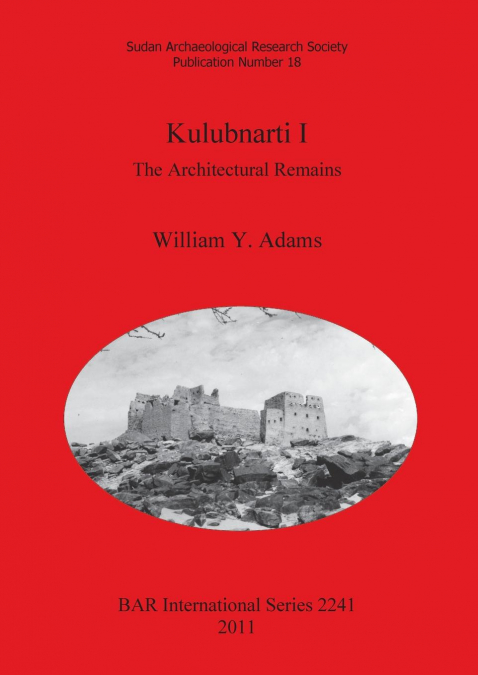
  • Kulubnarti I
    William Y. Adams / William YAdams
    Sudan Archaeological Research Society. Publication Number 18In 1998 and 1999 volumes II and III of the reports on the University of Kentucky excavations at Kulubnarti were published by the Sudan Archaeological Research Society as numbers 2 and 4 in its monograph series. Kulubnarti III was also available through British Archaeological Reports in its International Series no. 814....
    Disponible

    104,23 €

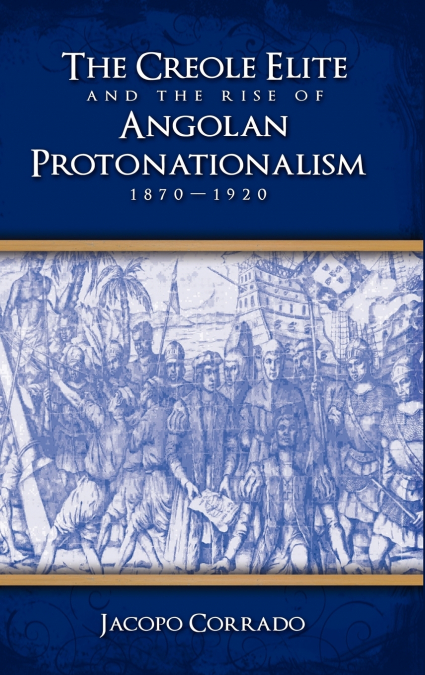
  • The Creole Elite and the Rise of Angolan Protonationalism
    Jacopo Corrado
    This book is about Angolan literature and culture. It investigates a segment of Angolan history and literature, with which even Portuguese-speaking readers are generally not familiar. Its main purpose is to define the features and the literary production of the so-called ’creole elite’, as well as its contribution to the early manifestations of dissatisfaction towards colonial ...
  • Traditionalists, Muslims, and Christians in Africa
    Prince Sorie Conteh
    As is the case for most of sub-Saharan Africa, African Traditional Religion (ATR) is the indigenous religion of Sierra Leone. When the early forebears and later progenitors of Islam and Christianity arrived, they met Sierra Leone indigenes with a remarkable knowledge of God and a structured religious system. Successive Muslim clerics, traders, and missionaries were respectful o...
  • Shajara ya Mwana Mzizima 4
    Alhaji Abdallah Mohammed Tambaza
    This is the fourth part in the series of the history of Dar es salaam. This book is about Kariakoo, the first area where Africans were allowed to live and stay. It traces the history of the area before independence and up till the 1970’s.Kitabu hiki ni mfululizo wa vitabu vya kumbukumbu ya sehemu na watu mashuhuri katika jiji la Dar es Salaam. Kitabu hiki ni cha tatu ambacho ki...
    Disponible

    41,51 €

  • Britain, the Royal Air Force and relief flights to Biafra, 1968-1969
    Onianwa Oluchukwu Ignatus
    In this intriguing new book, Onianwa Oluchukwu Ignatus investigates Britain’s decision to engage the Royal Air Force (RAF) in the relief operations during the Nigerian Civil War. The main area badly ravaged by the conflict being the Republic of Biafra was declared 'a frontier of need.' Humanitarian concerns and mounting public pressures, both in Britain and other Western countr...
  • We Rest Here Content
    Robin Smith
    We Rest Here Content is not the history of the Imperial Light Horse Regiment - that was written by the regiment’s Intelligence Officer, Lieutenant George Fleming Gibson and published in 1937 as The Story of the Imperial Light Horse in the South African War 1899-1902. We Rest Here Content approaches the subject of the I.L.H. from a different viewpoint. It looks at all the known ...
    Disponible

    75,50 €