

 Librería Samer Atenea
 Kálamo Books
 Librería Elías (Asturias)
 Librería Kolima (Madrid)
 Librería Proteo (Málaga)
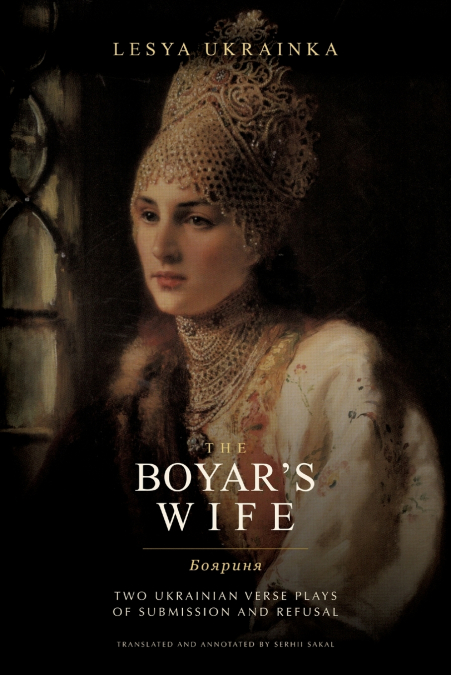
Nobody is cruel to her. It destroys her anyway. What is done to Oksana in The Boyar’s Wife is done in instalments, each one too small to refuse. A dress. A headdress. A name - the Russian form of her own.That is the one she refuses. Then the money she meant to send home. Then the letters. Then the man who carried them. Then her own brother. Ukraine, the 1660s. She is a Cossack officer’s daughter. She marries Stepan, the son of her father’s dead comrade, home from the tsar’s court dressed as a Moscow boyar and not quite convincing in it. We never see the wedding. The next time we see her, she is in Moscow. Her mother-in-law is fond of her. Her husband loves her. Every compromise he makes, he makes for a good reason. By the end she names exactly what was done to her - too late for the one person who could have stopped it. With it: In the Catacombs - a crypt outside Rome, one night, where a slave is offered a better master and works out, aloud and in front of everyone, what that would actually cost him. The same bargain. The opposite answer. Two plays, one question: what it costs to say yes. The woman who wrote it Lesya Ukrainka (1871-1913) never went to school. She published from the age of thirteen. She was ill from about ten with tuberculosis of the bone, which moved through her body and decided where she could live - Crimea, Italy, Germany, Egypt, and Georgia, where she died at forty-two. She spent her last decade writing verse drama, most of it about people deciding what they will and will not agree to. What is in this edition • Both plays complete, in a new line-for-line verse translation - one English line for every Ukrainian one• 91 short footnotes, only where the line in front of you needs one• 140 commentary entries at the back - read the play clean, or read it with everything• 33 essays on the history, the verse, and the words that will not translate• A cast list, a chronology, and a page on how the names are said Translated from the Katerynoslav edition of 1918, which printed the two plays together.






