Inicio > Humanidades > Historia > The Black Death
The Black Death

The Black Death

James Dodds

39,18 €
IVA incluido
Disponible
Editorial:
J.F. Publishing
Año de edición:
2026
Materia
Historia
ISBN:
9798233628252
39,18 €
IVA incluido
Disponible

Selecciona una librería:

  • Librería Samer Atenea
  • Kálamo Books
  • Librería Elías (Asturias)
  • Librería Kolima (Madrid)
  • Librería Proteo (Málaga)

The Black Death: The Reshaper of Europe The worst catastrophe in European history. The most consequential. A reckoning with what a bacterium destroyed, and what, from the ruins, it made possible. In the autumn of 1347, a fleet of Genoese trading ships docked in the harbour of Messina, Sicily. Most of the sailors aboard were dead. Those still alive were covered in black, pus-weeping swellings the size of eggs. The port authorities ordered the ships back out to sea. It was already too late. Within five years, between a third and a half of Europe’s population was dead, somewhere between twenty-five and thirty-eight million people, in the greatest demographic catastrophe in recorded Western history. But The Black Death: The Reshaper of Europe is not, at its heart, a book about dying. It is a book about what the dying made. The feudal system that had bound the European peasantry in legal servitude for four centuries dissolved in the generation after the epidemic, not because anyone decided to abolish it, but because the economics of a labour-scarce world made it unworkable. The authority of the Catholic Church, the most powerful institution in European history, cracked under the weight of pastoral failure and was never fully repaired, preparing the ground from which the Protestant Reformation would eventually grow. Galenic medicine, whose inadequacy against the plague was demonstrated with brutal public clarity, began its slow, contested retreat before the empirical tradition that would eventually produce modern science. The arts erupted in a new intimacy with the individual human face and the individual human death. And from the meadow at Mile End, where a fourteen-year-old king listened to the demands of the men of Kent and Essex in 1381, the long road toward modern democratic politics can be traced, however indirectly and however far. This is a work of synthetic historical scholarship: a single, coherent argument made across seventeen chapters and more than a hundred thousand words, connecting the biological event of the fourteenth-century epidemic to the civilisational transformation of the following two centuries. It does not claim that the plague caused the Renaissance, or the Reformation, or capitalism, in any simple or deterministic sense. It claims something more precise and more defensible: that the plague was the necessary disruption without which those transformations would not have occurred when they did, in the institutional form they took, with the specific characteristics that define the modern Western world. The argument is made through evidence, the chronicles, the manorial records, the plague tractates, the literary and artistic testimony of those who survived and through engagement with the historians, economists, and scholars who have debated the plague’s consequences for the better part of a century. Throughout, the book insists on holding two things simultaneously: the structural argument about forces and institutions, and the human reality of specific people whose lives and deaths those forces operated through. Agnolo di Tura, who buried his five children with his own hands in a Sienese plague pit. John Clyn, the Irish friar who passed his chronicle to an unknown future he did not expect to see. Guy de Chauliac, the greatest physician of his age, confessing with devastating candour that he and his profession could do nothing. John Ball, preaching from a village green that when Adam delved and Eve span, there were no gentlemen. These voices carry the history that the statistics cannot. 'The living were scarce.' Henry Knighton’s bleak phrase is the book’s organising image: the scarcity of the living was simultaneously the source of the economic transformation and the fact of the dead and no account of the one can be honest that does not hold the other equally in view.

Artículos relacionados

  • Raising Freedom's Banner
    Paul Harris
    World wide history of peaceful street demonstrations from their earliest beginning in eighteenth century England to their use throughout the world in the twenty-first century. Describes why some demonstration movements succeeded and others failed. Contrasts demonstrations within the law with civil disobedience demonstrations. Describes Peterloo, the Chartists, the Suffragettes,...
    Disponible

    23,59 €

  • Waipi’o Valley
    Jeffrey L. Gross
    Waipi’o Valley: A Polynesian Journey from Eden to Eden recounts the remarkable migrations of the Polynesians across a third of the circumference of the earth. Their amazing journey began from Kalana i Hau’ola, the biblical “Garden of Eden” located along the shore of the Persian Gulf, extended to the Indus River Valley of ancient Vedic India, to Egypt where some ancestors of the...
  • Floralia
    June Rainsford Butler
    A century characterized by a growing interest in science, the opportunity for travel, and leisure for gardening furnishes the setting for Butler’s book. The rise of landscape gardening in England is traced, and the origin and history of its most famous gardens are given. The close relation between England and America in the field of horticulture is also discussed.Originally pub...
    Disponible

    61,20 €

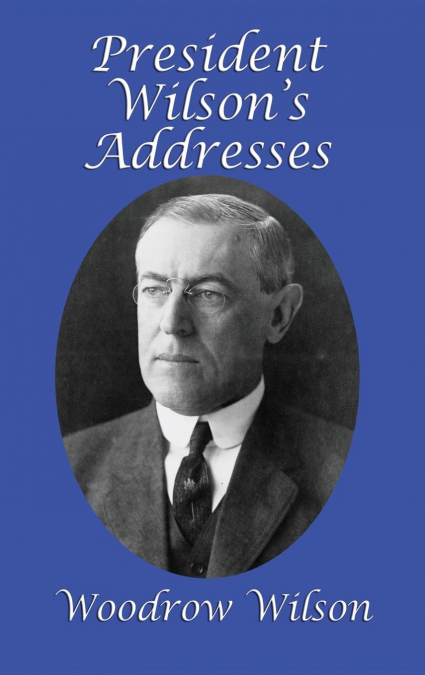
  • President Wilson’s Addresses
    Woodrow Wilson
    'These addresses of President Woodrow Wilson are almost entirely concerned with political affairs, and more specifically with defining Americanism. Yet they also show that even as he moved from academia to the heights of politics, Wilson retained something of the teacher’s interest in showing the relation between specific instances and the general forms of thought or action of ...
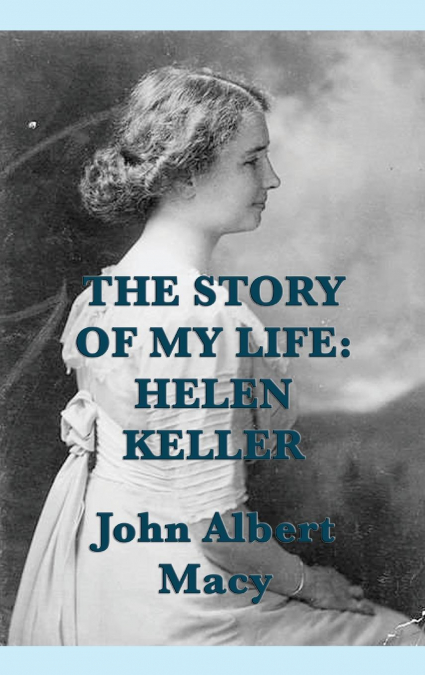
  • The Story of my Life
    John Albert Macy
    The Story of My Life, is Helen Keller’s autobiography detailing her early life, especially her experiences with Anne Sullivan. The book is dedicated to inventor Alexander Graham Bell. The dedication reads, 'To ALEXANDER GRAHAM BELL Who has taught the deaf to speak and enabled the listening ear to hear speech from the Atlantic to the Rockies, I dedicate this Story of My Life.' ...
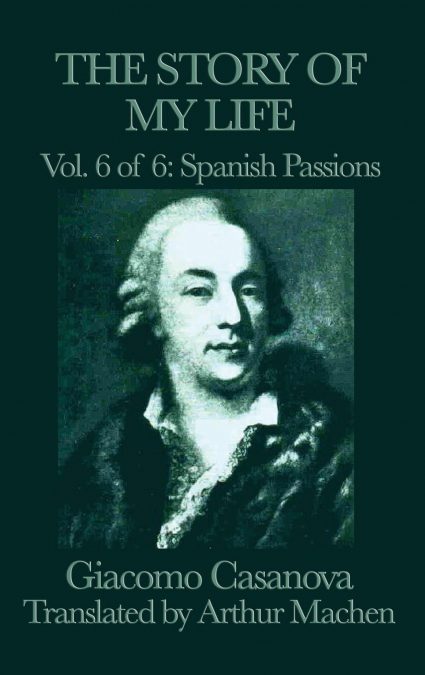
  • The Story of My Life Vol. 6 Spanish Passions
    Giacomo Casanova
    Casanova was an Italian adventurer and author from the Republic of Venice. His autobiography, Histoire de ma vie (Story of My Life), is regarded as one of the most authentic sources of the customs and norms of European social life during the 18th century. He has become so famous for his often complicated and elaborate affairs with women that his name is now synonymous with 'wom...

Otros libros del autor

  • Exposition of the Apostles’ Creed (Cram Edition)
    James Dodds
    This XpressRead Cram Edition of Exposition of the Apostles’ Creed pairs the complete original text with carefully prepared study materials, designed for deeper engagement with this classic.Delve into the foundational tenets of Christian faith with James Dodds’s 'Exposition of the Apostles’ Creed.' This meticulously prepared print edition offers a comprehensive exploration of th...
    Disponible

    21,07 €

  • Records of the Scottish Settlers in the River Plate and their Churches, etc. [With plates, including a portrait.]
    James Dodds
    Title: Records of the Scottish Settlers in the River Plate and their Churches, etc. [With plates, including a portrait.]Publisher: British Library, Historical Print EditionsThe British Library is the national library of the United Kingdom. It is one of the world’s largest research libraries holding over 150 million items in all known languages and formats: books...
    Disponible

    51,86 €

  • Personal Reminiscences And Biographical Sketches (1887)
    James Dodds
    ''Personal Reminiscences And Biographical Sketches'' is a book written by James Dodds and published in 1887. The book is a collection of personal stories and biographical sketches of various people that Dodds encountered throughout his life. The stories cover a wide range of topics, including politics, religion, and social issues. The book is divided into several chapters, each...
    Disponible

    32,21 €

  • The Fifty Years Struggle Of The Scottish Covenanters, 1638-88 (1860)
    James Dodds
    This scarce antiquarian book is a facsimile reprint of the original. Due to its age, it may contain imperfections such as marks, notations, marginalia and flawed pages. Because we believe this work is culturally important, we have made it available as part of our commitment for protecting, preserving, and promoting the world’s literature in affordable, high quality, modern edit...
    Disponible

    26,40 €

  • Thomas Chalmers
    James Dodds
    This scarce antiquarian book is a facsimile reprint of the original. Due to its age, it may contain imperfections such as marks, notations, marginalia and flawed pages. Because we believe this work is culturally important, we have made it available as part of our commitment for protecting, preserving, and promoting the world’s literature in affordable, high quality, modern edit...
    Disponible

    38,65 €

  • Lays Of The Covenanters
    James Dodds
    Lays of the Covenanters is a collection of poems written by James Dodds. The Covenanters were a group of Scottish Presbyterians who signed the National Covenant in 1638, pledging to defend their religious liberties against the interference of the English Crown. The poems in this book celebrate the Covenanters’ struggle for freedom and their steadfast faith in the face of persec...
    Disponible

    33,45 €