The Birth of Tragedy; or, Hellenism and Pessimism: Large Print

The Birth of Tragedy; or, Hellenism and Pessimism: Large Print

Friedrich Wilhelm Nietzsche

27,39 €
IVA incluido
Disponible
Editorial:
Muze Publications
Año de edición:
2026
Materia
Estudios literarios: obras de teatro y dramaturgos
ISBN:
9781811108680
27,39 €
IVA incluido
Disponible

Selecciona una librería:

  • Librería Samer Atenea

  • Kálamo Books
  • Librería Elías (Asturias)
  • Librería Kolima (Madrid)
  • Librería Proteo (Málaga)

Can art help us face suffering without turning away from life? Nietzsche finds a provocative answer in the drama, music, and myths of ancient Greece.In The Birth of Tragedy; or, Hellenism and Pessimism, Friedrich Nietzsche explores the forces that made Greek tragic drama possible. He names them the Apollonian and the Dionysian: the impulse toward form, clarity, and beautiful appearance, and the experience of ecstasy, dissolution, and shared intensity. For Nietzsche, the power of tragic art emerges not from either force alone, but from their creative tension.This early philosophical work follows that tension into a larger argument about culture. Nietzsche links the decline of Greek tragedy to the growing authority of Socratic reason and the demand that existence be made intelligible. Against confidence in rational explanation, he considers the resources of music and myth, looking to Wagner as a possible source of cultural renewal. The result is both a theory of art and a challenge to the assumption that knowledge alone can make life meaningful.What readers find inside:Apollo and Dionysus — Two artistic impulses illuminate the relationship between ordered beauty and ecstatic experience.Greek tragic drama — The union of music, myth, and dramatic form becomes a way to confront human suffering.The challenge of Socrates — Nietzsche questions what a culture loses when reason becomes its dominant measure of truth.Music and renewal — Wagner’s art enters Nietzsche’s hopes for a revival of tragic culture.Art and affirmation — The work asks how aesthetic experience can sustain an attachment to life despite its pain.For readers of philosophy, students of classical drama, and anyone interested in the relationship between creativity and suffering, this is an energetic encounter with questions that remain unsettled: what art does, why cultures need myths, and where explanation reaches its limits.Begin this challenging inquiry into the power of art to change how we understand and endure existence.Large print edition: 16-point type for comfortable reading. 10
Artículos relacionados

  • Shakespeare’s identities
    James Driscoll
    No dramatist has treated identity in as many ways and in such depth as William Shakespeare. In Shakespeare’s Identities, James P. Driscoll shows how the Bard used history, comedy, tragedy, and romance to develop comprehensive treatments of personal identity.Driscoll’s innovative study examines four aspects of identity: the conscious, social, real, and ideal. Drawing on Jungian ...
    Disponible

    49,06 €

  • Shakespeare and Abraham
    Ken Jackson
    Shakespeare and Abraham shows how Shakespeare’s engagement with the biblical narrative of Abraham’s sacrifice of Isaac manifests in his plays. ...
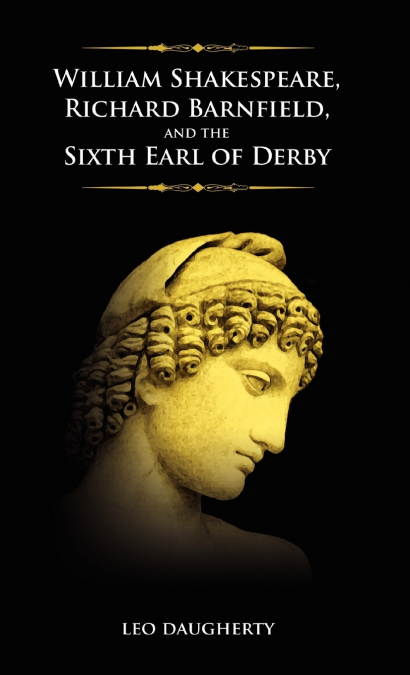
  • William Shakespeare, Richard Barnfield, and the Sixth Earl of Derby
    Leo Daugherty
    This book is the first to argue that the Rival Poet of Shakespeare’s Sonnets is the well-known young Elizabethan writer Richard Barnfield (1574-1620), long suspected to have been one of Shakespeare’s 'private friends' (as they were termed by Francis Meres in 1598), with whom (as Meres also tells us) Shakespeare shared some of his sonnets. This is also the first book to argue th...
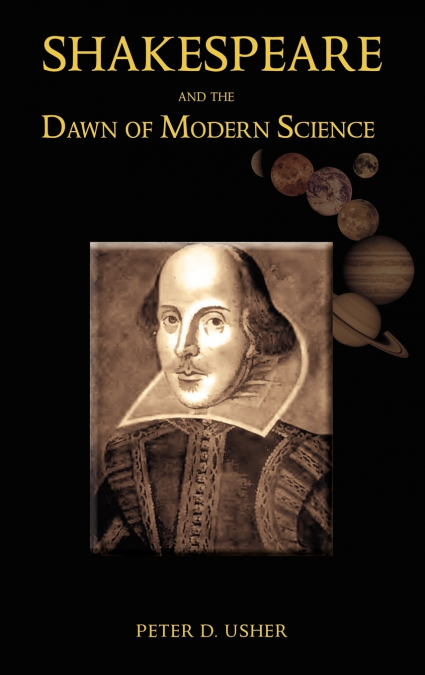
  • Shakespeare and the Dawn of Modern Science
    Peter D. Usher
    In Shakespeare and the Dawn of Modern Science, renowned astronomy expert Peter Usher expands upon his allegorical interpretation of Hamlet and analyzes four more plays, Love’s Labour’s Lost, Cymbeline, The Merchant of Venice, and The Winter’s Tale. With painstaking thoroughness, he dissects the plays and reveals that, contrary to current belief, Shakespeare was well aware of th...
  • The Comic Matrix of Shakespeare’s Tragedies
    Susan Snyder
    Comic elements in Shakespeare’s tragedies have often been noted, but while most critics have tended to concentrate on humorous interludes or on a single play, Susan Snyder seeks a more comprehensive understanding of how Shakespeare used the conventions, structures, and assumptions of comedy in his tragic writing. She argues that Shakespeare’s early mastery of romantic comedy de...
    Disponible

    53,22 €

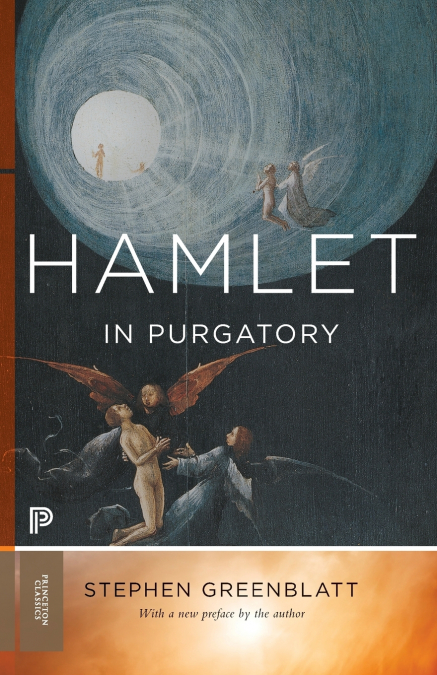
  • Hamlet in Purgatory
    Stephen Greenblatt
    In Hamlet in Purgatory, renowned literary scholar Stephen Greenblatt delves into his longtime fascination with the ghost of Hamlet’s father, and his daring and ultimately gratifying journey takes him through surprising intellectual territory. It yields an extraordinary account of the rise and fall of Purgatory as both a belief and a lucrative institution--as well as a capacious...
    Disponible

    29,73 €

Otros libros del autor

  • The Birth of Tragedy Out of the Spirit of Music
    Friedrich Wilhelm Nietzsche
    We will have achieved much for the study of aesthetics when we come, not merely to a logical understanding, but also to the immediately certain apprehension of the fact that the further development of art is bound up with the duality of the Apollonian and the Dionysian, just as reproduction depends upon the duality of the sexes, their continuing strife and only periodically occ...
  • Thoughts Out of Season
    Friedrich Wilhelm Nietzsche
    To the reader who knows Nietzsche, who has studied his Zarathustra and understood it, and who, in addition, has digested the works entitled Beyond Good and Evil, The Genealogy of Morals, The Twilight of the Idols, and The Antichrist,- to such a reader everything in this volume will be perfectly clear and comprehensible. ...
  • The Will to Power
    Friedrich Wilhelm Nietzsche
    What happens when a civilization loses faith in its highest values? Nietzsche confronts that crisis by asking whether the beliefs we cherish sustain life—or diminish it.The Will to Power brings together writings from Friedrich Nietzsche’s notebooks, arranged after his death rather than completed by him as a finished book. These fragments explore some of his most challenging ide...
    Disponible

    27,47 €

  • Thus Spake Zarathustra: A Book for All and None
    Friedrich Wilhelm Nietzsche
    What happens when inherited beliefs no longer tell us how to live? Nietzsche turns that question into a poetic journey through the dangers and possibilities of creating our own values.In Thus Spake Zarathustra: A Book for All and None, the solitary prophet Zarathustra leaves his mountain retreat to speak to humanity. His teachings challenge conventional morality, religious auth...
    Disponible

    27,39 €

  • Thus Spake Zarathustra: A Book for All and None: Large Print
    Friedrich Wilhelm Nietzsche
    What happens when inherited beliefs no longer tell us how to live? Nietzsche turns that question into a poetic journey through the dangers and possibilities of creating our own values.In Thus Spake Zarathustra: A Book for All and None, the solitary prophet Zarathustra leaves his mountain retreat to speak to humanity. His teachings challenge conventional morality, religious auth...
    Disponible

    27,47 €

  • The Birth of Tragedy; or, Hellenism and Pessimism
    Friedrich Wilhelm Nietzsche
    Can art help us face suffering without turning away from life? Nietzsche finds a provocative answer in the drama, music, and myths of ancient Greece.In The Birth of Tragedy; or, Hellenism and Pessimism, Friedrich Nietzsche explores the forces that made Greek tragic drama possible. He names them the Apollonian and the Dionysian: the impulse toward form, clarity, and beautiful ap...
    Disponible

    27,39 €