

 Librería Samer Atenea
 Kálamo Books
 Librería Elías (Asturias)
 Librería Kolima (Madrid)
 Librería Proteo (Málaga)
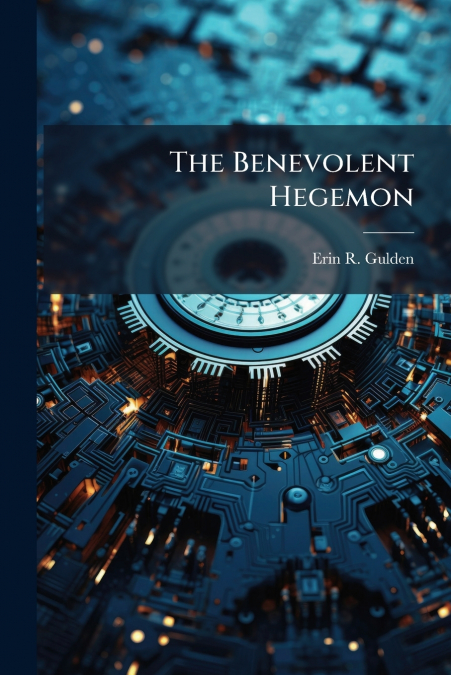
Space capabilities contribute significantly to all aspects of our daily lives, from multi-national banking and urban planning, to worldwide telecommunications and robust materials distribution operations, to tactical and strategic military applications. The data and information from space has become critical to our way of life. Specifically for the United States military, space capabilities are force multipliers to our global warfighters. Therefore, protecting these capabilities is paramount and must be a national priority with a foundation built upon international cooperation and augmented with a few critical passive protection devices. Our national space protection strategy must not follow the historical pattern of problem solving that the United States Air Force and intelligence community have used. The United States Air Force was built upon a foundation of technology superiority. No matter what the problem, we turned to technology for the solution. While this has worked through our limited history, this reliance on technological solutions cannot be the sole influence for our space capability protection. We must first change the lens through which we view space protection by focusing on cooperation, not technology, as our primary method of problem solving. Second, we must take the moral high ground and lead the international community in establishing peaceful rules for space operations.This work has been selected by scholars as being culturally important, and is part of the knowledge base of civilization as we know it. This work was reproduced from the original artifact, and remains as true to the original work as possible. Therefore, you will see the original copyright references, library stamps (as most of these works have been housed in our most important libraries around the world), and other notations in the work.This work is in the public domain in the United States of America, and possibly other nations. Within the United States, you may freely copy and distribute this work, as no entity (individual or corporate) has a copyright on the body of the work.As a reproduction of a historical artifact, this work may contain missing or blurred pages, poor pictures, errant marks, etc. Scholars believe, and we concur, that this work is important enough to be preserved, reproduced, and made generally available to the public. We appreciate your support of the preservation process, and thank you for being an important part of keeping this knowledge alive and relevant.





