
Inicio > Lenguas > Lingüistica > The Banquet, a Dialogue of Plato Concerning Love. The Second Part
The Banquet, a Dialogue of Plato Concerning Love. The Second Part

The Banquet, a Dialogue of Plato Concerning Love. The Second Part

Plato

35,45 €
IVA incluido
Consulta disponibilidad
Editorial:
Gale ECCO, Print Editions
Año de edición:
2018
Materia
Lingüistica
ISBN:
9781379604655

Selecciona una librería:

  • Librería Samer Atenea

  • Kálamo Books
  • Librería Elías (Asturias)
  • Librería Kolima (Madrid)
  • Librería Proteo (Málaga)

The 18th century was a wealth of knowledge, exploration and rapidly growing technology and expanding record-keeping made possible by advances in the printing press. In its determination to preserve the century of revolution, Gale initiated a revolution of its own: digitization of epic proportions to preserve these invaluable works in the largest archive of its kind. Now for the first time these high-quality digital copies of original 18th century manuscripts are available in print, making them highly accessible to libraries, undergraduate students, and independent scholars.Western literary study flows out of eighteenth-century works by Alexander Pope, Daniel Defoe, Henry Fielding, Frances Burney, Denis Diderot, Johann Gottfried Herder, Johann Wolfgang von Goethe, and others. Experience the birth of the modern novel, or compare the development of language using dictionaries and grammar discourses. ++++The below data was compiled from various identification fields in the bibliographic record of this title. This data is provided as an additional tool in helping to insure edition identification:++++British LibraryT132439Translator’s dedication signed: Floyer Sydenham. The final leaf contains ’Proposals for a new subscription’. In: ’Dialogues of Plato’ vol.1, London, 1767-80.London : printed for W. Sandby, 1767. [2],250,[2]p. ; 4°

Artículos relacionados

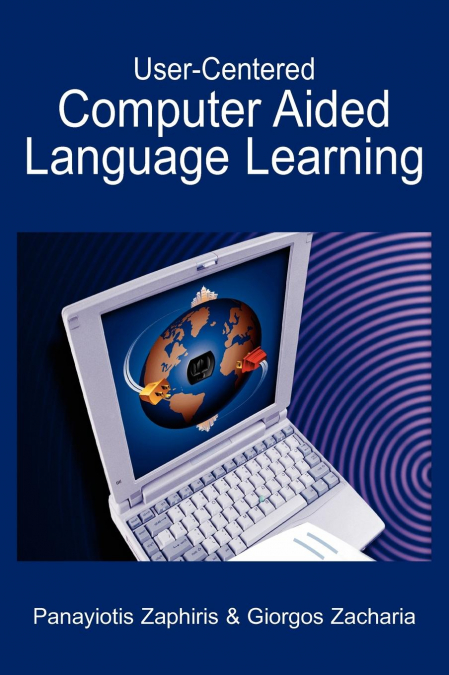
  • User-Centered Computer Aided Language Learning
    Giorgos Zacharia / Panayiotis Zaphiris
    ...
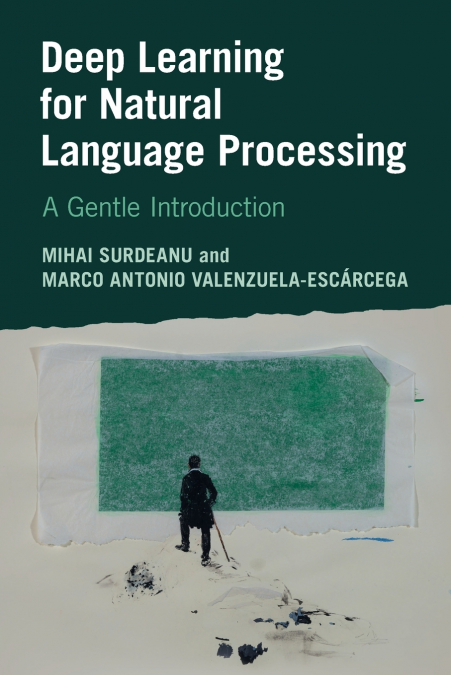
  • Deep Learning for Natural Language Processing
    Marco Antonio Valenzuela-Escárcega / Mihai Surdeanu
    ...
    Disponible

    56,34 €

  • Deep Learning for Natural Language Processing
    Marco Antonio Valenzuela-Escárcega / Mihai Surdeanu
    ...
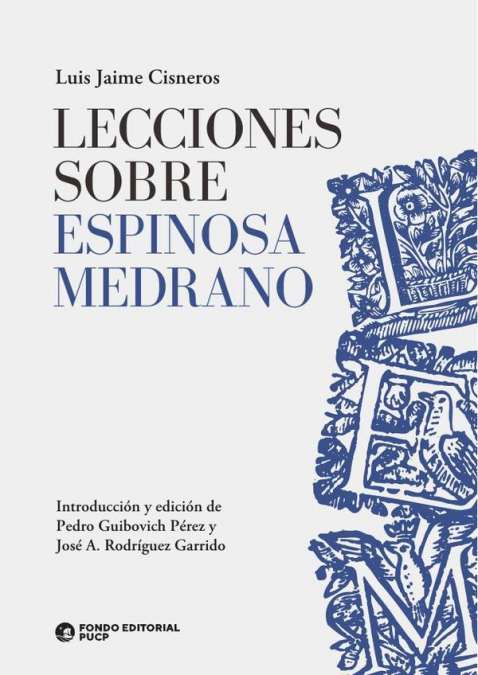
  • Lecciones sobre espinosa medrano
    Luis Jaime Cisneros Vizquerra
    La obra de Juan de Espinosa Medrano, apodado en su tiempo «El Lunarejo» (c. 1629-1688), fue uno de los mayores focos de interés académico de Luis Jaime Cisneros (1921-2011). En 1980 aparecieron sus primeros trabajos dedicados a estudiar los textos capitales de Espinosa Medrano (el Apologético en favor de don Luis de Góngora, la Panegírica declamación por la protección de las ci...
    Disponible

    18,67 €

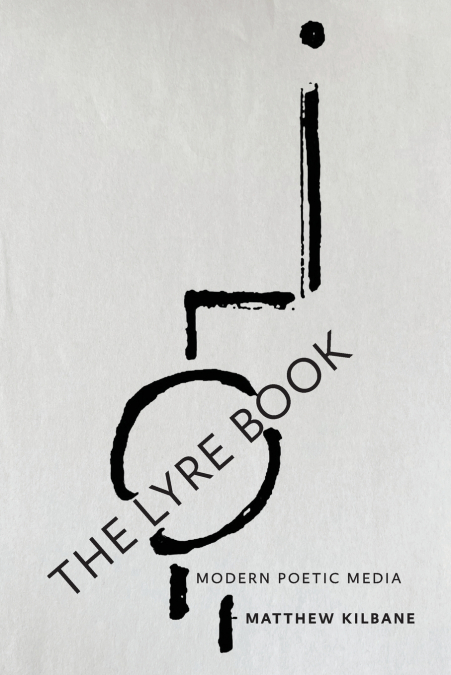
  • Lyre Book
    Matthew Kilbane
    Redefines modern lyric poetry at the intersection of literary and media studies.In The Lyre Book, Matthew Kilbane urges literary scholars to consider lyric not as a genre or a reading practice but as a media condition: the generative tension between writing and sound. In addition to clarifying issues central to the study of modern poetry--including its proximity to popular song...
    Disponible

    57,17 €

  • Translation-mediated Communication in a Digital World
    David Ashworth / Minako O’Hagan
    The Internet is accelerating globalization by exposing organizations and individuals to global audiences. This in turn is driving teletranslation and teleinterpretation, new types of multilingual support, which are functional in digital communications environments. The book describes teletranslation and teleinterpretation by exploring a number of key emerging contexts for langu...
    Disponible

    51,07 €

Otros libros del autor

  • Cratylus
    Plato
    Does a name reveal what something truly is—or only what people agree to call it? A familiar word becomes a philosophical puzzle in this searching dialogue about language and truth.In Cratylus, Plato brings Socrates into conversation with Hermogenes and Cratylus over the correctness of names. Hermogenes grounds naming in convention and agreement; Cratylus argues that names posse...
  • Philebus: Large Print
    Plato
    Is the happiest life the one with the most pleasure—or the one guided by reason? What if neither, on its own, is enough?In Philebus, Plato turns the question of human happiness into a searching philosophical conversation. Socrates and Protarchus debate the claims of pleasure and intelligence, testing whether either can supply everything a good life requires. Their inquiry moves...
  • The Republic
    Plato
    Why be just when injustice seems to pay? Plato turns that unsettling question into a searching debate about power, truth, and how we should live.In The Republic, Socrates and his companions investigate justice by imagining a city and asking what would make it well governed. Their conversation moves between public life and the inner life: the education of guardians, the responsi...
  • The Republic: Large Print
    Plato
    Why be just when injustice seems to pay? Plato turns that unsettling question into a searching debate about power, truth, and how we should live.In The Republic, Socrates and his companions investigate justice by imagining a city and asking what would make it well governed. Their conversation moves between public life and the inner life: the education of guardians, the responsi...
  • Phaedrus
    Plato
    What makes love a path to wisdom—and persuasion more than a clever use of words? A walk outside Athens becomes a searching conversation about desire, truth, and the human soul.In Plato’s Phaedrus, Socrates joins a young admirer of speeches beside the river Ilissus. A speech by Lysias sparks a debate about lovers and those who do not love, leading Socrates to reconsider love as ...
  • Phaedrus: Large Print
    Plato
    What makes love a path to wisdom—and persuasion more than a clever use of words? A walk outside Athens becomes a searching conversation about desire, truth, and the human soul.In Plato’s Phaedrus, Socrates joins a young admirer of speeches beside the river Ilissus. A speech by Lysias sparks a debate about lovers and those who do not love, leading Socrates to reconsider love as ...