Inicio > Sociedad y ciencias sociales > Política y gobierno > The Balance between Indigenous Land Claims and Individual Private Property Rights in Latin America
The Balance between Indigenous Land Claims and Individual Private Property Rights in Latin America

The Balance between Indigenous Land Claims and Individual Private Property Rights in Latin America

Janine Schildt

17,39 €
IVA incluido
Disponible
Editorial:
GRIN Publishing
Año de edición:
2010
Materia
Política y gobierno
ISBN:
9783640728138
17,39 €
IVA incluido
Disponible

Selecciona una librería:

  • Librería Samer Atenea
  • Librería Aciertas (Toledo)
  • Kálamo Books
  • Librería Perelló (Valencia)
  • Librería Elías (Asturias)
  • Donde los libros
  • Librería Kolima (Madrid)
  • Librería Proteo (Málaga)

Seminar paper from the year 2009 in the subject Politics - International Politics - Topic: Public International Law and Human Rights, grade: 1,7, , language: English, abstract: How can indigenous property rights be guaranteed in today's societies? In many countries with a large indigenous population this is an ongoing political struggle at the center of which stands the question how to balance traditional indigenous land rights and modern private property rights. The UN Declaration on the Rights of Indigenous Peoples was initially not signed by Canada, USA, New Zealand and Australia. The countries argued inter alia that the article on indigenous land rights could not be brought in accord with their domestic legislation and the private property rights they have to protect. In international law no common standard for indigenous land rights exists and individual countries have found different approaches in their domestic legislations often subordinating indigenous rights or restricting them on various grounds. Frequently, indigenous collective claims are weakened because legislation only recognizes individual rights to property as legitimate. The Inter-American Court of Human Rights (IACtHR) has evolved a firm protector of indigenous land rights. In its landmark decisions Mayagna (Sumo) Awas Tingni Community vs. Nicaragua (2001), Moiwana Community vs. Suriname (2005), Yakye Axa vs. Paraguay (2005), Sawhoyamaxa vs. Paraguay (2006) and Pueblo Saramaka vs. Suriname (2007) it has underlined that traditional collective land rights fall under the protection of property in the American Convention on Human Rights (ACHR) and are thus equivalent to individual private property rights. This paper will look at the role of the IACtHR in the protection of indigenous land rights in Latin America and will discuss how it confronts the balancing problem between the two forms of property rights. Thereby, it is argued that especially because the challenge stays unresolved in many
Artículos relacionados

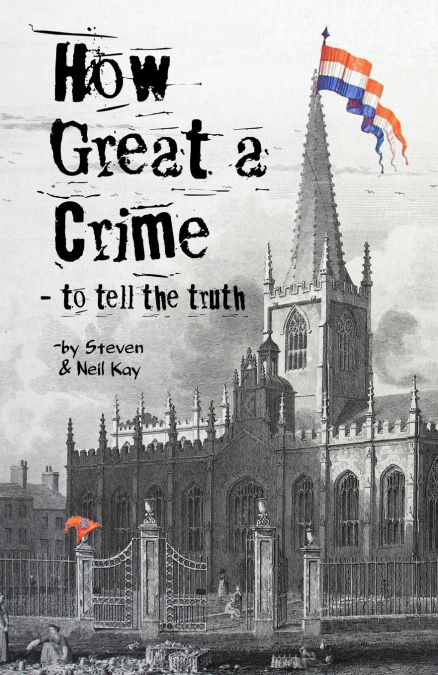
  • How Great a Crime - to tell the truth
    Neil Kay / Steven Kay
    Joseph Gales was one of the all-time great Sheffielders – forget Joe Cocker, Jessica Ennis-Hill, Sean Bean or Michael Palin. These are all minnows compared to Joseph Gales – and their stories are boring besides that of the Galeses. The Galeses story has been forgotten and has not been brought together in one place before – it is not just something dredged up from history – an i...
    Disponible

    10,33 €

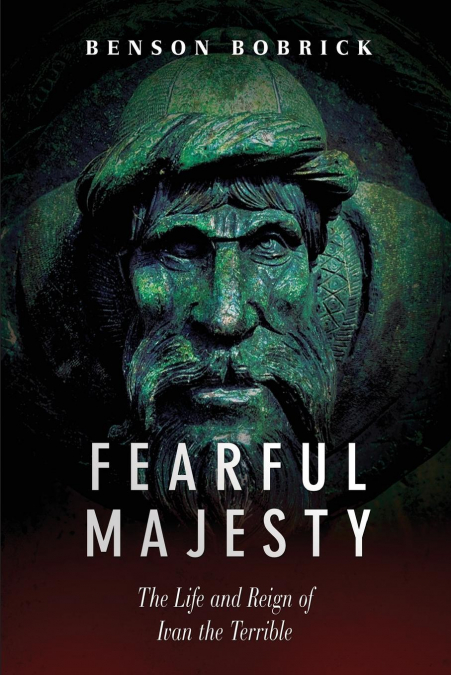
  • Fearful Majesty
    Benson Bobrick
    Ivan the Terrible - the name evokes the legend of a cruel and dangerously insane tyrant. Fearful Majesty explores that legend and exposes the man, his nature, and his time.This acclaimed biography of one of Russia’s most important and tyrannical rulers is not only a rich, readable biography, it is also surprisingly timely, revealing how many of the issues Russia faces today hav...
    Disponible

    19,27 €

  • Economic Optimization of Innovation & Risk
    Robert Shuler
    A Theory of Crash Rate for Private & Public Projects with Critical or non-Critical systems.Analyzing & managing risk has been a quest for 5000 years, and is essential to everything from water supplies, finance, and agriculture to computers and space travel. At last there is a quantitative theory and a simple equation that allows you to: - choose your failure rate - get there...
    Disponible

    13,02 €

  • The System
    Lincoln Steffens
    The 'muckraker' Lincoln Steffens dug deep into business criminality and political corruption in a powerful series of articles written for McClure's magazine. Establishment newspapers and 'System' politicians dismissed his work as just another example of the decrepit modern journalism that could never pass for genuine writing. But Steffens' dogged quest for truth and justice set...
    Disponible

    23,66 €

  • Digital Activism in Asia Reader
    The digital turn might as well be marked as an Asian turn. From flash-mobs in Taiwan to feminist mobilisations in India, from hybrid media strategies of Syrian activists to cultural protests in Thailand, we see the emergence of political acts that transform the citizen from being a beneficiary of change to becoming an agent of change. In co-shaping these changes, what the digit...
    Disponible

    22,19 €

  • The New Freedom
    Woodrow Wilson
    In 1912, Woodrow Wilson was the Democratic nominee for President of the United States. He campaigned against the Republican incumbent, William Howard Taft, and Taft’s predecessor, Theodore Roosevelt, who had split off from the Republican Party to form his own Progressive, or Bull Moose, Party. Much of the campaign focused on the US economy, particularly the candidates’ views of...
    Disponible

    8,67 €

Otros libros del autor

  • Biodiesel to the rescue
    Janine Schildt
    Seminar paper from the year 2008 in the subject Business economics - Economic Policy, grade: 2,0, Hertie School of Governance (Master of Public Policy), course: States and Markets, language: English, abstract: The Brazilian Biodiesel Program (PNBP) is set out to reduce poverty in the underdevelopedNorthern regions of the country. It encourages family agriculture from plants suc...
    Disponible

    19,53 €