Librería Samer Atenea
 Kálamo Books
 Librería Elías (Asturias)
 Librería Kolima (Madrid)
 Librería Proteo (Málaga)
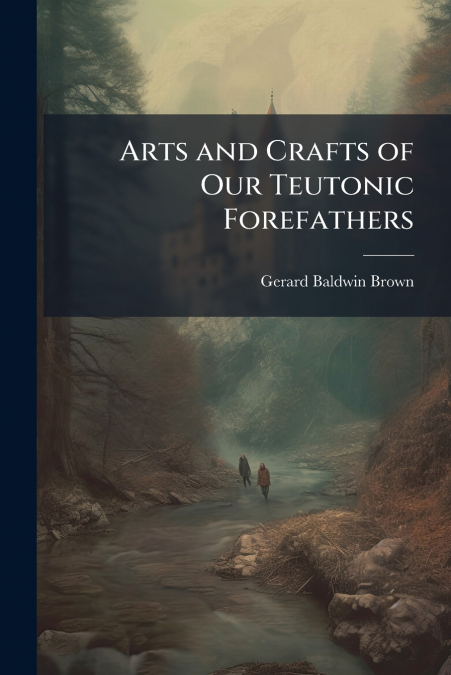
'The Arts and Crafts of Our Teutonic Forefathers' by Gerard Baldwin Brown offers a comprehensive exploration of the artistic and craft traditions of early Germanic peoples. Published in 1911, this work delves into the rich tapestry of Teutonic culture, examining various forms of artistic expression, from metalwork and jewelry to architecture and manuscript illumination. Brown meticulously details the techniques, materials, and symbolic meanings embedded within these crafts, providing readers with a profound understanding of the Teutonic aesthetic sensibility. This book stands as a valuable resource for historians, art enthusiasts, and anyone interested in the cultural heritage of Northern Europe. It sheds light on the origins and evolution of artistic practices that have influenced subsequent generations. Discover the enduring legacy of the Teutonic forefathers through their remarkable arts and crafts.This work has been selected by scholars as being culturally important, and is part of the knowledge base of civilization as we know it. This work was reproduced from the original artifact, and remains as true to the original work as possible. Therefore, you will see the original copyright references, library stamps (as most of these works have been housed in our most important libraries around the world), and other notations in the work.This work is in the public domain in the United States of America, and possibly other nations. Within the United States, you may freely copy and distribute this work, as no entity (individual or corporate) has a copyright on the body of the work.As a reproduction of a historical artifact, this work may contain missing or blurred pages, poor pictures, errant marks, etc. Scholars believe, and we concur, that this work is important enough to be preserved, reproduced, and made generally available to the public. We appreciate your support of the preservation process, and thank you for being an important part of keeping this knowledge alive and relevant.