 Librería Samer Atenea
 Kálamo Books
 Librería Elías (Asturias)
 Librería Kolima (Madrid)
 Librería Proteo (Málaga)
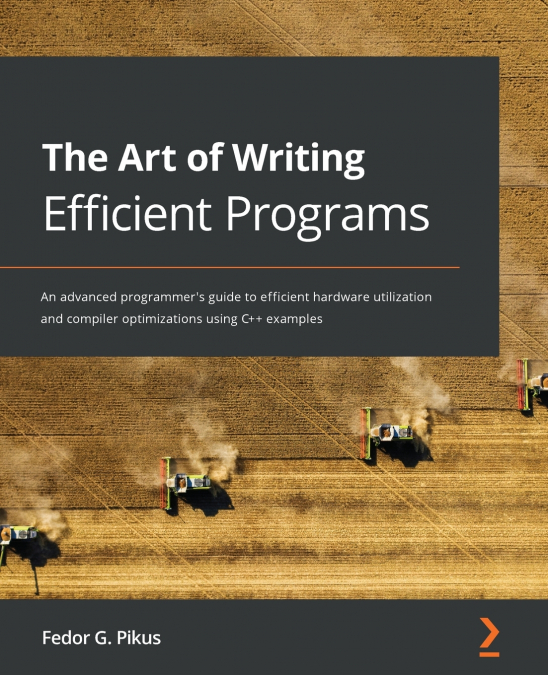
Become a better programmer with performance improvement techniques such as concurrency, lock-free programming, atomic operations, parallelism, and memory managementKey Features:- Learn proven techniques from a heavyweight and recognized expert in C++ and high-performance computing- Understand the limitations of modern CPUs and their performance impact- Find out how you can avoid writing inefficient code and get the best optimizations from the compiler- Learn the tradeoffs and costs of writing high-performance programsBook Description:The great free lunch of 'performance taking care of itself' is over. Until recently, programs got faster by themselves as CPUs were upgraded, but that doesn’t happen anymore. The clock frequency of new processors has almost peaked, and while new architectures provide small improvements to existing programs, this only helps slightly. To write efficient software, you now have to know how to program by making good use of the available computing resources, and this book will teach you how to do that.The Art of Efficient Programming covers all the major aspects of writing efficient programs, such as using CPU resources and memory efficiently, avoiding unnecessary computations, measuring performance, and how to put concurrency and multithreading to good use. You’ll also learn about compiler optimizations and how to use the programming language (C++) more efficiently. Finally, you’ll understand how design decisions impact performance.By the end of this book, you’ll not only have enough knowledge of processors and compilers to write efficient programs, but you’ll also be able to understand which techniques to use and what to measure while improving performance. At its core, this book is about learning how to learn.What You Will Learn:- Discover how to use the hardware computing resources in your programs effectively- Understand the relationship between memory order and memory barriers- Familiarize yourself with the performance implications of different data structures and organizations- Assess the performance impact of concurrent memory accessed and how to minimize it- Discover when to use and when not to use lock-free programming techniques- Explore different ways to improve the effectiveness of compiler optimizations- Design APIs for concurrent data structures and high-performance data structures to avoid inefficienciesWho this book is for:This book is for experienced developers and programmers who work on performance-critical projects and want to learn new techniques to improve the performance of their code. Programmers in algorithmic trading, gaming, bioinformatics, computational genomics, or computational fluid dynamics communities will get the most out of the examples in this book, but the techniques are fairly universal. Although this book uses the C++ language, the concepts demonstrated in the book can be easily transferred or applied to other compiled languages such as C, Java, Rust, Go, and more.Table of Contents- Introduction to Performance and Concurrency- Performance Measurements- CPU Architecture, Resources, and Performance Implications- Memory Architecture and Performance- Threads, Memory, and Concurrency- Concurrency and Performance- Data Structures for Concurrency- Concurrency in C++- High-Performance C++- Compiler Optimizations in C++- Undefined Behavior and Performance- Design for Performance