The Antichrist

The Antichrist

The Antichrist

Friedrich Nietzsche

21,31 €
IVA incluido
Consulta disponibilidad
Editorial:
Brian Westland
Año de edición:
1895
Materia
Ética y filosofía moral
ISBN:
9781774414897

Selecciona una librería:

  • Librería Samer Atenea

  • Kálamo Books
  • Librería Elías (Asturias)
  • Librería Kolima (Madrid)
  • Librería Proteo (Málaga)

The Antichrist is a German philosophy classic by the philosopher Friedrich Nietzsche, originally published in 1895. Although it was written in 1888, its controversial content made Franz Overbeck and Heinrich Köselitz delay its publication, along with Ecce Homo. The German title can be translated into English as both "The Anti-Christ" and "The Anti-Christian".The book, however, is a polemic against institutionalized Christianity, not against Christ. Nietzsche claimed in the Foreword to have written the book for a very limited readership. In order to understand the book, he asserted that the reader "... must be honest in intellectual matters to the point of hardness to so much as endure my seriousness, my passion." The reader should be above politics and nationalism. Also, the usefulness or harmfulness of truth should not be a concern. Characteristics such as "Strength which prefers questions for which no one today is sufficiently daring; courage for the forbidden" are also needed. He disdained all other readers.In 1, Nietzsche expressed his dissatisfaction with modernity. He disliked the contemporary "lazy peace," "cowardly compromise," "tolerance" and "resignation." This related to Schopenhauer's claim that knowledge of the inner nature of the world and life results in "... perfect resignation, which is the innermost spirit of Christianity ... ." Nietzsche introduced his concept of will to power in 2. He defined the concepts of good, bad and happiness in relation to the will to power. "What is good? — All that heightens the feeling of power, the will to power, power itself in man. What is bad? All that proceeds from weakness. What is happiness?-The feeling that power increases-that a resistance is overcome." Nietzsche's words were provocative and shocking in passages such as: "The weak and ill–constituted shall perish: first principle of our philanthropy. And one shall help them to do so. What is more harmful than any vice? — Active sympathy for the ill–constituted and weak — Christianity ... ." This is an example of Nietzsche's reaction against Schopenhauer, who had based all morality on compassion. Nietzsche, on the contrary, praised "... virtue free of moralic acid."


Artículos relacionados

  • Ka Ab Ba Building The Lighted Temple
    Dr Terri R. Nelson / Dr Terri RNelson
    The book KaAbBa Building The Lighted Temple/Metaphysical Keys to the Tree of Life draws a circle that is inclusive of the Afrikan origin of the Ancient Kemetic/Egyptian wisdom. It reveals the undeniable root and link of Ancient Africa to all the religious systems that would develop worldwide. This book is explosive in its power to convey the meaning of KaAbBa, the Medu Neter  (...
    Disponible

    37,41 €

  • Technoethics and the Evolving Knowledge Society
    Rocci Luppicini
    Recently, there has been a major push to rediscover the ethical dimension of technology across the sciences, social sciences, and humanities. Technoethics and the Evolving Knowledge Society: Ethical Issues in Technological Design, Research, Development, and Innovation examines human processes and practices connected to technology embedded within social, political, and moral sph...
  • Kant
    Immanuel Kant
    Kant’s Groundwork of the Metaphysics of Morals is one of the most important works in modern moral philosophy. It belongs beside Plato, Aristotle, Machiavelli, and Hobbes. Here Kant sets out to articulate and defend the Categorical Imperative - the fundamental principle that underlies moral reasoning - and to lay the foundation for a comprehensive account of justice and human vi...
  • On the Duty of Civil Disobedience
    HENRY DAVID THOREAU
    Civil Disobedience argues that citizens should not permit their governments to overrule their consciences, and that they have a duty to avoid allowing their acquiescence to enable the government to make them the agents of injustice. Thoreau was motivated in part by his disgust with slavery and the Mexican-American War, but the sentiments he expresses here are just as pertinent ...
  • Beyond Good and Evil
    Friedrich Nietzsche
    Nietzsche, though primarily a philosopher, wrote widely on art, philology, history, religion, tragedy, culture, and science.  In 1886, at the height of his powers, he published Beyond Good and Evil.  Here he examines much of the best of human thought--dogmatic philosophy, Judeo-Christian morality, science and democracy – and finds it lacking.  Rejecting “slave-morality” he pres...
  • Beyond Good and Evil
    Friedrich Nietzsche
    Nietzsche, though primarily a philosopher, wrote widely on art, philology, history, religion, tragedy, culture, and science.  In 1886, at the height of his powers, he published Beyond Good and Evil.  Here he examines much of the best of human thought--dogmatic philosophy, Judeo-Christian morality, science and democracy – and finds it lacking.  Rejecting “slave-morality” he pres...
    Disponible

    9,99 €

Otros libros del autor

  • Beyond Good and Evil
    Friedrich Nietzsche
    Nietzsche, though primarily a philosopher, wrote widely on art, philology, history, religion, tragedy, culture, and science.  In 1886, at the height of his powers, he published Beyond Good and Evil.  Here he examines much of the best of human thought--dogmatic philosophy, Judeo-Christian morality, science and democracy – and finds it lacking.  Rejecting “slave-morality” he pres...
  • Beyond Good and Evil
    Friedrich Nietzsche
    Nietzsche, though primarily a philosopher, wrote widely on art, philology, history, religion, tragedy, culture, and science.  In 1886, at the height of his powers, he published Beyond Good and Evil.  Here he examines much of the best of human thought--dogmatic philosophy, Judeo-Christian morality, science and democracy – and finds it lacking.  Rejecting “slave-morality” he pres...
    Disponible

    9,99 €

  • Beyond Good and Evil
    Friedrich Nietzsche
    What If Everything You Believe About Good and Evil Deserves to Be Questioned?In Beyond Good and Evil, Friedrich Nietzsche delivers one of the most provocative and influential works in the history of Western philosophy. Challenging conventional morality, established religious beliefs, and the assumptions underlying traditional philosophical thought, Nietzsche invites readers to ...
    Disponible

    12,08 €

  • El ocaso de los ídolos
    Friedrich Nietzsche
    ¿Quién decide lo que somos cuando todos pensamos igual?En una sociedad que confunde multitud con verdad y ruido con razón, la individualidad se convierte en un acto de resistencia. Este ensayo desvela cómo la comodidad, la técnica y la opinión colectiva han desplazado al pensamiento crítico, transformando la cultura en una corriente uniforme que arrastra incluso a los más lúcid...
    Disponible

    12,43 €

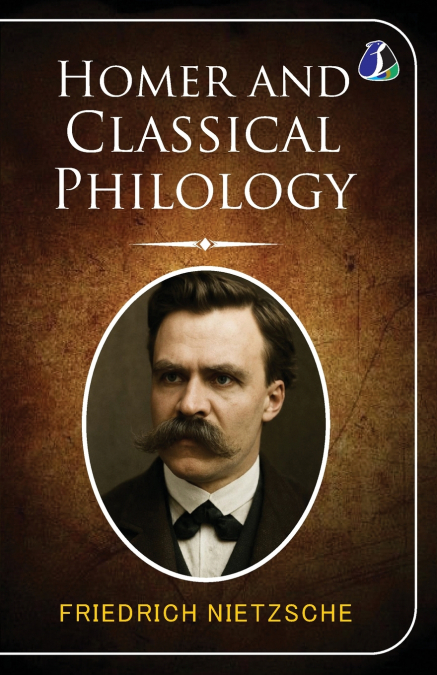
  • Homer and the Classical Philology
    Friedrich Nietzsche
    Friedrich Nietzsche’s Homer and Classical Philology (1869) is his inaugural lecture at the University of Basel. It diagnoses a crisis in 19th-century philology, calling for a shift from dry data collection toward a synthesis of aesthetics, history, and philosophy. Using the 'Homeric question', he argues that epics are not the work of a single historical genius, but the collecti...
    Disponible

    12,34 €

  • The Twilight of the Idols
    Friedrich Nietzsche
    NA ...
    Disponible

    15,68 €