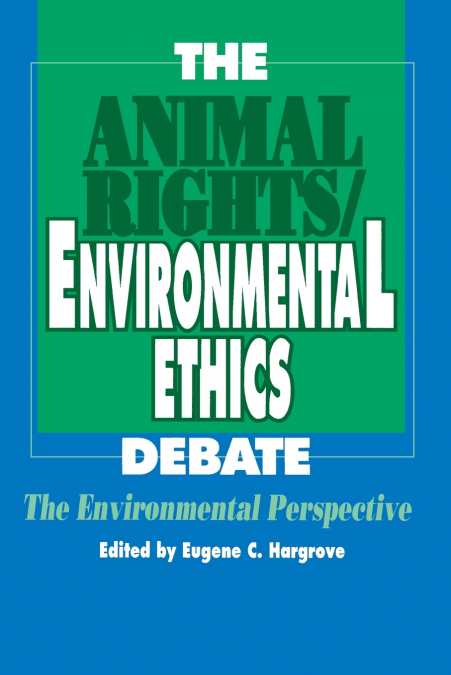

Inicio > Humanidades > Filosofía > Ética y filosofía moral > The Animal Rights/Environmental Ethics Debate
The Animal Rights/Environmental Ethics Debate

The Animal Rights/Environmental Ethics Debate

Eugene C. Hargrove

47,09 €
IVA incluido
Disponible
Editorial:
State University of New York Press
Año de edición:
1992
Materia
Ética y filosofía moral
ISBN:
9780791409343
47,09 €
IVA incluido
Disponible

Selecciona una librería:

  • Librería Samer Atenea

  • Kálamo Books
  • Librería Elías (Asturias)
  • Librería Kolima (Madrid)
  • Librería Proteo (Málaga)

Collects key historical essays on the debate between animal rights and environmental ethics, tracing their development and exploring attempts to reconcile the moral value of individual animals with that of species and ecosystems.Can the moral claims of individual animals be reconciled with the value of entire ecosystems, or are these two visions of ethics ultimately in conflict?The Animal Rights/Environmental Ethics Debate brings together the most important original writings in the debate between Animal Rights and Environmental Ethics, presenting the intellectual history of a foundational dispute in contemporary moral philosophy. Organized around key texts by leading thinkers, the collection reveals how the disagreement has developed, sharpened, and in some cases converged over time.From questions of sentience and species value to the moral standing of ecosystems and even extraterrestrial life, the essays map the central arguments that have shaped the field. Together, they offer both a critical archive of foundational work and a pathway toward possible reconciliation.Designed for accessibility as well as depth, the book is suitable for students encountering environmental ethics for the first time, while also serving as a valuable resource for advanced scholars. It functions equally well as a textbook and as a reference for research and classroom discussion. 6
Artículos relacionados

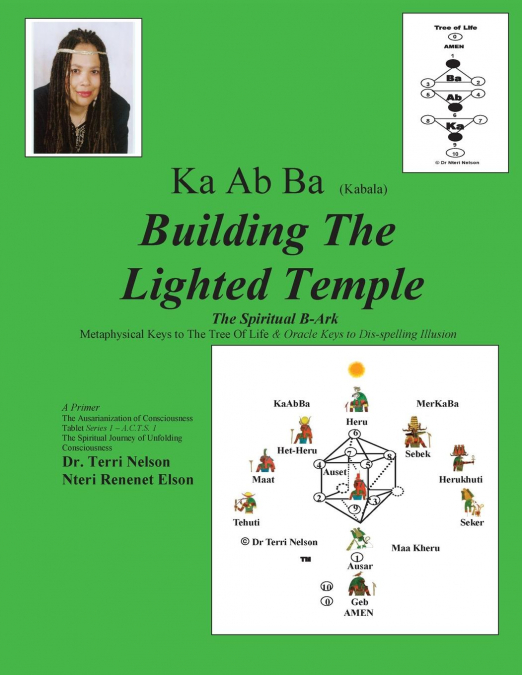
  • Ka Ab Ba Building The Lighted Temple
    Dr Terri R. Nelson / Dr Terri RNelson
    The book KaAbBa Building The Lighted Temple/Metaphysical Keys to the Tree of Life draws a circle that is inclusive of the Afrikan origin of the Ancient Kemetic/Egyptian wisdom. It reveals the undeniable root and link of Ancient Africa to all the religious systems that would develop worldwide. This book is explosive in its power to convey the meaning of KaAbBa, the Medu Neter  (...
    Disponible

    37,41 €

  • Technoethics and the Evolving Knowledge Society
    Rocci Luppicini
    Recently, there has been a major push to rediscover the ethical dimension of technology across the sciences, social sciences, and humanities. Technoethics and the Evolving Knowledge Society: Ethical Issues in Technological Design, Research, Development, and Innovation examines human processes and practices connected to technology embedded within social, political, and moral sph...
  • Kant
    Immanuel Kant
    Kant’s Groundwork of the Metaphysics of Morals is one of the most important works in modern moral philosophy. It belongs beside Plato, Aristotle, Machiavelli, and Hobbes. Here Kant sets out to articulate and defend the Categorical Imperative - the fundamental principle that underlies moral reasoning - and to lay the foundation for a comprehensive account of justice and human vi...
  • On the Duty of Civil Disobedience
    HENRY DAVID THOREAU
    Civil Disobedience argues that citizens should not permit their governments to overrule their consciences, and that they have a duty to avoid allowing their acquiescence to enable the government to make them the agents of injustice. Thoreau was motivated in part by his disgust with slavery and the Mexican-American War, but the sentiments he expresses here are just as pertinent ...
  • Beyond Good and Evil
    Friedrich Nietzsche
    Nietzsche, though primarily a philosopher, wrote widely on art, philology, history, religion, tragedy, culture, and science.  In 1886, at the height of his powers, he published Beyond Good and Evil.  Here he examines much of the best of human thought--dogmatic philosophy, Judeo-Christian morality, science and democracy – and finds it lacking.  Rejecting “slave-morality” he pres...
  • Beyond Good and Evil
    Friedrich Nietzsche
    Nietzsche, though primarily a philosopher, wrote widely on art, philology, history, religion, tragedy, culture, and science.  In 1886, at the height of his powers, he published Beyond Good and Evil.  Here he examines much of the best of human thought--dogmatic philosophy, Judeo-Christian morality, science and democracy – and finds it lacking.  Rejecting “slave-morality” he pres...
    Disponible

    9,99 €