

 Librería Samer Atenea
 Kálamo Books
 Librería Elías (Asturias)
 Librería Kolima (Madrid)
 Librería Proteo (Málaga)
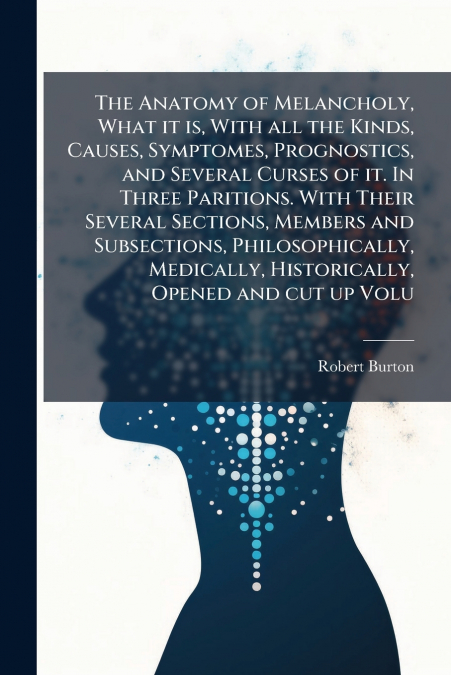
The Anatomy of Melancholy by Robert Burton, first published in 1621, is a comprehensive and encyclopedic exploration of the subject of melancholy, now understood as depression. This monumental work delves into the causes, symptoms, and potential cures for this pervasive condition, drawing upon a vast range of classical and contemporary sources in philosophy, medicine, and literature.Presented in three parts, Burton meticulously dissects the various facets of melancholy, examining its manifestations in individuals and society. More than a medical treatise, The Anatomy of Melancholy offers a rich tapestry of observations on human nature, social commentary, and personal reflection. Its enduring appeal lies in its insightful analysis of the human condition and its timeless relevance to the ongoing struggle with mental well-being. It remains a seminal work in the history of psychological thought and a fascinating read for anyone interested in the complexities of the human mind.This work has been selected by scholars as being culturally important, and is part of the knowledge base of civilization as we know it. This work was reproduced from the original artifact, and remains as true to the original work as possible. Therefore, you will see the original copyright references, library stamps (as most of these works have been housed in our most important libraries around the world), and other notations in the work.This work is in the public domain in the United States of America, and possibly other nations. Within the United States, you may freely copy and distribute this work, as no entity (individual or corporate) has a copyright on the body of the work.As a reproduction of a historical artifact, this work may contain missing or blurred pages, poor pictures, errant marks, etc. Scholars believe, and we concur, that this work is important enough to be preserved, reproduced, and made generally available to the public. We appreciate your support of the preservation process, and thank you for being an important part of keeping this knowledge alive and relevant.








