
The Amarna Letters

The Amarna Letters

Scriptural Research Institute

16,05 €
IVA incluido
Disponible
Editorial:
Digital Ink Productions
Año de edición:
2021
Materia
Historia antigua: hasta c. 500 e. c.
ISBN:
9781739069100
16,05 €
IVA incluido
Disponible

Selecciona una librería:

  • Librería Samer Atenea
  • Librería Aciertas (Toledo)
  • Kálamo Books
  • Librería Perelló (Valencia)
  • Librería Elías (Asturias)
  • Donde los libros
  • Librería Kolima (Madrid)
  • Librería Proteo (Málaga)

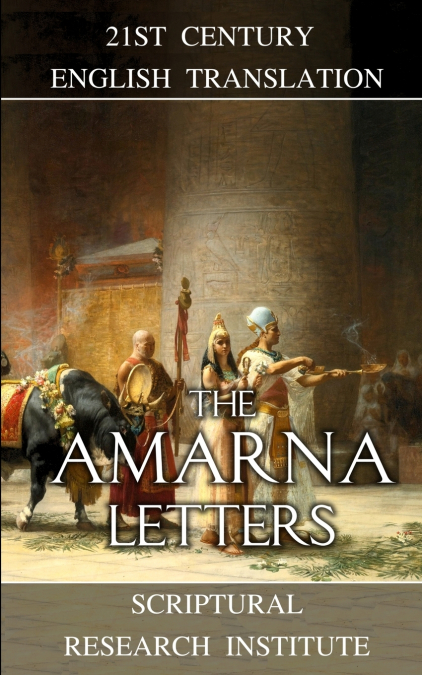
The Amarna Letters are a collection of clay tablets found in the ruins of El Amarna, Egypt, in the 1880s. The city of El Amarna was built by the Pharaoh Akhenaten, during his religious reforms in the 1340s BC, but was then abandoned after he died and Egypt reverted to worshiping the old gods. These letters provide a unique glimpse into a period of Egyptian history, that the Egyptians themselves attempted to erase. After Akhenaten’s heir Tutankhamen died, his successor Ay was only able to hold the throne for a few years before Horemheb seized it, and attempted to reunited the Egyptians by erasing all records of Akhenaten’s reforms, which included erasing Akhenaten’s name from almost every record in Egypt. By this period, El Amarna appears to have already been mostly abandoned, and therefore Egyptologists were able to reconstruct the strange story of Akhenaten’s reign, in the middle of the New Kingdom era.The Amarna letters were recovered from the royal archives in El Amarna, where they appear to have been archived after having been translated for the royal court. The letters are inscribed on clay tablets in Cuneiform, the dominant form of writing in Mesopotamia, Canaan, and the neighboring cultures in Anatolia and Cyprus at the time. The shape of the Cuneiform logograms used are Akkadian, the parent form of the later Neo-Babylonian, Neo-Assyrian, and Ugaritic forms of Cuneiform, however, the language used in the Letters is not pure Akkadian. The Letters are between various members of the Egyptian royal court, and many different cities and nations across the Middle East, including Babylon, Assyria, Mitanni, and Cyprus, and therefore the language within the Letters is not consistent. Within the letters from Canaanite cities, all of which were subject to Egypt at the time, several transliterated names are also used, which appears to be a direct precursor to the later development of Ugaritic Cuneiform by 1200 BC, which was an abjad similar to the Canaanite script that was developed by 1000 BC, however, used Cuneiform logograms instead of alphabet-like letters.The surviving letters were mostly about trade and diplomacy, however, do include a great deal of information about what was happening in the Middle East at the time. In particular, they demonstrate how limited Egypt’s actual control of its Canaanite holdings were, where the governors of cities were constantly requesting military help to defend themselves against each other, the marauding Habirus, and the Hittite-backed Amorites in northern Canaan. The Amarna Letters were written during the mid-1330s BC, during the reigns of the Pharaohs Amenhotep III and Akhenaten, although it is not always clear when in their respective reigns the letters were written, or even which pharaoh was on the throne at the time.
Artículos relacionados

  • Key to Countering Islamic Fundamentalism
    Maryam Rajavi
    Testimony before U.S. House Foreign Affairs Committee's subcommittee on Terrorism, non-Proliferation, and Trade discussing ISIS and Islamic fundamentalism. The book contains Maryam Rajavi's full testimony as well as the question and answer by representatives. During the hearing, Maryam Rajavi who is the president-elect of Iran's parliament-in-exile, the National Council of Resi...
    Disponible

    13,94 €

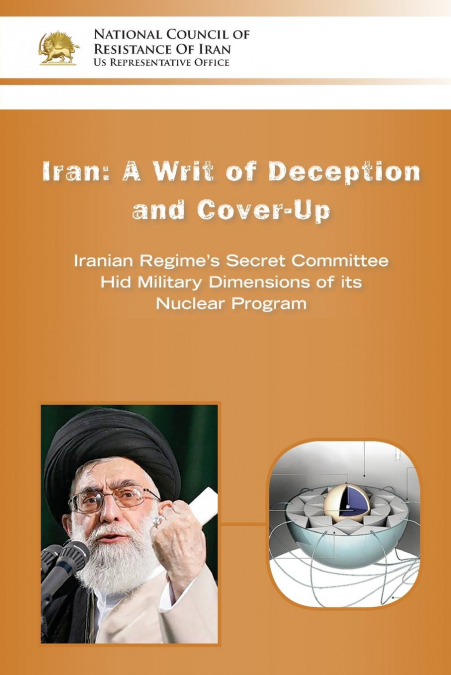
  • IRAN-A Writ of Deception and Cover-up
    NCRI- U.S. Representative Office / NCRI- U.SRepresentative Office
    Based on reliable information obtained by the Mujahedin-e Khalq (MEK) network inside Iran, a top-secret committee is in charge of drafting the answers to the International Atomic Energy Agency (IAEA) regarding the Possible Military Dimensions (PMD) of Tehran's nuclear program. Top officials from the Islamic Revolutionary Guards Corps (IRGC) and the Ministry of Defense Armed...
    Disponible

    5,44 €

  • Sebastopol to Dagenham
    Thomas Basil Fanshawe
    'Sebastopol appears to be a succession of forts which the Russians are strengthening every day. A great number of the men are sick of the whole concern. No one looks forward to another winter out here with any degree of satisfaction'.Captain Thomas Basil Fanshawe served with the 33rd (Duke of Wellington's) Regiment at Sebastopol during the Crimean War. The letters h...
    Disponible

    23,05 €

  • THEN AND NOW
    Hussein Shabka
    The rise and fall of civilizations has been a fact of history since before it was recorded. It is a normal process. So what is the particular significance of Egypt’s descent from a wealthy, organized, sophisticated society into the chaotic milieu that reigns today? Perhaps it relates to the nature of the yawning gap that exists between that sophistication that endured for more ...
    Disponible

    33,86 €

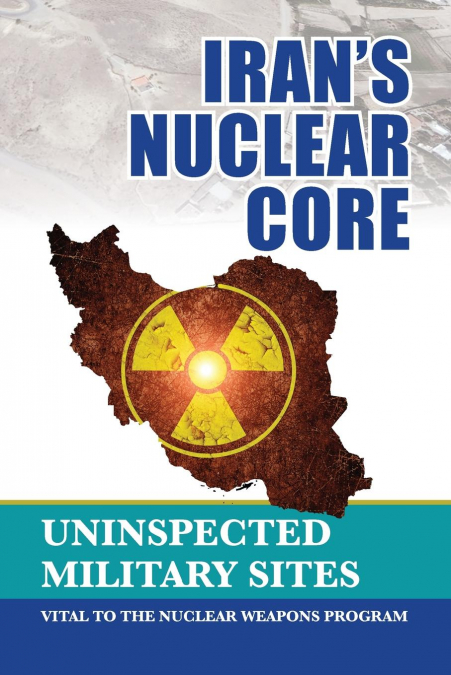
  • Iran’s Nuclear Core
    NCRI- U.S. Representative Office / NCRI- U.SRepresentative Office
    Iran's Nuclear Core details how the nuclear weapons program is at the heart, and not in parallel, to the civil nuclear program of Iran. The program is run by the Islamic Revolutionary Guards Corp (IRGC) since the beginning, and the main nuclear sites and nuclear research facilities have been hidden from the eyes of the United Nations nuclear watchdog.The manuscript details ...
    Disponible

    23,24 €

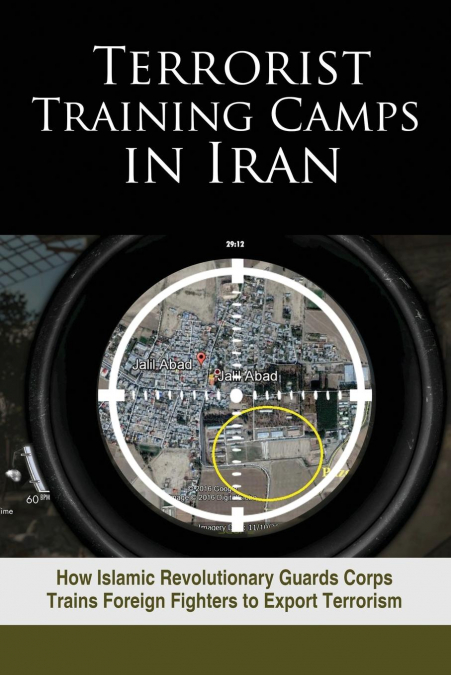
  • Terrorist Training Camps in Iran
    NCRI- U.S. Representative Office / NCRI- U.SRepresentative Office
    The book details how  Islamic Revolutionary Guards Corps trains foreign fighters in 15 various camps in Iran to export terrorism. The IRGC has created a large directorate within its extraterritorial arm, the Quds Force, in order to expand its training of foreign mercenaries as part of the strategy to step up its meddling abroad in Syria, Iraq, Yemen, Bahrain, Afghanistan and el...
    Disponible

    23,24 €

Otros libros del autor

  • Septuagint - Hosea and the Dodeka
    Scriptural Research Institute
    In the mid 3rd century BCE, King Ptolemy II Philadelphus of Egypt ordered a translation of the ancient Israelite scriptures for the Library of Alexandria, which resulted in the creation of the Septuagint. The Dodeka would eventually be added to the Septuagint as the Book of Dodeka circa 140 BCE, and then much later be divided into its twelve constituent books by the early Chris...
    Disponible

    23,86 €

  • Memories of the New Kingdom
    Scriptural Research Institute
    The New Kingdom era of Egyptian history emerged from the darkness of the Second Intermediate Period, when the Theban dynasty drove out the Hyksos from Egypt, and went on the conquer Canaan, and Nubia. The Hyksos dynasty appears to have been largely as a result of the Minoan eruption in Greece, which darkened the sky of Egypt and blanketed northern Egypt with up to 2 meters (6 f...
    Disponible

    16,26 €

  • Septuagint - Numbers
    Scriptural Research Institute
    Since the 1800s, the majority of Biblical scholars have interpreted the books of Leviticus and Numbers as a later addition to the original laws of Moses found in Exodus, with Deuteronomy being an even later addition during the Babylonian or Persian eras. Cosmic Genesis is either considered to be part of Moses’ original work or a later addition in the Persian era, depending on t...
    Disponible

    19,41 €

  • Septuagint - Exodus
    Scriptural Research Institute
    Few books have generated as many debates about geographical features as the book of Exodus. It describes in detail a series of wonders that the Lord God of the Israelites, performed to cause them to be freed from their slavery in the country, and then their trek across the wilderness to a mountain on which God descended and gave them the Torah. The wonders themselves have been ...
    Disponible

    21,60 €

  • Septuagint - Cosmic Genesis
    Scriptural Research Institute
    In the mid-3rd century BC, King Ptolemy II Philadelphus of Egypt ordered a translation of the ancient Israelite scriptures for the Library of Alexandria, which resulted in the creation of the Septuagint. The original version, published circa 250 BC, only included the Torah, or in Greek terms, the Pentateuch. The Torah is composed of the five books traditionally credited to Mose...
    Disponible

    22,88 €

  • Septuagint - Wisdom of Joshua ben Sira and Odes
    Scriptural Research Institute
    The Wisdom of Joshua ben Sira was an independently translated early Jewish collection of wisdom proverbs, translated in 132 BC according to the prologue by the author, which was added the Septuagint.The translator claimed to be the grandson of Joshua ben Sira, who had moved to Egypt, and found that there were no books of minor wisdom among the Septuagint, and so translated his ...
    Disponible

    18,27 €