 Librería Samer Atenea
 Kálamo Books
 Librería Elías (Asturias)
 Librería Kolima (Madrid)
 Librería Proteo (Málaga)
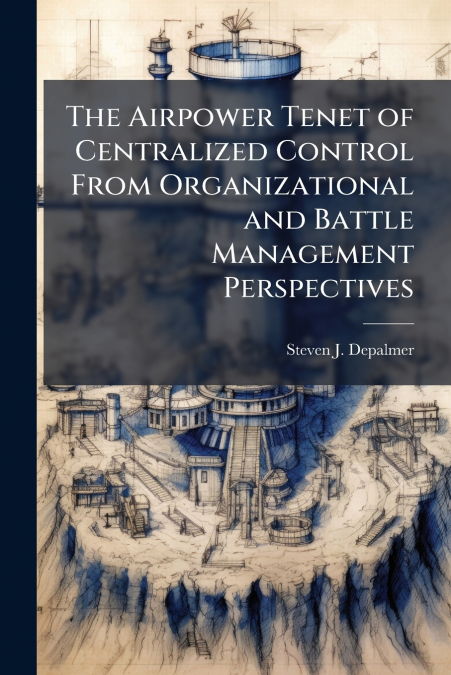
This study examines the airpower tenet of centralized control, which US Air Force doctrine has traditionally upheld as the foundation for organizing, planning, and executing joint air operations. The tenet is examined from both an organizational and a battle management aspect. The organizational aspect refers to the command and procedural arrangements that permit a Joint Forces Air Component Commander (JFACC) to achieve unity of air effort. It is the JFACC’s span of control. The battle management aspect refers to the JFACC’s actions in the process of planning and executing theater air operations. It is the JFACC’s level of control. Most doctrinal publications that mention JFACC operations focus on the organizational aspect, and not the battle management aspect of the tenet of centralized control.first covers the evolution of the air component commander’s span of control, which prior to the Goldwater-Nichols Act of 1986 rarely permitted unity of air effort. Next it examines the JFACC levels of control exercised in Operations DESERT STORM and DELIBERATE FORCE and looks at six factors that either instigated or facilitated these different levels of control.This work has been selected by scholars as being culturally important, and is part of the knowledge base of civilization as we know it. This work was reproduced from the original artifact, and remains as true to the original work as possible. Therefore, you will see the original copyright references, library stamps (as most of these works have been housed in our most important libraries around the world), and other notations in the work.This work is in the public domain in the United States of America, and possibly other nations. Within the United States, you may freely copy and distribute this work, as no entity (individual or corporate) has a copyright on the body of the work.As a reproduction of a historical artifact, this work may contain missing or blurred pages, poor pictures, errant marks, etc. Scholars believe, and we concur, that this work is important enough to be preserved, reproduced, and made generally available to the public. We appreciate your support of the preservation process, and thank you for being an important part of keeping this knowledge alive and relevant.