 Librería Samer Atenea
 Kálamo Books
 Librería Elías (Asturias)
 Librería Kolima (Madrid)
 Librería Proteo (Málaga)
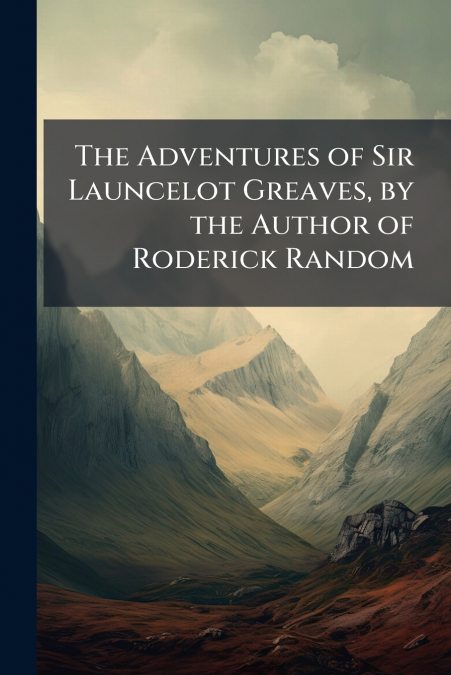
'The Adventures of Sir Launcelot Greaves' is a satirical novel by Tobias Smollett, first published in 1762. The story follows Sir Launcelot Greaves, a wealthy and eccentric young man who, inspired by the tales of King Arthur and the Knights of the Round Table, decides to roam the English countryside righting wrongs and dispensing justice. Accompanied by his loyal but often bewildered servant, Timothy Crabshaw, Sir Launcelot encounters a colorful cast of characters and becomes embroiled in a series of humorous and often absurd adventures. Smollett’s novel is a witty and insightful commentary on the social issues and literary conventions of 18th-century England. Through the character of Sir Launcelot, Smollett satirizes the romantic ideals of chivalry and explores the conflict between the heroic past and the more pragmatic present. The novel’s episodic structure and picaresque elements contribute to its enduring appeal, offering readers a lively and engaging glimpse into the world of Georgian England.This work has been selected by scholars as being culturally important, and is part of the knowledge base of civilization as we know it. This work was reproduced from the original artifact, and remains as true to the original work as possible. Therefore, you will see the original copyright references, library stamps (as most of these works have been housed in our most important libraries around the world), and other notations in the work.This work is in the public domain in the United States of America, and possibly other nations. Within the United States, you may freely copy and distribute this work, as no entity (individual or corporate) has a copyright on the body of the work.As a reproduction of a historical artifact, this work may contain missing or blurred pages, poor pictures, errant marks, etc. Scholars believe, and we concur, that this work is important enough to be preserved, reproduced, and made generally available to the public. We appreciate your support of the preservation process, and thank you for being an important part of keeping this knowledge alive and relevant.