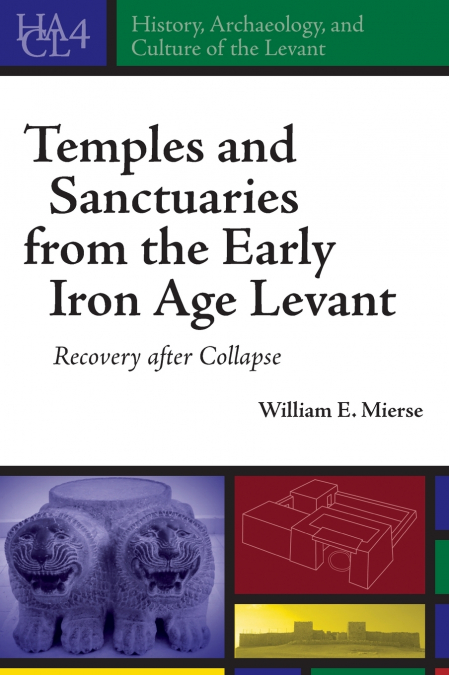
Temples and Sanctuaries from the Early Iron Age Levant

Temples and Sanctuaries from the Early Iron Age Levant

William E. Mierse / William Mierse

95,02 €
IVA incluido
Consulta disponibilidad
Editorial:
Penn State University Press
Año de edición:
2012
Materia
Historia antigua: hasta c. 500 e. c.
ISBN:
9781575062464

Selecciona una librería:

  • Librería Samer Atenea
  • Librería Aciertas (Toledo)
  • Kálamo Books
  • Librería Perelló (Valencia)
  • Librería Elías (Asturias)
  • Donde los libros
  • Librería Kolima (Madrid)
  • Librería Proteo (Málaga)

The vision for this impressive work on temple architecture in the Levant grew out of the author’s work on Roman temple designs on the Iberian Peninsula and continual references to Semitic influences on the designs of sanctuaries both on the Peninsula and in North Africa. It was assumed that Phoenician colonization had brought with it the full flowering of Levantine architectural forms. As Mierse began to search for relevant material on the ancient Levant, however, he discovered that no overall synthesis had ever been written, and it was virtually impossible to recognize and isolate Semitic elements in architectural forms. This book addresses this need.The analysis presented here is comparative and follows the methodology most commonly employed by architectural historians throughout the twentieth century. It is a formalist approach and permits the isolation of lines of continuity and the detection of discontinuity. While Mierse relies heavily on this traditional method, he also introduces some approaches from the postprocessual school of archaeology in its attempts to discern an appropriate way for cult to be investigated by archaeology.The sanctuaries that this book presents were erected between the end of the Late Bronze Age (conventionally assigned the date of 1200 B.C.E.) and the annexation of the Levantine region into the Assyrian Empire (when Mesopotamia again became highly influential in the region). The topic concerns temples that were produced during the period when the Levant was its own entity and politically independent of Egypt, Mesopotamia, or Anatolia. During this period, the designs chosen for inclusion in this book must reflect local choices rather than resulting from imposed outside concepts.The architecture that emerged in the wake of the downfall of the Late Bronze Age and the subsequent reemergence of social cohesiveness manifested significant changes in form and function. The five centuries under review reveal exciting developments in sacred architecture and show that, although the architects of the first millennium B.C.E. maintained important lines of continuity with the developments of the previous two millennia, they were also capable of creating novel forms to meet new needs.Included in this fascinating volume are 90 pages of photos, drawings, floor plans, and maps.
Artículos relacionados

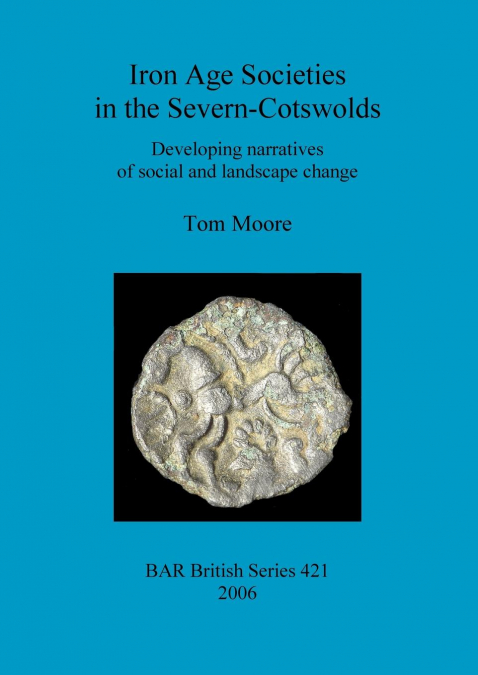
  • Iron Age Societies in the Severn-Cotswolds
    Tom Moore
    The central theme of this study is an examination of the processes of change in Iron Age social organisation and identity on a regional scale using the Severn-Cotswolds area in England as a case study. It aims to provide a coherent narrative of the period in the region based on the wealth of current data now available, providing a basic storyboard against which future studies c...
    Disponible

    144,57 €

  • Somewhere Beyond The Sea Les îles bretonnes (France)
    The Seminar on the Archaeology of Western France, which focused on the islands of Brittany, was held on 1 April 2014 at the University of Rennes 1. The desire to organize this seminar arose spontaneously from the dynamism which currently animates archaeological research on island spaces of the western seaboard of France. Indeed, the seminar took place during a pivotal period of...
    Disponible

    86,11 €

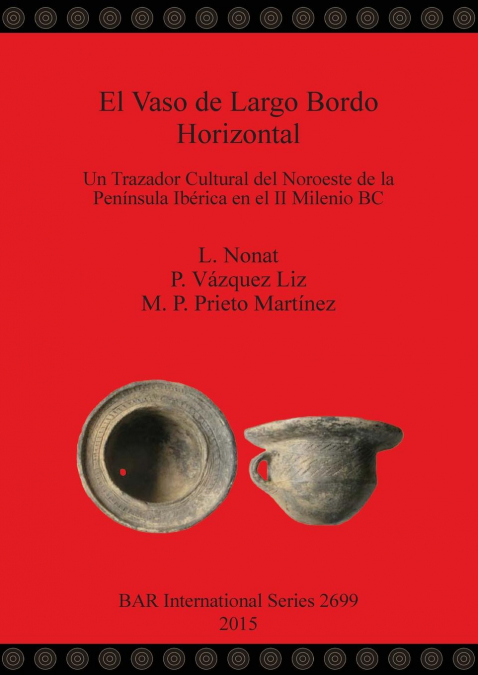
  • El Vaso de Largo Bordo Horizontal
    L. Nonat / LNonat / M. P. Prieto Martínez / MPPrieto Martínez / P. Vázquez Liz / PVázquez Liz
    In this paper the authors study a specific type of pottery from the northwest Iberian Peninsula, known as the Wide Horizontal Rim (WHR) vessel. One of its distinctive aspects is precisely the fact that it is exclusively found in this region, which now comprises the Spanish region of Galicia and northern Portugal, as far south as the River Duero. This type of pottery, of which t...
    Disponible

    115,71 €

  • A Connecting Sea
    Stašo Forenbaher
    This book includes papers stemming from a session at the EAA conference held in Zadar in September 2007.                          ...
    Disponible

    79,97 €

  • The Roman Pottery Production Site at Wickham Barn, Chiltington, East Sussex
    Chris Butler / Malcolm Lyne
    The excavations undertaken at Chiltington in East Sussex revealed two Roman pottery kilns, as well as remains from prehistory and from medieval period.The kilns are well documented, and all the finds were examined and catalogued. Three phases were identified. The pottery produced on the site indicate a strong New Forest influence. ...
    Disponible

    55,62 €

  • Kurgans, Ritual Sites, and Settlements
    Edited by: Jeannine Davis-Kimball, Eileen M. Murphy, Ludmila Koryakova and Leonid T. YablonskyThis richly illustrated volume adds immensely to the small but growing corpus of Eurasian Archaeology published in the English language. Comprised of thirty articles, the authors have focused on the Bronze Age, continuing to include the first millennium BC Early Iron Age, with a termin...
    Disponible

    158,26 €