
Temples and Concepts in Ancient Egyptian Architecture

Temples and Concepts in Ancient Egyptian Architecture

RYAN MOORHEN

21,42 €
IVA incluido
Disponible
Editorial:
DTTV PUBLICATIONS
Año de edición:
2022
Materia
Historia antigua: hasta c. 500 e. c.
ISBN:
9798201174606
21,42 €
IVA incluido
Disponible

Selecciona una librería:

  • Librería Samer Atenea
  • Librería Aciertas (Toledo)
  • Kálamo Books
  • Librería Perelló (Valencia)
  • Librería Elías (Asturias)
  • Donde los libros
  • Librería Kolima (Madrid)
  • Librería Proteo (Málaga)

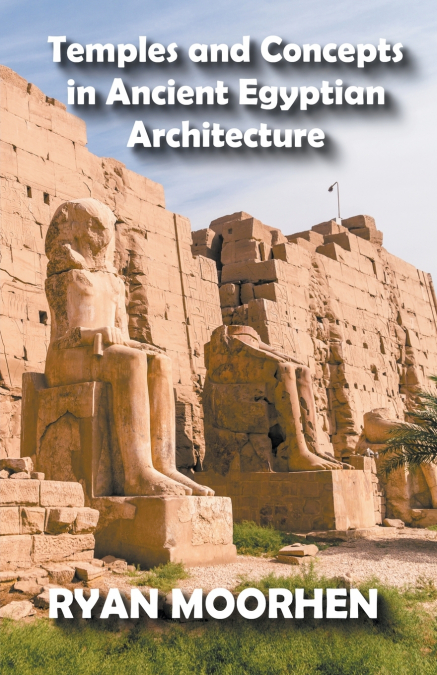
The earliest temples were simple huts made of plaited wickerwork, used as shrines for the symbols of God; the altar was nothing more than a mat made of reeds. In the earliest temples, a wall surrounds the name-stela, later covered with a roof. Temple construction became increasingly complex with the advent of the New Empire, although the plan remained virtually unchanged from the earliest to the latest. A sanctuary in the simplest form consisted of a surrounding wall, a pylon or entry gateway with flanking towers, before which two colossal statues of the king, two obelisks, and finally, the innermost sanctuary called the naos, which contained the divine symbols. Various additions included three pylons divided by three avenues of sphinxes, columned courts, and a hypostyle or columned hall. These Egyptian kings increased the size of their predecessors’ buildings in this way.A vast wall surrounded these temples, blocking all noise and bustle of the narrow streets of the crowded cities. On each side of the broad road that led up to the great pylon, the principal gateway were rows of lions, rams, or other sacred animals guarding the entrance. Two obelisks stood in front of the gateway and a statue of the king who founded the temple as protector. The door was flanked by two high, square towers sloping inward on either side. They were initially designed for defensive purposes, so the passage through the pylon could be successfully barred against all foes while sorties could be made from postern gates in the wall. Towers were fitted with sockets at the foot where tall masts were mounted. The gaily colored streamers waved in front of the great doors to keep away all evil, just as the Winged Disk, the symbol of the sun, did. These were usually made of wood, a valuable material in Egypt, and swathed in gold. Reliefs and inscriptions painted on the temple’s outer walls depicted the deeds of the founder since the temple was as much a personal memorial as it was a shrine to the tutelary deity. An extraordinary court surrounded the pylon, usually only colonnaded on either side, but columns were running down the middle in more prominent temples, such as Karnak. Many citizens had the right to attend the great festivals held here. The hypostyle was entered by a low doorway, the windows close to the roof, so the light was dim, whereas the sanctuary was utterly and profoundly dark.
Artículos relacionados

  • Iron Age Societies in the Severn-Cotswolds
    Tom Moore
    The central theme of this study is an examination of the processes of change in Iron Age social organisation and identity on a regional scale using the Severn-Cotswolds area in England as a case study. It aims to provide a coherent narrative of the period in the region based on the wealth of current data now available, providing a basic storyboard against which future studies c...
    Disponible

    144,57 €

  • Somewhere Beyond The Sea Les îles bretonnes (France)
    The Seminar on the Archaeology of Western France, which focused on the islands of Brittany, was held on 1 April 2014 at the University of Rennes 1. The desire to organize this seminar arose spontaneously from the dynamism which currently animates archaeological research on island spaces of the western seaboard of France. Indeed, the seminar took place during a pivotal period of...
    Disponible

    86,11 €

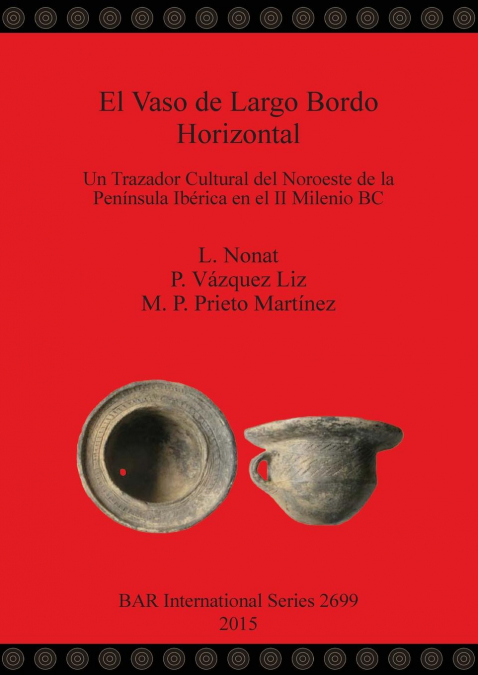
  • El Vaso de Largo Bordo Horizontal
    L. Nonat / LNonat / M. P. Prieto Martínez / MPPrieto Martínez / P. Vázquez Liz / PVázquez Liz
    In this paper the authors study a specific type of pottery from the northwest Iberian Peninsula, known as the Wide Horizontal Rim (WHR) vessel. One of its distinctive aspects is precisely the fact that it is exclusively found in this region, which now comprises the Spanish region of Galicia and northern Portugal, as far south as the River Duero. This type of pottery, of which t...
    Disponible

    115,71 €

  • A Connecting Sea
    Stašo Forenbaher
    This book includes papers stemming from a session at the EAA conference held in Zadar in September 2007.                          ...
    Disponible

    79,97 €

  • The Roman Pottery Production Site at Wickham Barn, Chiltington, East Sussex
    Chris Butler / Malcolm Lyne
    The excavations undertaken at Chiltington in East Sussex revealed two Roman pottery kilns, as well as remains from prehistory and from medieval period.The kilns are well documented, and all the finds were examined and catalogued. Three phases were identified. The pottery produced on the site indicate a strong New Forest influence. ...
    Disponible

    55,62 €

  • Kurgans, Ritual Sites, and Settlements
    Edited by: Jeannine Davis-Kimball, Eileen M. Murphy, Ludmila Koryakova and Leonid T. YablonskyThis richly illustrated volume adds immensely to the small but growing corpus of Eurasian Archaeology published in the English language. Comprised of thirty articles, the authors have focused on the Bronze Age, continuing to include the first millennium BC Early Iron Age, with a termin...
    Disponible

    158,26 €

Otros libros del autor

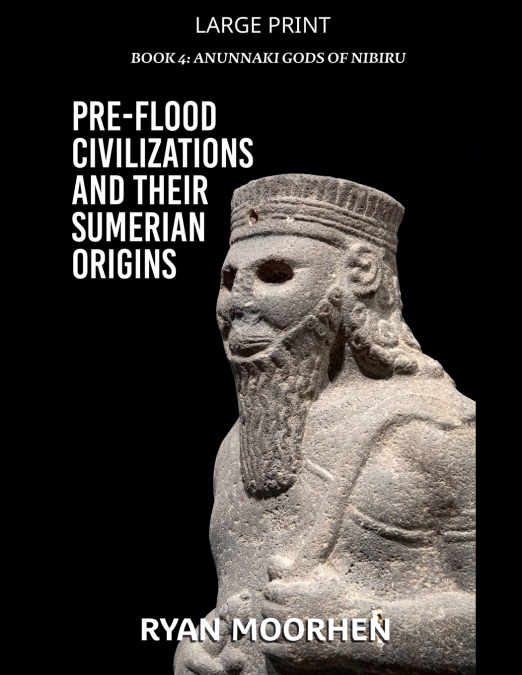
  • Pre-Flood Civilizations and Their Sumerian Origins
    RYAN MOORHEN
    Book 4: Pre-Flood Civilizations and the Sumerian Origins plunges readers deep into the oldest myths and memories of humanity, where history, theology, and cosmic mathematics intertwine. At its heart stands the Sumerian King List, a document that recounts the reigns of antediluvian kings who ruled not for decades but for tens of thousands of years. Their extraordinary longevity,...
    Disponible

    27,46 €

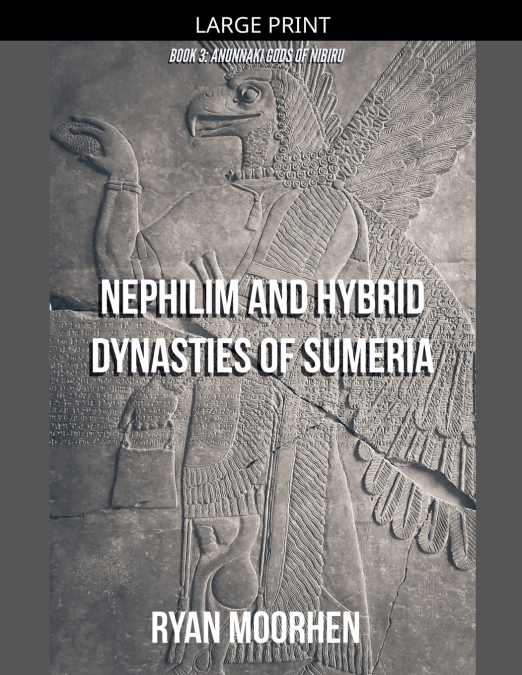
  • Nephilim and Hybrid Dynasties of Sumeria
    RYAN MOORHEN
    For millennia, a shadow has loomed across the world’s oldest stories-a shadow of giants, fallen angels, and hybrid rulers who blurred the boundary between heaven and earth. From the cryptic verses of Genesis 6 to the sweeping visions of the Book of Enoch, from Mesopotamia’s semi-divine kings to Egypt’s god-born pharaohs, the memory of the Nephilim lingers like a forbidden truth...
    Disponible

    26,51 €

  • Pre-Flood Civilizations and Their Sumerian Origins
    RYAN MOORHEN
    Book 4: Pre-Flood Civilizations and the Sumerian Origins plunges readers deep into the oldest myths and memories of humanity, where history, theology, and cosmic mathematics intertwine. At its heart stands the Sumerian King List, a document that recounts the reigns of antediluvian kings who ruled not for decades but for tens of thousands of years. Their extraordinary longevity,...
    Disponible

    38,73 €

  • Nephilim and Hybrid Dynasties of Sumeria
    RYAN MOORHEN
    For millennia, a shadow has loomed across the world’s oldest stories-a shadow of giants, fallen angels, and hybrid rulers who blurred the boundary between heaven and earth. From the cryptic verses of Genesis 6 to the sweeping visions of the Book of Enoch, from Mesopotamia’s semi-divine kings to Egypt’s god-born pharaohs, the memory of the Nephilim lingers like a forbidden truth...
    Disponible

    35,07 €

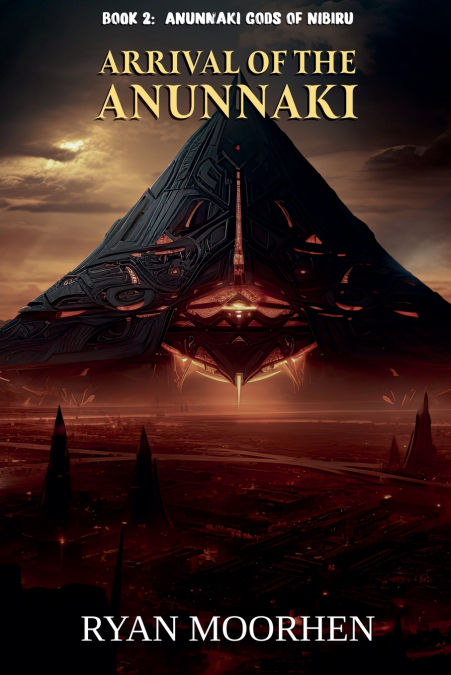
  • Arrival of the Anunnaki
    RYAN MOORHEN
    From the ruins of Sumer and Babylon to the echoes of Egypt, India, and Mesoamerica, ancient civilizations left behind more than broken temples and forgotten tablets-they left a memory of gods who descended from the stars. Known as the Anunnaki, these lords of heaven and earth appear in hymns, myths, and king lists not as distant abstractions, but as radiant beings who walked am...
    Disponible

    30,57 €

  • Arrival of the Anunnaki
    RYAN MOORHEN
    From the ruins of Sumer and Babylon to the echoes of Egypt, India, and Mesoamerica, ancient civilizations left behind more than broken temples and forgotten tablets-they left a memory of gods who descended from the stars. Known as the Anunnaki, these lords of heaven and earth appear in hymns, myths, and king lists not as distant abstractions, but as radiant beings who walked am...
    Disponible

    43,65 €