

Inicio > > Redes y comunicaciones informáticas > Technological Aspects of Virtual Organizations
Technological Aspects of Virtual Organizations

Technological Aspects of Virtual Organizations

Alea M. Fairchild

133,11 €
IVA incluido
Consulta disponibilidad
Editorial:
Springer Nature B.V.
Año de edición:
2004
Materia
Redes y comunicaciones informáticas
ISBN:
9781402017322

Selecciona una librería:

  • Librería Samer Atenea
  • Librería Aciertas (Toledo)
  • Kálamo Books
  • Librería Perelló (Valencia)
  • Librería Elías (Asturias)
  • Donde los libros
  • Librería Kolima (Madrid)
  • Librería Proteo (Málaga)

This textbook was inspired by an undergraduate elective course given on virtual organizations and technology. The instructor could not find a suitable text that covered both the organizational and technological aspects including examples based on today’s industry. Other books were either too strategic or too technical for an audience of undergraduate business and technology students who were to use the book. But why was that the case? For the same reason that business and IT people in industry tended not to speak the same 'language': indeed, the integration of technology into business strategy has been a recent occurrence, and traditional strategy issues have been decided too high in the organizational structure while technology was too detailed in tactical implementation. With the Internet and the advent of e-commerce, m-commerce, and c-commerce (and the other letters of the alphabet soon to follow), business and technology finally started to become closer, and the interest in technology as an enabler for strategic business decision-making evolved into a mainstream concept. How are we defining a virtual organization? Most definitions of the concept of virtual organizations start with stating that it is 'a network between organisations or individuals . . . '. The Oxford Concise Dictionary defines ’virtual’ as: 'that is such/or practical purposes, though not in name or according to a strict definition. ' An organization may be thought of as a number of individuals systematically united for some end or work.

Artículos relacionados

  • Next Generation Search Engines
    Recent technological progress in computer science, Web technologies, and the constantly evolving information available on the Internet has drastically changed the landscape of search and access to information. Current search engines employ advanced techniques involving machine learning, social networks, and semantic analysis. Next Generation Search Engines: Advanced Models for ...
  • Collaboration and the Semantic Web
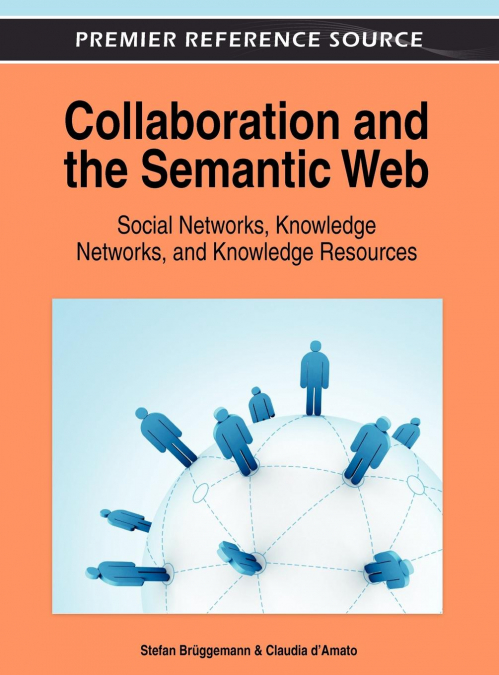
    Collaborative working has been increasingly viewed as a good practice for organizations to achieve efficiency. Organizations that work well in collaboration may have access to new sources of funding, deliver new, improved, and more integrated services, make savings on shared costs, and exchange knowledge, information and expertise. Collaboration and the Semantic Web: Social Net...
  • Resource Allocation in Next-Generation Broadband Wireless Access Networks
    With the growing popularity of wireless networks in recent years, the need to increase network capacity and efficiency has become more prominent in society. This has led to the development and implementation of heterogeneous networks. Resource Allocation in Next-Generation Broadband Wireless Access Networks is a comprehensive reference source for the latest scholarly research o...
  • Advanced Topics in Information Technology Standards and Standardization Research, Volume 1
    Kai Jakobs
    ...
  • Data Warehouses and OLAP
    ...
  • Selected Readings on Database Technologies and Applications
    Terry Halpin
    Education and research in the field of database technology can prove problematic without the proper resources and tools on the most relevant issues, trends, and advancements. Selected Readings on Database Technologies and Applications supplements course instruction and student research with quality chapters focused on key issues concerning the development, design, and analysis ...

Otros libros del autor

  • Technological Aspects of Virtual Organizations
    Alea M. Fairchild
    This textbook was inspired by an undergraduate elective course given on virtual organizations and technology. The instructor could not find a suitable text that covered both the organizational and technological aspects including examples based on today’s industry. Other books were either too strategic or too technical for an audience of undergraduate ...
    Disponible

    134,44 €