 Librería Samer Atenea
 Kálamo Books
 Librería Elías (Asturias)
 Librería Kolima (Madrid)
 Librería Proteo (Málaga)
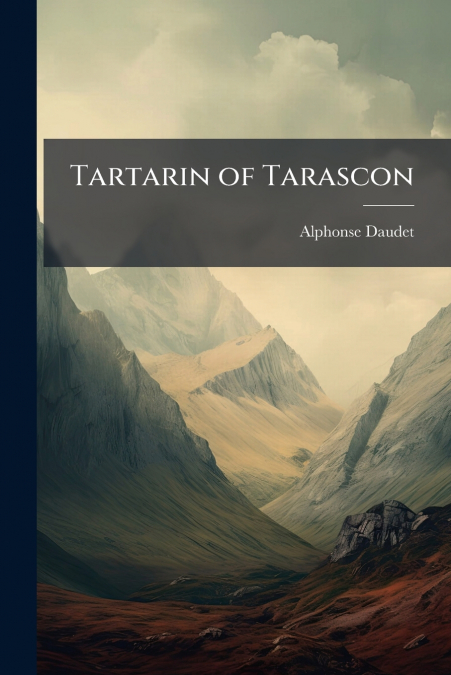
'Tartarin of Tarascon' is a humorous and satirical novel by Alphonse Daudet, first published in 1872. The book follows the adventures of Tartarin, a middle-aged bourgeois in the small town of Tarascon, France, who is obsessed with hunting lions in Algeria. Despite never having left his hometown or hunted anything more dangerous than a capon, Tartarin’s vivid imagination and tall tales make him a local hero. Driven by his romantic ideals and a desire for adventure, Tartarin eventually sets off for Algeria, armed with an arsenal of weapons and a head full of exaggerated expectations. His journey is filled with comical mishaps and encounters, as he blunders his way through the unfamiliar landscape, mistaking donkeys for lions and finding himself in a series of absurd situations. Daudet’s witty prose and sharp observations create a memorable character and a delightful satire of provincial life and romantic delusions. 'Tartarin of Tarascon' remains a beloved classic of French literature, celebrated for its humor and insightful commentary on human nature.This work has been selected by scholars as being culturally important, and is part of the knowledge base of civilization as we know it. This work was reproduced from the original artifact, and remains as true to the original work as possible. Therefore, you will see the original copyright references, library stamps (as most of these works have been housed in our most important libraries around the world), and other notations in the work.This work is in the public domain in the United States of America, and possibly other nations. Within the United States, you may freely copy and distribute this work, as no entity (individual or corporate) has a copyright on the body of the work.As a reproduction of a historical artifact, this work may contain missing or blurred pages, poor pictures, errant marks, etc. Scholars believe, and we concur, that this work is important enough to be preserved, reproduced, and made generally available to the public. We appreciate your support of the preservation process, and thank you for being an important part of keeping this knowledge alive and relevant.