Taming the Megabanks

Taming the Megabanks

Arthur E. Wilmarth Jr

58,56 €
IVA incluido
Consulta disponibilidad
Editorial:
Oxford University Press
Año de edición:
2020
Materia
Banca
ISBN:
9780190260705

Selecciona una librería:

  • Librería Samer Atenea
  • Librería Aciertas (Toledo)
  • Kálamo Books
  • Librería Perelló (Valencia)
  • Librería Elías (Asturias)
  • Donde los libros
  • Librería Kolima (Madrid)
  • Librería Proteo (Málaga)

Banks were allowed to enter securities markets and become universal banks during two periods in the past century - the 1920s and the late 1990s. Both times, universal banks made high-risk loans and packaged them into securities that were sold as safe investments to poorly-informed investors. Both times, universal banks promoted unsustainable booms that led to destructive busts - the Great Depression of the early 1930s and the Global Financial Crisis of 2007-09. Both times, governments were forced to arrange costly bailouts of universal banks. Congress passed the Glass-Steagall Act of 1933 in response to the Great Depression. The Act broke up universal banks and established a decentralized financial system composed of three separate and independent sectors: banking, securities, and insurance. That system was stable and successful for over four decades until the big-bank lobby persuaded regulators to open loopholes in Glass-Steagall during the 1980s and convinced Congress to repeal it in 1999. Congress did not adopt a new Glass-Steagall Act after the Global Financial Crisis. Instead, Congress passed the Dodd-Frank Act. Dodd-Frank’s highly technical reforms tried to make banks safer but left in place a dangerous financial system dominated by universal banks. Universal banks continue to pose unacceptable risks to financial stability and economic and social welfare. They exert far too much influence over our political and regulatory systems because of their immense size and their undeniable 'too-big-to-fail' status. In Taming the Megabanks, Arthur Wilmarth argues that we must again separate banks from securities markets to avoid another devastating financial crisis and ensure that our financial system serves Main Street business firms and consumers instead of Wall Street bankers and speculators. Wilmarth’s comprehensive and detailed analysis demonstrates that a new Glass-Steagall Act would make our financial system much more stable and less likely to produce boom-and-bust cycles. Giant universal banks would no longer dominate our financial system or receive enormous subsidies. A more decentralized and competitive financial system would encourage banks and securities firms to fulfill their proper roles as servants - not masters - of Main Street businesses and consumers.
Artículos relacionados

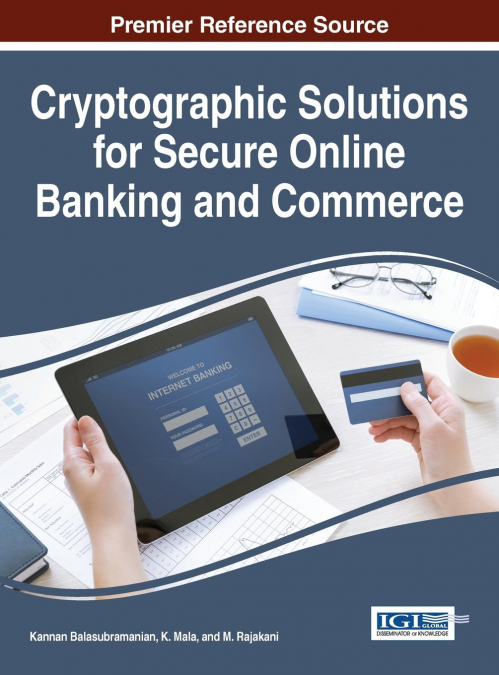
  • Cryptographic Solutions for Secure Online Banking and Commerce
    Technological advancements have led to many beneficial developments in the electronic world, especially in relation to online commerce. Unfortunately, these advancements have also created a prime hunting ground for hackers to obtain financially sensitive information and deterring these breaches in security has been difficult. Cryptographic Solutions for Secure Online Banking an...
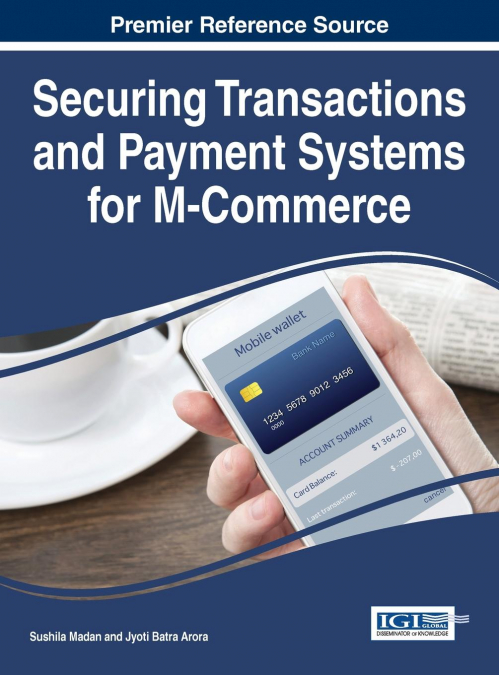
  • Securing Transactions and Payment Systems for M-Commerce
    Mobile commerce, or M-commerce, is booming as many utilize their mobile devices to complete transactions ranging from personal shopping to managing and organizing business operations. The emergence of new technologies such as money sharing and transactional applications have revolutionized the way we do business. Wholeheartedly adopted by both the business world and consumers, ...
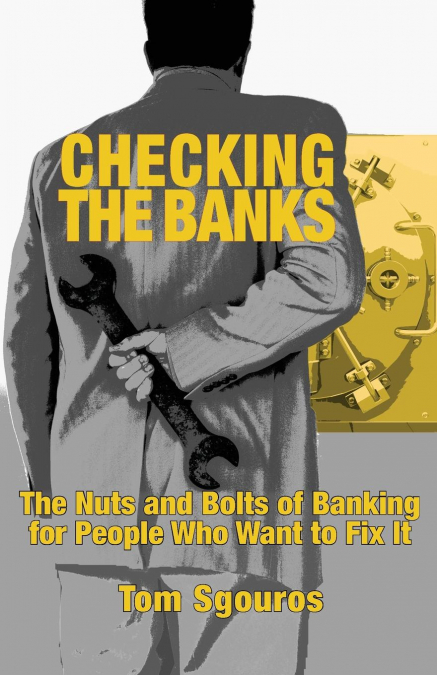
  • Checking the Banks
    Tom Sgouros
    “This is a marvelous book! Well-written-even enjoyable to read-about local banking! Packed with important information, not only for the expert, but for anyone, activist or public official, Put it on top of your reading pile!” - Gar Alperovitz, author of What Then Must We Do? “A clear, accessible, practical, grounded, and authoritative intro- duction to ...
    Disponible

    23,74 €

  • Capitalism and the Market Economy
    Jonathan McMillan
    The Beginning of a New Economic OrderWhat is capitalism? Most people would describe it as a free-market economy. But this description falls short. And it prevents us from tackling one of the most important questions of our time: What is wrong with capitalism, and how can we fix it?In this trailblazing book, Jonathan McMillan provides a corrective to certain deeply held but misg...
    Disponible

    14,14 €

  • Islamic Banking
    Fuad A Al-Omar / Mohammed Abdel Haq
    Islam has a very specific approach to commercial transactions, the law of contract, interest charges, indeed to the very nature of property. For financial institutions operating in an Islamic environment, or seeking to meet the requirements of communities committed to Islamic law, this poses a variety of problems. This important book investigates how such a challenge can be met...
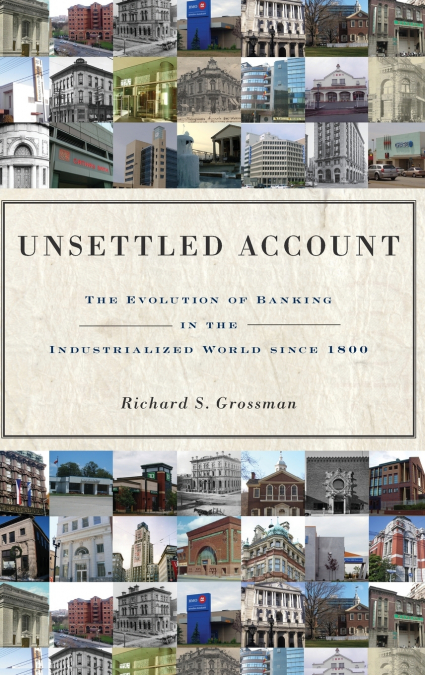
  • Unsettled Account
    Richard S. Grossman
    A sweeping look at the evolution of commercial banks over the past two centuriesCommercial banks are among the oldest and most familiar financial institutions. When they work well, we hardly notice; when they do not, we rail against them. What are the historical forces that have shaped the modern banking system? In Unsettled Account, Richard Grossman takes the first truly compa...