

 Librería Samer Atenea
 Kálamo Books
 Librería Elías (Asturias)
 Librería Kolima (Madrid)
 Librería Proteo (Málaga)
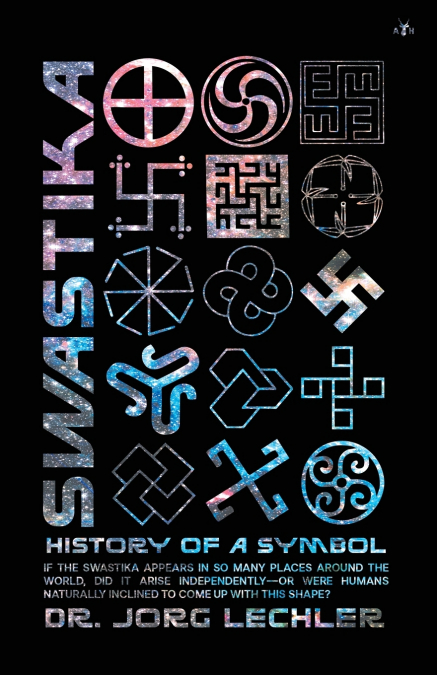
'Five millennia look down on us with the swastika, and in recounting its history we not only walk through those five millennia but across the globe.'Dr. Jörg Lechler’s Swastika: History of a Symbol traces the history and roots of one of the most well-known, controversial, and enduring cultural, religious, national, and political symbols. Originally published in 1921, the book was republished in an expanded edition in 1934 during the Third Reich. It takes the reader on a journey through the Americas, Asia, India, the Middle East, and Europe, where the author argues the swastika’s oldest uses are to be found. Replete with images from archeology demonstrating its many appearances, the work also functions as a gallery testament to the symbol’s organic recurrence and evocative power.The swastika has often followed the spread of the Indo-European peoples. Its origins lie in natural phenomena, marked by its nearly universal relationship with the sun, which frequently carried cultural and religious implications. Lechler also mentions its associations with similar symbols such as the sun cross and other ancient motifs, and demonstrates its use in early Christianity, as well as European heraldry and folk art. This journey through the swastika’s long history serves as a potent backdrop to its then-contemporary use in National Socialist Germany. In this context, the book illuminates and emphasizes its utility as a mythic connection between National Socialism’s historically progressive political ideology, and the deep past of German, Germanic, and European history. The swastika emerges as a powerful symbol of identity, appropriately linked with the politics of Germany’s racialist state.Antelope Hill Publishing is proud to present Swastika: History of a Symbol for the first time in English, a unique work with historical, anthropological, and political relevance to both the past and present, sure to be appreciated by everyone interested in examining the origins of one of history’s most resonant images.





