 Librería Samer Atenea
 Kálamo Books
 Librería Elías (Asturias)
 Librería Kolima (Madrid)
 Librería Proteo (Málaga)
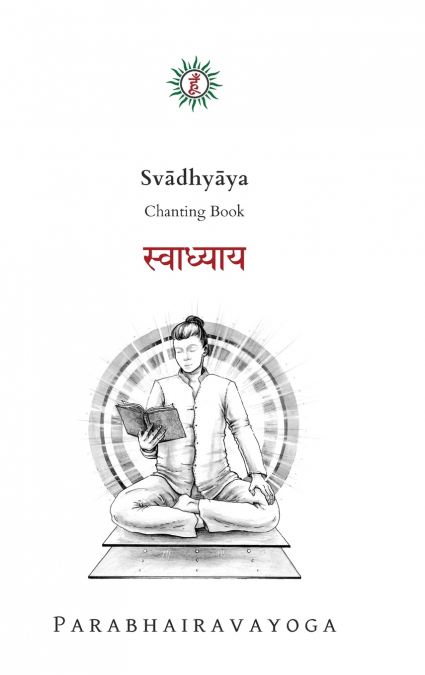
The recitation of scriptural texts is called 'svādhyāya' (sva-adhyāya) and its meaning is multiple: Literally it means 'self-reading' or 'self-study', but a better dictionary translation would be 'reciting or repeating or rehearsing to oneself'. In practice, the meaning boils down to 'recitation of sacred texts', sometimes very long scriptures.But why is this so important? First of all, the scriptures being recited are exclusively the Tantric ones which are very sacred and dear to us. Secondly, the practice of svādhyāya is a Yoga in itself because when you are doing it you have to be extremely concentrated on the text being chanted while keeping a comfortable/healthy posture of the body. This increases your concentration skills enormously, which will be very useful during your meditations. Besides, the body is disciplined by means of the practice of a comfortable/healthy cross-legged pose with one hand on your knee and the other keeping the book in front of you, and of course, with your spinal column fully straight.It is very traditional to practice a combo of things successively: (1) Haṭhayoga, (2) svādhyāya and finally (3) meditation. This three-hours combo (one hour of Haṭhayoga, one hour of chanting and one hour of meditation) is recommended. If you try to meditate only, then you will be more time dealing with your restless mind and so on. But if you practice Haṭhayoga for one hour plus chanting for another hour, your meditation will be like a rocket to the moon. Of course, not all students have three free hours every day to do this, and then they should be practical and adapt their practices to their lives. Anyway, the abovementioned combo is highly recommended by me in order to make fast solid progress in Parabhairavayoga.And because the 'time' thing is a problem for students everywhere, they should be practical always. For example, if they want to chant one hour every day but they have only half an hour in the morning and, say, half an hour during the afternoon, they are permitted to split the recitation. The important thing is that at the end of the day they can attain their one hour goal. So, the recommended period of time for practicing svādhyāya is one hour every day, but the minimum is half an hour. Less than this and the practice is not delivering the results you want.While you do svādhyāya, your attention is solely concentrated on the text, stopping any mental distraction. You will notice that if you are hardly distracted at that time, you will have problems to return to the exact point you left before. All in all, the practice of svādhyāya forces you to be completely onepointed. With onepointedness comes success in Parabhairavayoga indeed.