

 Librería Samer Atenea
 Kálamo Books
 Librería Elías (Asturias)
 Librería Kolima (Madrid)
 Librería Proteo (Málaga)
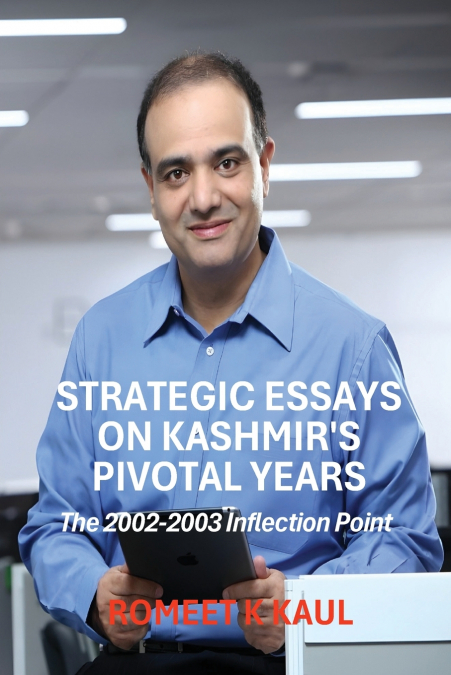
What really changed in Kashmir-and why did it take so long?Strategic Essays on Kashmir’s Pivotal Years: The 2002-2003 Inflection Point offers a rigorous, contemporaneous account of the year that quietly reshaped India’s Kashmir doctrine-long before its consequences became visible in policy and power.Written during 2002-2003, the book captures Jammu & Kashmir at a rare crossroads. Ordinary citizens defied intimidation to vote in large numbers, rejecting violence and separatist boycotts, even as Pakistan’s state-sponsored jihad infrastructure remained fully operational. The result was a paradox that would define the next decade: democratic legitimacy without strategic closure.Drawing on essays originally published in Kashmir Telegraph and other leading Indian and international platforms, Romeet K Kaul analyses why the 2002 elections exposed the hollowness of Pakistan’s 'Kashmir cause,' why coalition politics in Srinagar faltered under ideological contradictions, and why New Delhi’s policy of strategic restraint failed to deter cross-border terrorism.At the heart of the book is a central argument later vindicated by events after 2014: Kashmir was never merely a problem of governance or alienation, but a sustained proxy-war driven by Pakistan’s military-mullah nexus. Democracy without deterrence and integration, the book argues, could not end it.Key themes include:The 2002 J&K Assembly elections were the first credible democratic test after a decade of insurgencyThe terror ecosystem of Lashkar-e-Taiba and Jaish-e-MohammedThe limits of the 'healing touch' in the face of organised jihadPakistan’s double game with the United StatesThe myths surrounding UN resolutions and partition 'end-games'How ambiguity and moral equivalence prolonged the conflictSeen from today’s vantage point-after the abrogation of Article 370, the reorganisation of Jammu & Kashmir as a Union Territory, surgical strikes, Balakot, and Operation Sindoor-these essays read less like history and more like a diagnosis. They explain why India eventually abandoned strategic restraint and why constitutional integration became unavoidable.Unapologetically right-of-centre yet grounded in field observation, this book is both a chronicle and a warning: peace without clarity is temporary, and sovereignty without resolve invites coercion.For policymakers, students of national security, informed citizens, and readers seeking to understand how India’s Kashmir policy evolved from hesitation to hard resolve, this book offers a rare record of the argument before it became consensus.





