
Stoicism

Stoicism

Dr. James Calloway

15,37 €
IVA incluido
Disponible
Editorial:
Dr. James Calloway
Año de edición:
2026
Materia
Ética y filosofía moral
ISBN:
9798256174842
15,37 €
IVA incluido
Disponible

Selecciona una librería:

  • Librería Samer Atenea

  • Kálamo Books
  • Librería Elías (Asturias)
  • Librería Kolima (Madrid)
  • Librería Proteo (Málaga)

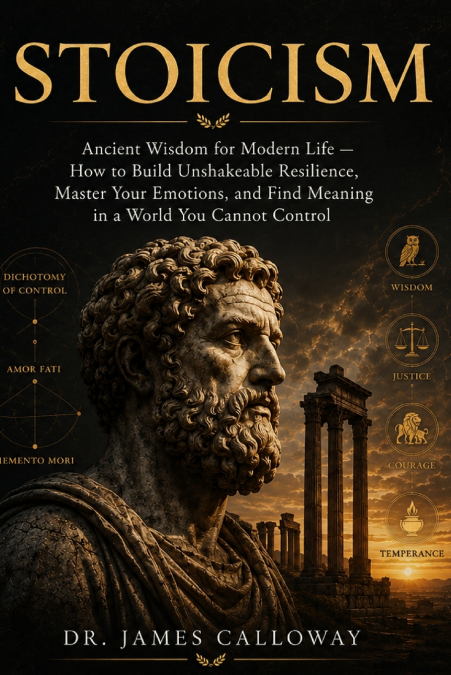
A philosophy tested by a slave, an emperor, and a senator facing execution. It held.Two thousand years ago, Epictetus was a slave who had his leg broken by a cruel master and became the most influential teacher of his age. Marcus Aurelius governed the Roman Empire through plague, war, and political chaos - and wrote private notes to himself that became one of the most widely read philosophical texts in history. Seneca navigated wealth, power, and an order from Nero to take his own life - which he did, with composure.None of them were arguing for a philosophical system. They were using one to survive. And the philosophy they used was Stoicism - the ancient framework for living that has outlasted every empire it ever touched.Stoicism is the complete, practical guide to this philosophy: what it actually teaches, why it works, and how to apply it in a world very different from ancient Rome but governed by exactly the same inner weather.Inside you will discover:• The dichotomy of control: the single insight that dissolves chronic anxiety at its root• Virtue as the only genuine good - and what this means for how you spend your time• The four Stoic virtues: wisdom, justice, courage, and temperance in daily practice• Amor fati: not merely accepting what happens, but finding in it what cannot be otherwise• Memento mori: how remembering death produces presence, gratitude, and genuine freedom• The inner citadel: building the resilience that no external event can breach• Stoic emotional mastery: feeling accurately rather than feeling nothing• The three masters - Marcus, Epictetus, Seneca - and what their lives actually teach• A complete daily practice: morning, evening, weekly, and over a lifetimeThis is not self-help.It is a philosophy tested under the worst conditions a human life can produce.It is ready for yours.
Artículos relacionados

  • Ka Ab Ba Building The Lighted Temple
    Dr Terri R. Nelson / Dr Terri RNelson
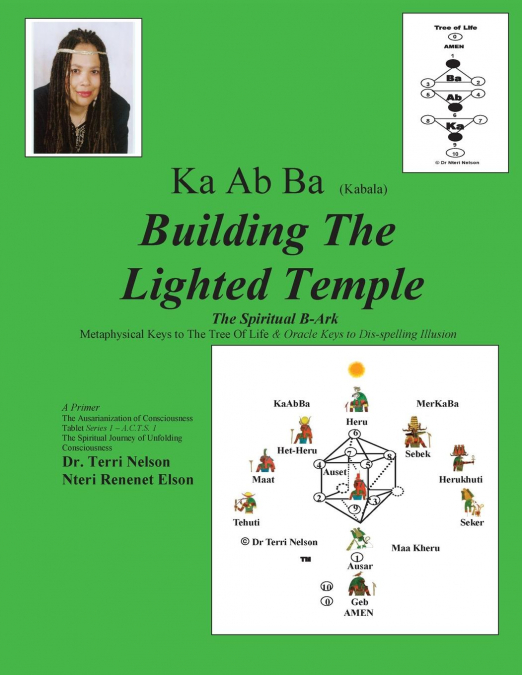
    The book KaAbBa Building The Lighted Temple/Metaphysical Keys to the Tree of Life draws a circle that is inclusive of the Afrikan origin of the Ancient Kemetic/Egyptian wisdom. It reveals the undeniable root and link of Ancient Africa to all the religious systems that would develop worldwide. This book is explosive in its power to convey the meaning of KaAbBa, the Medu Neter  (...
    Disponible

    37,41 €

  • Technoethics and the Evolving Knowledge Society
    Rocci Luppicini
    Recently, there has been a major push to rediscover the ethical dimension of technology across the sciences, social sciences, and humanities. Technoethics and the Evolving Knowledge Society: Ethical Issues in Technological Design, Research, Development, and Innovation examines human processes and practices connected to technology embedded within social, political, and moral sph...
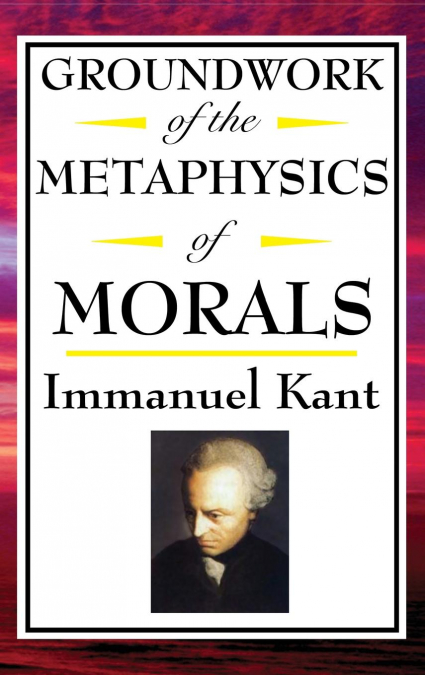
  • Kant
    Immanuel Kant
    Kant’s Groundwork of the Metaphysics of Morals is one of the most important works in modern moral philosophy. It belongs beside Plato, Aristotle, Machiavelli, and Hobbes. Here Kant sets out to articulate and defend the Categorical Imperative - the fundamental principle that underlies moral reasoning - and to lay the foundation for a comprehensive account of justice and human vi...
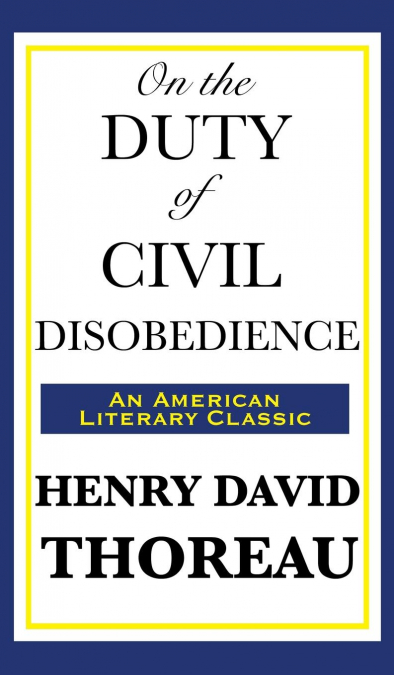
  • On the Duty of Civil Disobedience
    HENRY DAVID THOREAU
    Civil Disobedience argues that citizens should not permit their governments to overrule their consciences, and that they have a duty to avoid allowing their acquiescence to enable the government to make them the agents of injustice. Thoreau was motivated in part by his disgust with slavery and the Mexican-American War, but the sentiments he expresses here are just as pertinent ...
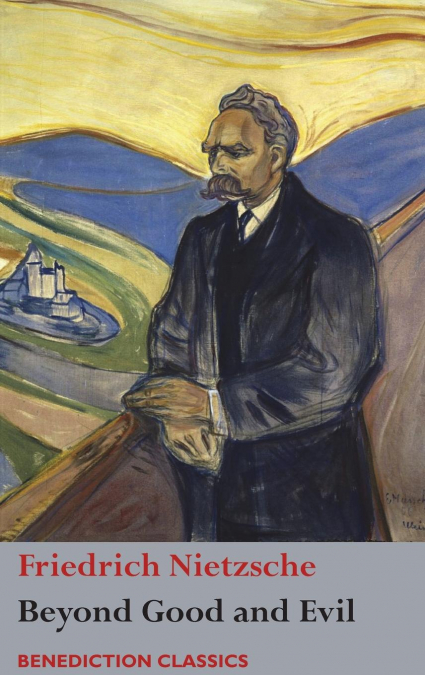
  • Beyond Good and Evil
    Friedrich Nietzsche
    Nietzsche, though primarily a philosopher, wrote widely on art, philology, history, religion, tragedy, culture, and science.  In 1886, at the height of his powers, he published Beyond Good and Evil.  Here he examines much of the best of human thought--dogmatic philosophy, Judeo-Christian morality, science and democracy – and finds it lacking.  Rejecting “slave-morality” he pres...
  • Beyond Good and Evil
    Friedrich Nietzsche
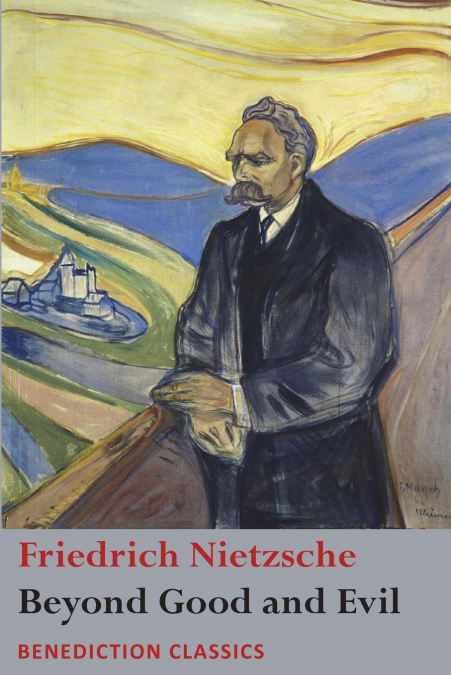
    Nietzsche, though primarily a philosopher, wrote widely on art, philology, history, religion, tragedy, culture, and science.  In 1886, at the height of his powers, he published Beyond Good and Evil.  Here he examines much of the best of human thought--dogmatic philosophy, Judeo-Christian morality, science and democracy – and finds it lacking.  Rejecting “slave-morality” he pres...
    Disponible

    9,99 €