Stepped Care 2.0

Stepped Care 2.0

Peter Cornish

109,87 €
IVA incluido
Consulta disponibilidad
Editorial:
Springer Nature B.V.
Año de edición:
2020
Materia
Psicología
ISBN:
9783030480547

Selecciona una librería:

  • Librería Samer Atenea
  • Librería Aciertas (Toledo)
  • Kálamo Books
  • Librería Perelló (Valencia)
  • Librería Elías (Asturias)
  • Donde los libros
  • Librería Kolima (Madrid)
  • Librería Proteo (Málaga)

This book is a primer on Stepped Care 2.0. It is the first book in a series of three. This primer addresses the increased demand for mental health care by supporting stakeholders (help-seekers, providers, and policy-makers) to collaborate in enhancing care outcomes through work that is both more meaningful and sustainable.Our current mental health system is organized to offer highly intensive psychiatric and psychological care. While undoubtedly effective, demand far exceeds the supply for such specialized programming. Many people seeking to improve their mental health do not need psychiatric medication or sophisticated psychotherapy. A typical help seeker needs basic support. For knee pain, a nurse or physician might first recommend icing and resting the knee, working to achieve a healthy weight, and introducing low impact exercise before considering specialist care. Unfortunately, there is no parallel continuum of care for mental health and wellness. As a result, a person seeking the most basic support must line up and wait for the specialist along with those who may have very severe and/or complex needs. Why are there no lower intensity options? One reason is fear and stigma. A thorough assessment by a specialist is considered best practice. After all, what if we miss signs of suicide or potential harm to others?  A reasonable question on the surface; however, the premise is flawed. First, the risk of suicide, or threat to others, for those already seeking care, is low. Second, our technical capacity to predict on these threats is virtually nil. Finally, assessment in our current culture of fear tends to focus more on the identification of deficits (as opposed to functional capacities), leading to over-prescription of expensive remedies and lost opportunities for autonomy and self-management. Despite little evidence linking assessment to treatment outcomes, and no evidence supporting our capacity to detect risk for harm, we persist with lengthy intake assessments and automatic specialist referrals that delay care. Before providers and policy makers can feel comfortable letting go of risk assessment, however, they need to understand the forces underlying the risk paradigm that dominates our society and restricts creative solutions for supporting those in need.

Artículos relacionados

  • Drinkers of Infinity
    Arthur Koestler
    This selection of essays, book-reviews, broadcast talks and papers delivered to learned societies reflects the extraordinary breadth of Arthur Koestler’s interests. From the trial of Galileo to the pleasures of canoeing down the Loire, from a detailed examination of the ‘memory’ of flatworms to an equally detailed examination of the futility of quarantining dogs, the author wri...
    Disponible

    17,24 €

  • Gordy the Rabbit has ADHD
    Jessie Shepherd
    Often when people are given a mental health disorder diagnosis the weaknesses are clear and overwhelmingly emphasized, while the strengths are ignored or forgotten. The mental health children's book series 'What Mental Disorder?' challenges the stigma against therapy and diagnosis. It enlists the reader to view the character as a whole being and not as a mental issu...
    Disponible

    16,30 €

  • The Paradoxical Ego
    Eugene Halliday / Zhu Kabere
    Three particular themes are basic to this study. First, that the human race and its environment are involved in a slowly progressive process of revelation and understanding of its inherent features; and that we are all participating in this ongoing evolutionary cycle. Second, and closely related to the first tenet, man is not separable from his environment. We all share in this...
    Disponible

    14,56 €

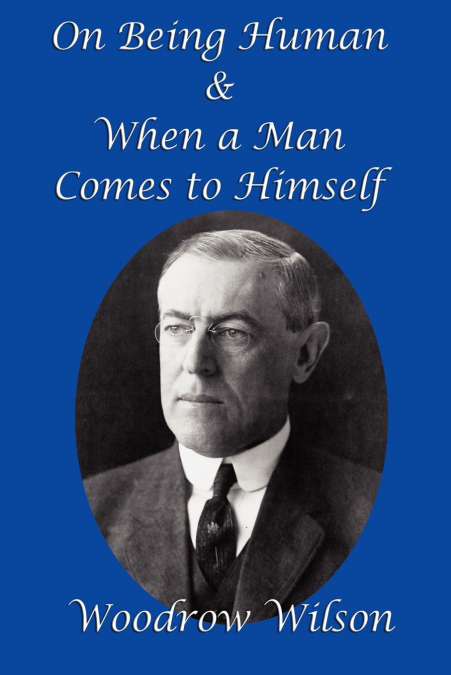
  • On Being Human and When a Man Comes to Himself
    Woodrow Wilson
    Before he became the 28th President of the United States (1913-21), the 34th Governor of New Jersey (1911-13), or even the 13th President of Princeton University (1902-10), Woodrow Wilson (1856-1924) was a scholar and professor. In 1885, he received his Ph.D. in history and political science from Johns Hopkins University, and in 1897, he was granted tenure at Princeton Universi...
    Disponible

    6,28 €

  • Bridge Over The River Why
    David Cooper / Deborah Cooper
    'In Bridge Over the River Why, the Coopers have succeeded in a dual task documenting their own journey through the grief of losing their son Eli by suicide, while at the same time providing a valuable resource for anyone who has had to face the same terrible tragedy. They start with the premise that 'doing and feeling' are the key components of moving forward and have a core me...
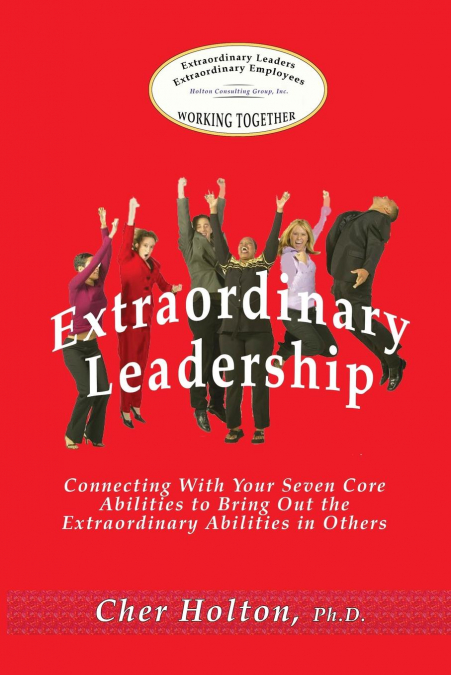
  • Extraordinary Leadership
    Cher Holton
    This transformational leadership book, grounded in state-of-the-art research and proven by real-life application in the trenches, moves beyond traditional leadership theories to introduce you to seven incredible Core Abilities and shows you how to connect with them to become an Extraordinary Leader who can bring out the very best in your people.All the techniques in the world w...
    Disponible

    23,85 €

Otros libros del autor

  • Stepped Care 2.0
    Peter Cornish
    This book is a primer on Stepped Care 2.0. It is the first book in a series of three. This primer addresses the increased demand for mental health care by supporting stakeholders (help-seekers, providers, and policy-makers) to collaborate in enhancing care outcomes through work that is both more meaningful and sustainable.Our current mental health system is organized to offer h...
    Disponible

    68,18 €