
Statistical Process Control

Statistical Process Control

Andreas Leitner

21,24 €
IVA incluido
Disponible
Editorial:
GRIN Verlag
Año de edición:
2007
ISBN:
9783638790338
21,24 €
IVA incluido
Disponible

Selecciona una librería:

  • Librería Samer Atenea
  • Librería Aciertas (Toledo)
  • Kálamo Books
  • Librería Perelló (Valencia)
  • Librería Elías (Asturias)
  • Donde los libros
  • Librería Kolima (Madrid)
  • Librería Proteo (Málaga)

Research Paper (undergraduate) from the year 2004 in the subject Business economics - Industrial Management, grade: 2, Glyndŵr University, Wrexham known as NEWI (Mechanical engineering), language: English, abstract: This paper discusses the impact of SPC for an organization. What SPC can do for an organization as well as what the organization has to provide for SPC to work successfully. This paper doesn’t discuss, how SPC works or how it can be installed into an organization. It discusses the requirements for SPC to work successfully as well as the output of SPC, and how it can be used for the organization to move forward, on the basis of organization, which do already use SPC successfully.(Oakland 1990 a) Statistic process control (SPC) is a strategy for reducing variability, the cause of most quality problems. Variation of products can be caused by nearly everything, delivering times, in ways of doing things, raw material, people attitudes, equipment, and its use, maintenance, and so one. SPC can help to improve processes continually by reducing its variability. The basic question therefore, which should be asked recurrently is:Can we do the job more consistently?Therefore, there must be willingness, to implement changes in every parts of business, to achieve continuous improvement. SPC is not just control; it enables reliable and consistent processes, and continuous improvement, which is important to fulfil long-term requirements of the customers, and the company. Quality can’t be inspected it must be built.Therefore creating quality is not the job of the quality department, it’s the job of everybody in the company. Knowledge of the current statement of the process is essential for both operational as well as strategic decisions for design and technology functions.The following questions helps to get this information, which should be asked contiguously.- Can we do the job correctly?- Are we doing the job correctly?- Have we done the job correctly?-

Artículos relacionados

  • Technological Change and the British Iron Industry, 1700-1870
    Charles K. Hyde
    This book describes technological change in an industry that played a central role in the Indsutrial Revolution. While earlier scholars have examined isolated aspects of ironmaking in the eighteenth- and nineteenth-century Britain, Charles Hyde surveys all aspects of its development. Costs, prices, profits, shrewd leaders, competition, new inventions, and productivity all figur...
    Disponible

    71,94 €

  • Corporate Governance in Asia
    ...
    Disponible

    72,99 €

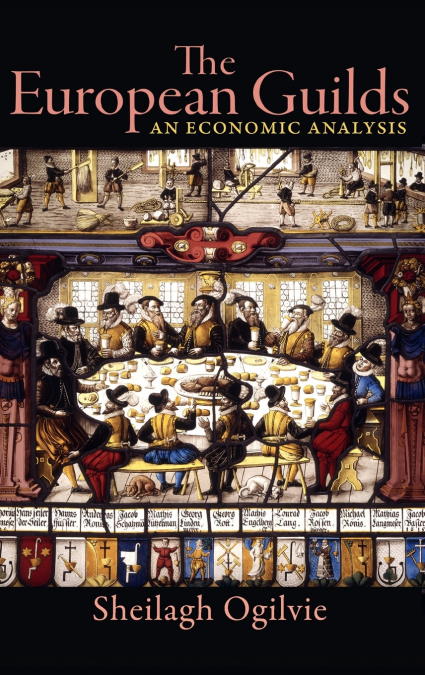
  • The European Guilds
    Sheilagh Ogilvie
    A comprehensive analysis of European craft guilds through eight centuries of economic historyGuilds ruled many crafts and trades from the Middle Ages to the Industrial Revolution, and have always attracted debate and controversy. They were sometimes viewed as efficient institutions that guaranteed quality and skills. But they also excluded competitors, manipulated markets, and ...
  • Technological Change and the British Iron Industry, 1700-1870
    Charles K. Hyde
    This book describes technological change in an industry that played a central role in the Indsutrial Revolution. While earlier scholars have examined isolated aspects of ironmaking in the eighteenth- and nineteenth-century Britain, Charles Hyde surveys all aspects of its development. Costs, prices, profits, shrewd leaders, competition, new inventions, and productivity all figur...
  • Technology Differences over Space and Time
    Francesco Caselli
    Technology Differences over Space and Time looks at how countries use their productive resources-such as workers, skills, equipment and structures, and natural resources. Francesco Caselli develops methods to assess the efficiency with which productive inputs are used, and how these efficiencies vary across countries and over time.Caselli finds that richer countries use skilled...
  • Cybersecurity Measures for Logistics Industry Framework
    Global supply chains are becoming more customer-centric and sustainable thanks to next-generation logistics management technologies. Automating logistics procedures greatly increases the productivity and efficiency of the workflow. There is a need, however, to create flexible and dynamic relationships among numerous stakeholders and the transparency and traceability of the supp...

Otros libros del autor

  • Concept of leadership and management within the manufacturing industry
    Andreas Leitner
    Essay from the year 2004 in the subject Business economics - Business Management, Corporate Governance, grade: 1, Glyndŵr University, Wrexham known as NEWI (NEWI - Wales, Business School), language: English, abstract: Before discussing the concept of Leadership and Management within the Manufacturing Industry, it’s important to define clearly what does Leadership and Managemen...
    Disponible

    26,63 €

  • Activity Based Costing
    Andreas Leitner
    Research Paper (undergraduate) from the year 2004 in the subject Business economics - Accounting and Taxes, grade: 2, Glyndŵr University, Wrexham known as NEWI (Business school), language: English, abstract: During the last decades there was a change in organisations from managing vertical to managing horizontal. The organisations started to become process orientated instead of...
    Disponible

    29,63 €