 Librería Samer Atenea
 Kálamo Books
 Librería Elías (Asturias)
 Librería Kolima (Madrid)
 Librería Proteo (Málaga)
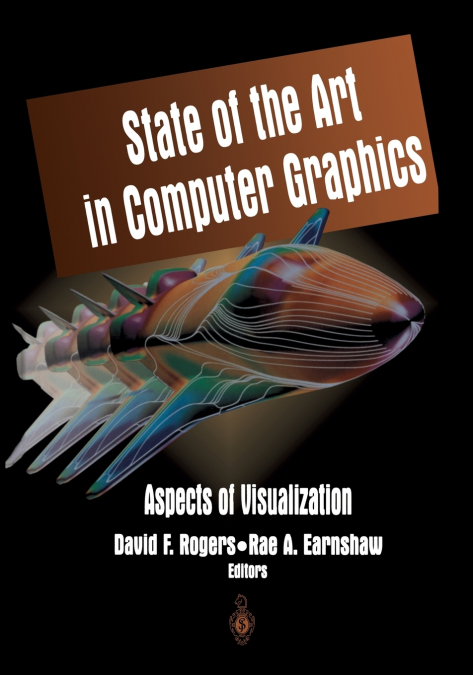
State of the Art in Computer Graphics Aspects of Visualization This is the fourth volume derived from a State of . . . the Art in Computer Graphics Summer Institute. It represents a snapshot of a number of topics in computer graphics, topics which include visualization of scientific data; modeling; some aspects of visualization in virtual reality; and hardware architectures for visu alization. Many papers first present a background introduction to the topic, followed by discussion of current work in the topic. The volume is thus equally suitable for nonspecialists in a particular area, and for the more experienced researcher in the field. It also enables general readers to obtain an acquaintance with a particular topic area sufficient to apply that knowledge in the context of solving current problems. The volume is organized into four chapters - Visualization of Data, Modeling, Virtual Reality Techniques, and Hardware Architectures for Visualization. In the first chapter, Val Watson and Pamela Walatka address the visual aspects of fluid dynamic computations. They discuss algorithms for function-mapped surfaces and cutting planes, isosurfaces, particle traces, and topology extractions. They point out that current visualization systems are limited by low information transfer bandwidth, poor response to viewing and model accuracy modification requests, mismatches between model rendering and human cognitive capabilities, and ineffective interactive tools. However, Watson and Walatka indicate that proposed systems will correct most of these problems.