Inicio > Derecho > Teoría general del derecho > Historia del derecho > State and Family in Early Rome [1908]
State and Family in Early Rome [1908]

State and Family in Early Rome [1908]

Charles W. L. Launspach / Charles WLLaunspach

49,62 €
IVA incluido
Consulta disponibilidad
Editorial:
The Lawbook Exchange
Año de edición:
2022
Materia
Historia del derecho
ISBN:
9781584775423

Selecciona una librería:

  • Librería Samer Atenea
  • Librería Aciertas (Toledo)
  • Kálamo Books
  • Librería Perelló (Valencia)
  • Librería Elías (Asturias)
  • Donde los libros
  • Librería Kolima (Madrid)
  • Librería Proteo (Málaga)

Launspach, a barrister and member of the Inner Temple, argues that in its 'infancy and adolescence' early Rome was 'a conscious imitation of the ancient Gens or ancient Family, that its theory of government was founded upon the relations existing between kinsmen, and that these again, were determined by religious notions which later became transformed through developments with the City and external influences' (Foreword, v). Consequently, the early state was neither a democracy nor an autocracy. When expansion and internal change drew the Roman commonwealth away from its familial roots, the underlying assumptions that had bound the state fragmented and the constitutional order was gradually supplanted by more authoritarian structures. xx, 288 pp.

Artículos relacionados

  • Court-Hand Restored [1879]
    Andrew Wright
    A Rosetta Stone for Early English Legal Documents By 1776, the year Wright published the first edition of Court-Hand Restored, the written conventions of early English legal documents, which had been taught for generations, were becoming esoteric. Concerned that younger lawyers would be unable to understand the work of their predecessors, Wright intended his work to be a kind o...
    Disponible

    32,79 €

  • Commentary to the Germanic Laws and Mediaeval Documents [1915]
    Leo Wiener
    Based on an ambitious study of all accessible records from the early decades of the Roman Empire to 1300, this work proposes that the Visigothic, Burgundian, Salic and other Germanic legal systems were based almost entirely on Roman law. This was a controversial argument because it challenged the prevailing consensus about Germanic law. Though scholars have subsequently disprov...
  • The Ordeal
    Henry Charles Lea / Arthur E. Howland / Arthur EHowland
    Henry Charles Lea was one of the first American historians to use what would later be termed comparative and anthropological approaches to history. Under his pen, the study of the medieval ordeal becomes a study in cultural history.Reprinted here from the fourth revised edition of 1892, the book begins by tracing the role of the ordeal in non-Western and ancient societies, show...
    Disponible

    23,88 €

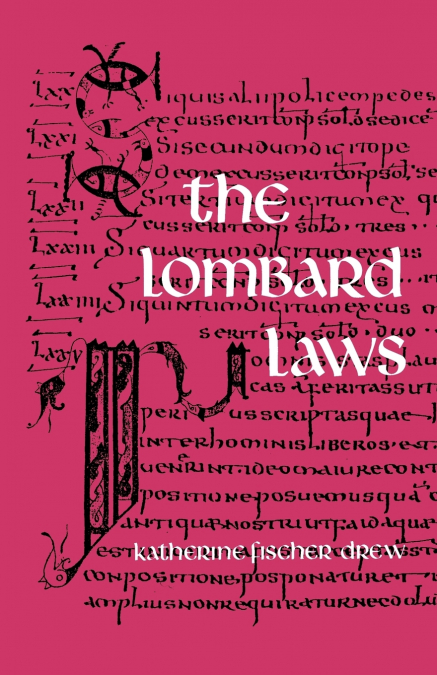
  • The Lombard Laws
    Katherine Fisher Drew
    ...
    Disponible

    31,40 €

  • The Influence of Italian Civil Law in Latin-America
    There are many ways to mark the anniversary of a civil code: one of them is to analyse the cultural messages it has produced, in order to understand not only by whom such messages have been received but also how, when and to what extent. The current volume is based on a dialogue between European (and, in particular, Italian) legal culture on the one hand, and Latin American leg...
    Disponible

    42,00 €

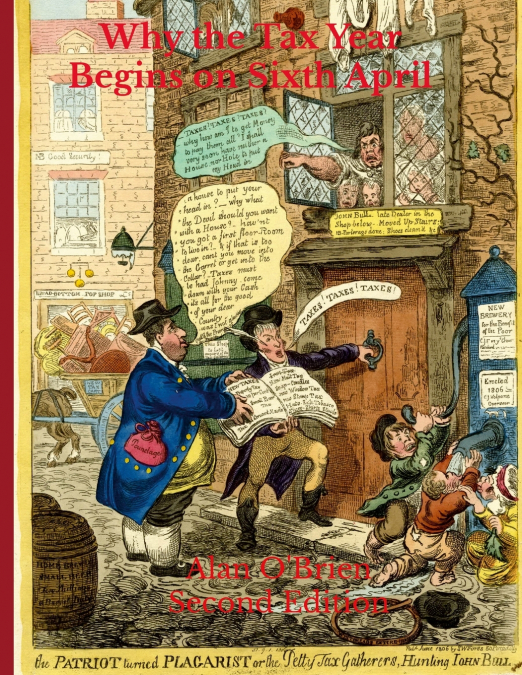
  • Why the Tax Year Begins on Sixth April
    Alan O’Brien
    Second Edition 2024This book explains why the UK tax year begins on 6 April and traces the history of the old tax year which ran from 25 March. It also covers other aspects of calendar history and related issues, including the continuing application of the 1750 British calendar reform statute to the USA and elsewhere.The move from the Julian to the Gregorian calendar in 1752 re...
    Disponible

    70,12 €