 Librería Samer Atenea
 Kálamo Books
 Librería Elías (Asturias)
 Librería Kolima (Madrid)
 Librería Proteo (Málaga)
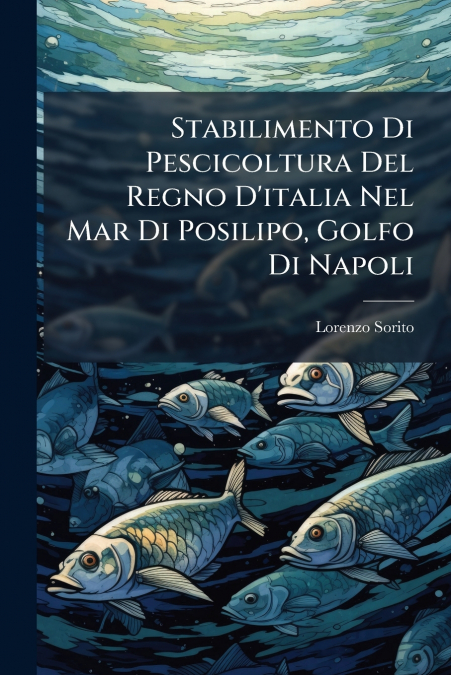
Stabilimento Di Pescicoltura Del Regno D’italia Nel Mar Di Posilipo, Golfo Di Napoli offers a detailed look at the fish farming establishment in the Kingdom of Italy, located in the sea of Posilipo, Gulf of Naples. Authored by Lorenzo Sorito, this historical work provides 'Alcuni Brevi Dettagli Sullo Stabilimento, E Sull’ Introito Presuntivo E Favoloso Del Primo Anno 1865, E Sulle Spese Occurrenti Al Detto Anno...' (Some Brief Details About the Establishment, And the Presumptive and Fabulous Income of the First Year 1865, And the Expenses Incurred in That Year...). This book provides insights into the early days of aquaculture and natural resource management in Italy, offering a glimpse into the economic and scientific considerations of the time. It is valuable for historians, marine biologists, and anyone interested in the history of fish farming and Italian economic history.This work has been selected by scholars as being culturally important, and is part of the knowledge base of civilization as we know it. This work was reproduced from the original artifact, and remains as true to the original work as possible. Therefore, you will see the original copyright references, library stamps (as most of these works have been housed in our most important libraries around the world), and other notations in the work.This work is in the public domain in the United States of America, and possibly other nations. Within the United States, you may freely copy and distribute this work, as no entity (individual or corporate) has a copyright on the body of the work.As a reproduction of a historical artifact, this work may contain missing or blurred pages, poor pictures, errant marks, etc. Scholars believe, and we concur, that this work is important enough to be preserved, reproduced, and made generally available to the public. We appreciate your support of the preservation process, and thank you for being an important part of keeping this knowledge alive and relevant.