 Librería Samer Atenea
 Kálamo Books
 Librería Elías (Asturias)
 Librería Kolima (Madrid)
 Librería Proteo (Málaga)
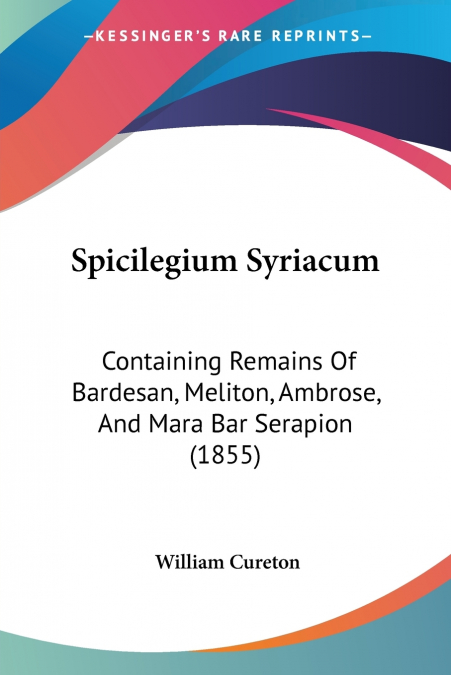
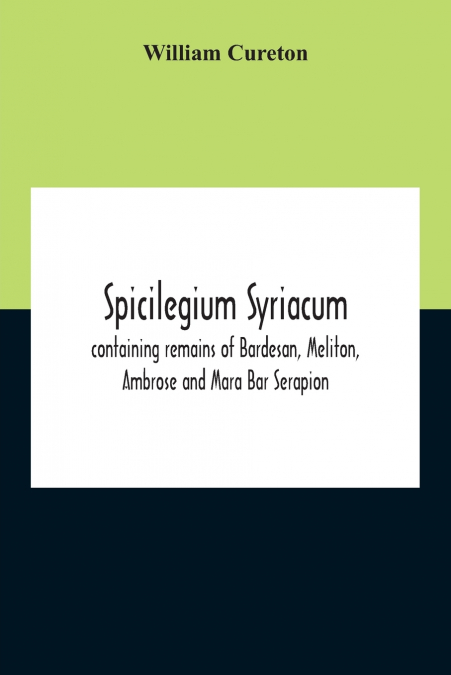
A rare bridge to the earliest Christian thought.Ancient Syriac texts still resonate.William Cureton’s Spicilegium Syriacum gathers the surviving remains of Bardesan, Meliton, Ambrose and Mara Bar Serapion into a lucid, readable collection. Part antiquarian rescue and part patristic literature anthology, it brings together Syriac Christian writings that serve as direct witnesses to questions of doctrine, devotional life and cultural encounter across the ancient Near East, and to the broader corpus of ancient religious texts. Readers encounter the works of Bardaisan and the writings of Melito of Sardis alongside fragments that have informed Gnostic Christianity studies and debates among the early church fathers. The scholarly apparatus is measured rather than forbidding; the focus remains the texts themselves, making the volume both an evocative introduction for general readers and a source of primary evidence for scholars of early Christianity and those seeking a theological research resource.Republished by Alpha Editions in a careful modern edition, this volume preserves the spirit of the original while making it effortless to enjoy today - a heritage title prepared for readers and collectors alike. Its literary and historical significance cannot be overstated: these fragments supply rare testimony to second-century texts and the lived faith of the ancient Near East, material that has shaped subsequent work on patristic scholarship and informed modern appraisal of Gnostic currents. Casual readers will find arresting, often surprising voices; classic-literature collectors will recognise a carefully restored volume, at once collectible and purposefully produced for modern shelves. At the same time this edition functions as a dependable Syriac manuscript collection resource for scholars and a compact, indispensable companion for anyone studying the works of Bardaisan, Melito of Sardis, and other formative figures. Its measured commentary and faithful transcriptions respect the Syriac idiom while assisting modern readers through the material’s historical depths. In effect, the edition bridges popular curiosity and rigorous study - a single volume that invites both immediate reading and long-term reference.