 Librería Samer Atenea
 Kálamo Books
 Librería Elías (Asturias)
 Librería Kolima (Madrid)
 Librería Proteo (Málaga)
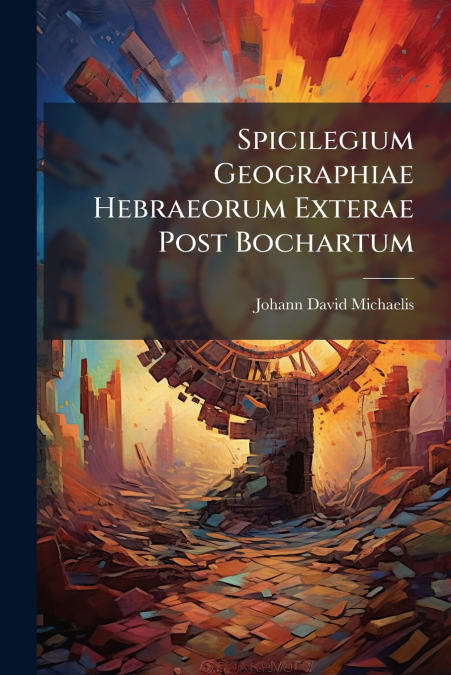
Spicilegium Geographiae Hebraeorum Exterae Post Bochartum, by Johann David Michaelis, is a scholarly work dedicated to the geography of the Hebrew people, particularly as it relates to regions outside of their immediate homeland. Written in Latin, this book builds upon the foundations laid by Samuel Bochart, a 17th-century French Protestant pastor and scholar renowned for his contributions to biblical geography and zoology. Michaelis, a distinguished professor of philosophy and advisor to the King of Great Britain, delves into the geographical understanding of the Hebrew world through meticulous research and analysis. This spicilegium, or gleaning, offers further insights and corrections to existing geographical knowledge concerning the Hebrews. It is an invaluable resource for historians, theologians, and scholars interested in the historical and geographical contexts of the Old Testament and the broader ancient Middle East.This work has been selected by scholars as being culturally important, and is part of the knowledge base of civilization as we know it. This work was reproduced from the original artifact, and remains as true to the original work as possible. Therefore, you will see the original copyright references, library stamps (as most of these works have been housed in our most important libraries around the world), and other notations in the work.This work is in the public domain in the United States of America, and possibly other nations. Within the United States, you may freely copy and distribute this work, as no entity (individual or corporate) has a copyright on the body of the work.As a reproduction of a historical artifact, this work may contain missing or blurred pages, poor pictures, errant marks, etc. Scholars believe, and we concur, that this work is important enough to be preserved, reproduced, and made generally available to the public. We appreciate your support of the preservation process, and thank you for being an important part of keeping this knowledge alive and relevant.