Librería Samer Atenea
 Kálamo Books
 Librería Elías (Asturias)
 Librería Kolima (Madrid)
 Librería Proteo (Málaga)
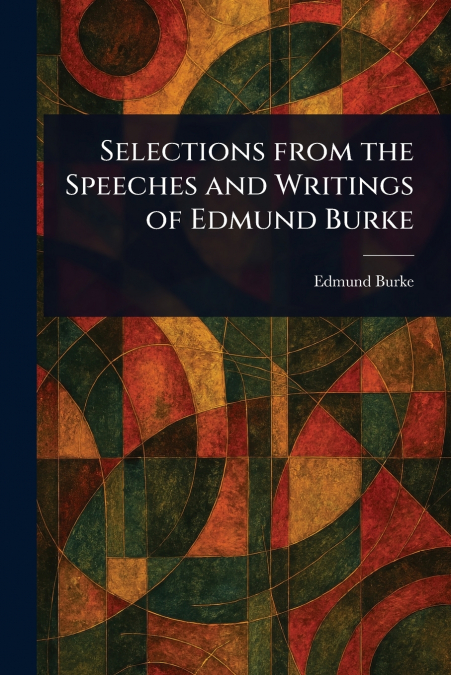
'Speech on Conciliation with the Colonies' is a powerful and enduring statement on the principles of governance and the importance of understanding and addressing the grievances of those governed. Delivered by Edmund Burke to the British Parliament on March 22, 1775, on the eve of the American Revolution, this speech urges a policy of reconciliation with the American colonies, advocating for compromise and understanding rather than coercion. Burke’s eloquent arguments explore the historical, economic, and political factors driving the unrest in America. He emphasizes the colonists’ love of liberty and their determination to resist any perceived tyranny from the mother country. Burke’s proposals include granting the colonies greater autonomy and representation, thereby preserving the unity of the British Empire through mutual respect and shared interests. This speech remains a vital text for students of history, political science, and rhetoric, offering insights into the complexities of colonial relations and the art of persuasive oratory. Burke’s wisdom and foresight continue to resonate, reminding us of the enduring need for empathy, understanding, and just governance in resolving conflicts and fostering lasting peace.This work has been selected by scholars as being culturally important, and is part of the knowledge base of civilization as we know it. This work was reproduced from the original artifact, and remains as true to the original work as possible. Therefore, you will see the original copyright references, library stamps (as most of these works have been housed in our most important libraries around the world), and other notations in the work.This work is in the public domain in the United States of America, and possibly other nations. Within the United States, you may freely copy and distribute this work, as no entity (individual or corporate) has a copyright on the body of the work.As a reproduction of a historical artifact, this work may contain missing or blurred pages, poor pictures, errant marks, etc. Scholars believe, and we concur, that this work is important enough to be preserved, reproduced, and made generally available to the public. We appreciate your support of the preservation process, and thank you for being an important part of keeping this knowledge alive and relevant.