 Librería Samer Atenea
 Kálamo Books
 Librería Elías (Asturias)
 Librería Kolima (Madrid)
 Librería Proteo (Málaga)
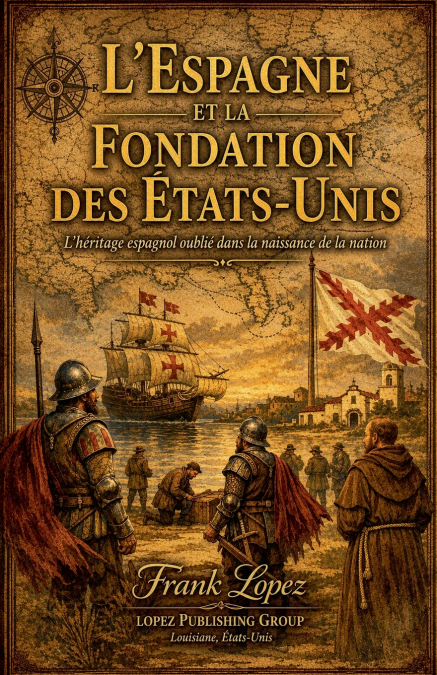
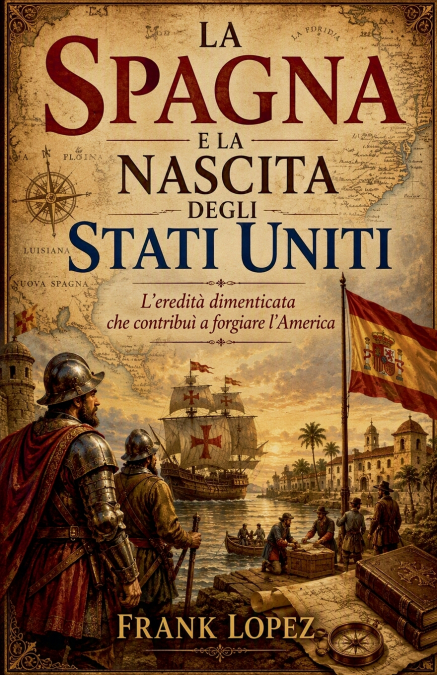
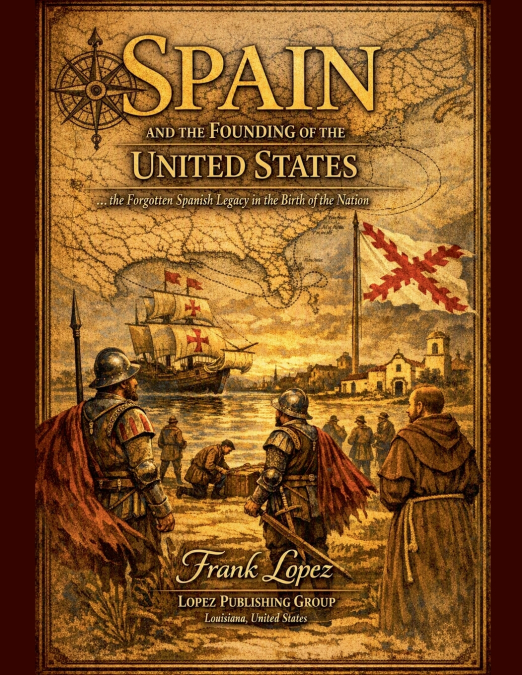
The history of the United States is often presented primarily as a story of thirteen British colonies, their struggle for independence, and the creation of a new republic. While that narrative is essential, it is incomplete. Long before the signing of the Declaration of Independence, Spain had already explored, mapped, settled, defended, and administered vast regions of the territory that would eventually become part of the United States.From Florida and the Gulf Coast to Texas, New Mexico, Arizona, California, and beyond, Spanish expeditions established routes, settlements, missions, presidios, ports, farms, and systems of government. Spanish explorers and settlers brought European institutions, architecture, agriculture, livestock, religion, language, and legal traditions to North America. At the same time, they entered a continent already inhabited by numerous Indigenous nations, each possessing its own political alliances, spiritual traditions, economies, and complex social structures.The encounters that followed were neither simple nor uniform. They included cooperation, cultural exchange, intermarriage, diplomacy, missionary activity, commercial partnerships, military alliances, resistance, warfare, forced labor, displacement, disease, and profound social transformation. The Spanish presence in North America must therefore be studied with both historical recognition and moral honesty. Its legacy includes remarkable achievements as well as conflict and human suffering.Spain’s contribution to the creation of the United States was not limited to exploration and settlement. During the American War of Independence, the Spanish Crown provided money, arms, military supplies, diplomatic support, and direct military assistance to the American cause. Spanish forces challenged British power throughout the Mississippi Valley, the Gulf of Mexico, and the Caribbean, preventing Britain from concentrating all its resources against the rebelling colonies.Among the most important figures in this effort was Bernardo de Gálvez, governor of Spanish Louisiana. Under his leadership, Spanish troops captured British positions at Baton Rouge, Mobile, and Pensacola. His campaigns weakened British control in the Gulf region, secured the lower Mississippi River, protected vital supply routes, and contributed significantly to the eventual success of the American Revolution.Yet Gálvez was not alone. Spanish officials, soldiers, sailors, merchants, settlers, Indigenous allies, free people of color, enslaved laborers, and residents of Louisiana and the Caribbean all participated in the wider struggle. Their contributions formed part of an international conflict whose outcome made American independence possible. This book seeks to restore Spain to its rightful place within the history of the United States. It does not claim that Spain alone founded the nation, nor does it diminish the contributions of Britain, France, the Netherlands, Indigenous peoples, Africans, or the many immigrant communities that shaped the country. Instead, it presents a broader and more balanced interpretation: the United States emerged from the interaction of many peoples, empires, cultures, and historical forces.For English-speaking readers, this edition offers an opportunity to reconsider familiar history from a wider perspective. Many Spanish names remain visible on the American landscape-in cities, rivers, mountains, states, missions, roads, and historic sites-yet the events behind those names are often overlooked. Florida, California, Nevada, Colorado, Montana, and numerous other places preserve evidence of a Spanish past that continues to influence American geography, language, architecture, law, agriculture, religion, and culture.