Inicio > Humanidades > Historia > Spain and the Abolition of Slavery in Cuba, 1817-1886
Spain and the Abolition of Slavery in Cuba, 1817-1886

Spain and the Abolition of Slavery in Cuba, 1817-1886

Arthur F. Corwin / Arthur FCorwin

50,89 €
IVA incluido
Disponible
Editorial:
Univ of Chicago behalf of University of Texas
Año de edición:
1967
Materia
Historia
ISBN:
9781477301333
50,89 €
IVA incluido
Disponible

Selecciona una librería:

  • Librería Samer Atenea
  • Librería Aciertas (Toledo)
  • Kálamo Books
  • Librería Perelló (Valencia)
  • Librería Elías (Asturias)
  • Donde los libros
  • Librería Kolima (Madrid)
  • Librería Proteo (Málaga)

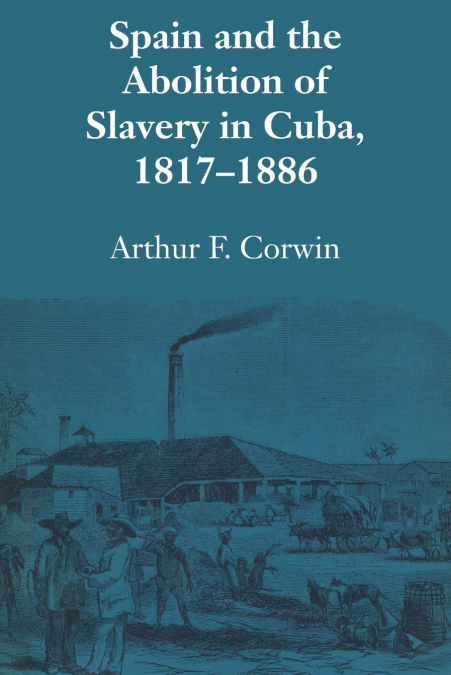
This book explores the abolition of African slavery in Spanish Cuba from 1817 to 1886-from the first Anglo-Spanish agreement to abolish the slave trade until the removal from Cuba of the last vestige of black servitude. Making extensive use of heretofore untapped research sources from the Spanish archives, the author has developed new perspectives on nineteenth-century Spanish policy in Cuba. He skillfully interrelates the problem of slavery with international politics, with Cuban conservative and liberal movements, and with political and economic developments in Spain itself. Arthur Corwin finds that the study of this problem falls naturally into two phases, the first of which, 1817-1860, traces the gradual reduction of the African traffic to the Spanish Antilles and constitutes, in effect, a study in Anglo-Spanish diplomacy. He gives special attention here to the aggressive nature of British abolitionist diplomacy and the mounting but generally ineffective indignation resulting from Spanish failure to apply sanctions against the traffic, as well as the increasing North American interest in the annexation of Cuba. The first phase has for its principal theme the manner in which for decades Spain feigned compliance with agreements to end the slave trade while actually protecting slaveholding interests as the best means of holding Cuba. The American Civil War, which destroyed the greatest bulwark of black slavery in the New World, marked the opening of a new phase, 1860-1886. The author strongly emphasizes here such influences as the rise of the Creole reform movement in Cuba and Puerto Rico, which, reading the signs of the times, gave the initial impulse to a Spanish abolitionist movement and contributed to closing the Cuban slave trade in 1866; the liberal revolution of 1868 in Spain and its promise of colonial reforms; the outbreak of the great Creole rebellion in Cuba, 1868-1878, and the abolitionist promises of the rebel chieftains; the threat of American intervention and the abolitionist pressure of American diplomacy; and the protests of the Spanish reactionaries in Spain and Cuba, leading to further procrastination in Madrid. The second phase has as its principal theme the shaping, through all these intertwined factors, of Spain’s first measure of gradual emancipation, the Moret Law of 1870, and all subsequent steps toward abolition.

Artículos relacionados

  • Raising Freedom's Banner
    Paul Harris
    World wide history of peaceful street demonstrations from their earliest beginning in eighteenth century England to their use throughout the world in the twenty-first century. Describes why some demonstration movements succeeded and others failed. Contrasts demonstrations within the law with civil disobedience demonstrations. Describes Peterloo, the Chartists, the Suffragettes,...
    Disponible

    23,59 €

  • Waipi’o Valley
    Jeffrey L. Gross
    Waipi’o Valley: A Polynesian Journey from Eden to Eden recounts the remarkable migrations of the Polynesians across a third of the circumference of the earth. Their amazing journey began from Kalana i Hau’ola, the biblical “Garden of Eden” located along the shore of the Persian Gulf, extended to the Indus River Valley of ancient Vedic India, to Egypt where some ancestors of the...
  • Floralia
    June Rainsford Butler
    A century characterized by a growing interest in science, the opportunity for travel, and leisure for gardening furnishes the setting for Butler’s book. The rise of landscape gardening in England is traced, and the origin and history of its most famous gardens are given. The close relation between England and America in the field of horticulture is also discussed.Originally pub...
    Disponible

    61,20 €

  • President Wilson’s Addresses
    Woodrow Wilson
    'These addresses of President Woodrow Wilson are almost entirely concerned with political affairs, and more specifically with defining Americanism. Yet they also show that even as he moved from academia to the heights of politics, Wilson retained something of the teacher’s interest in showing the relation between specific instances and the general forms of thought or action of ...
  • The Story of my Life
    John Albert Macy
    The Story of My Life, is Helen Keller’s autobiography detailing her early life, especially her experiences with Anne Sullivan. The book is dedicated to inventor Alexander Graham Bell. The dedication reads, 'To ALEXANDER GRAHAM BELL Who has taught the deaf to speak and enabled the listening ear to hear speech from the Atlantic to the Rockies, I dedicate this Story of My Life.' ...
  • The Story of My Life Vol. 6 Spanish Passions
    Giacomo Casanova
    Casanova was an Italian adventurer and author from the Republic of Venice. His autobiography, Histoire de ma vie (Story of My Life), is regarded as one of the most authentic sources of the customs and norms of European social life during the 18th century. He has become so famous for his often complicated and elaborate affairs with women that his name is now synonymous with 'wom...