Sophistry

Sophistry

Pons Malleus

12,97 €
IVA incluido
Disponible
Editorial:
Pons Malleus
Año de edición:
2025
Materia
Ética y filosofía moral
ISBN:
9798233434921
12,97 €
IVA incluido
Disponible

Selecciona una librería:

  • Librería Samer Atenea
  • Kálamo Books
  • Librería Elías (Asturias)
  • Librería Kolima (Madrid)
  • Librería Proteo (Málaga)

Sophistry is one of the most misunderstood and maligned philosophical movements in Western intellectual history. Cast as manipulative rhetoricians by their critics-most famously by Plato-sophists have long suffered from a legacy of distortion, caricature, and reduction. They are often remembered not for what they believed or taught, but for what others accused them of: corrupting youth, charging money for wisdom, and substituting clever argument for truth. Yet behind these accusations lies a rich, provocative, and complex tradition that demands serious philosophical engagement.This book seeks to recover the Sophists on their own terms, to explore the intellectual contributions they made to classical thought, and to evaluate their relevance in a contemporary world saturated with information, persuasion, and competing narratives. Far from being mere verbal tricksters, the Sophists were pioneers in fields we now recognize as linguistics, ethics, political theory, education, and cultural relativism. They were among the first to question whether truth is absolute or constructed, whether justice is natural or conventional, and whether virtue can be taught-or even defined.Emerging in 5th-century BCE Athens, during a time of profound political experimentation and democratic energy, the Sophists responded to a world in flux. They taught rhetoric not just as an art of persuasion, but as a tool of civic engagement and individual empowerment. They challenged the traditional moral codes upheld by myth and custom, offering instead a dynamic view of human nature and social order. For thinkers such as Protagoras, Gorgias, Hippias, and Prodicus, the human experience was central: how we speak, think, and act shapes the realities we inhabit.To study Sophism is to confront questions that remain vital today: What is truth in an age of competing narratives? Can ethics be grounded in reason, or are moral values inherently subjective? How does power operate through language, and how should education respond to a pluralistic society? These are not merely historical inquiries, but urgent philosophical challenges that resonate across centuries.The reader should approach this work not as a defense of the Sophists, nor as a wholesale endorsement of their doctrines, but as an invitation to reconsider their place in the philosophical canon. By moving beyond the polemics of Plato and Aristotle, we can begin to see the Sophists not as enemies of philosophy, but as its provocative interlocutors-often uncomfortable, sometimes radical, but always intellectually stimulating.This book draws upon ancient sources, modern scholarship, and philosophical analysis to present a comprehensive and nuanced portrait of Sophistry. Each chapter explores a central theme or figure, situating their ideas in historical context while tracing their implications for modern thought. The goal is not only to illuminate what the Sophists said, but to provoke reflection on how we think today-and why.In revisiting Sophistry, we do more than correct a historical record; we rediscover a tradition that challenges us to think critically about knowledge, power, and the human condition. The Sophists remind us that philosophy is not a fixed doctrine, but a living practice shaped by dialogue, dissent, and the endless pursuit of meaning.
Artículos relacionados

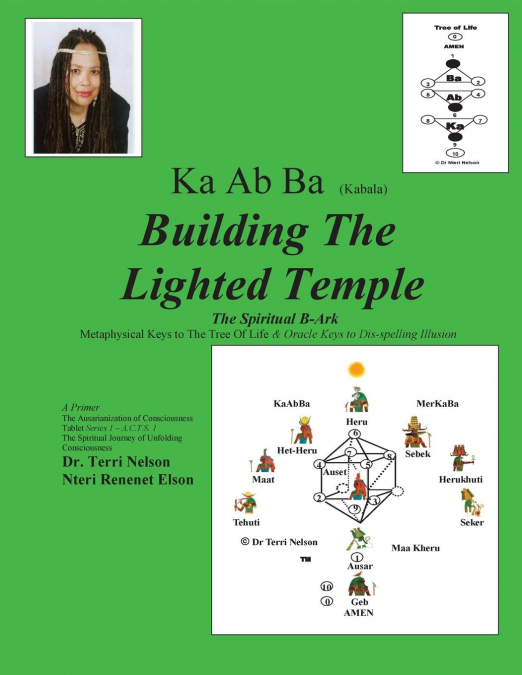
  • Ka Ab Ba Building The Lighted Temple
    Dr Terri R. Nelson / Dr Terri RNelson
    The book KaAbBa Building The Lighted Temple/Metaphysical Keys to the Tree of Life draws a circle that is inclusive of the Afrikan origin of the Ancient Kemetic/Egyptian wisdom. It reveals the undeniable root and link of Ancient Africa to all the religious systems that would develop worldwide. This book is explosive in its power to convey the meaning of KaAbBa, the Medu Neter  (...
    Disponible

    37,41 €

  • Technoethics and the Evolving Knowledge Society
    Rocci Luppicini
    Recently, there has been a major push to rediscover the ethical dimension of technology across the sciences, social sciences, and humanities. Technoethics and the Evolving Knowledge Society: Ethical Issues in Technological Design, Research, Development, and Innovation examines human processes and practices connected to technology embedded within social, political, and moral sph...
  • Kant
    Immanuel Kant
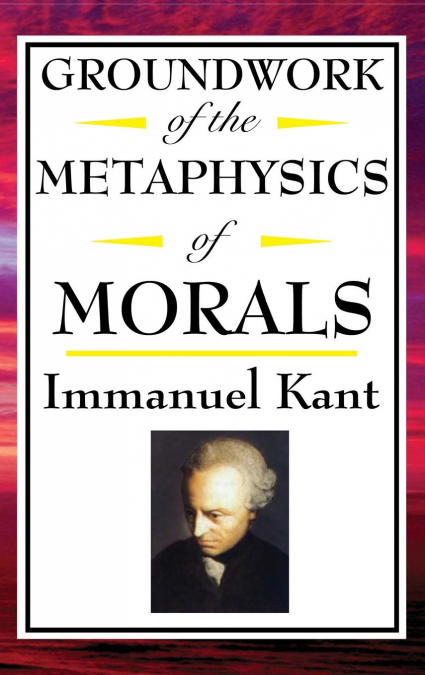
    Kant’s Groundwork of the Metaphysics of Morals is one of the most important works in modern moral philosophy. It belongs beside Plato, Aristotle, Machiavelli, and Hobbes. Here Kant sets out to articulate and defend the Categorical Imperative - the fundamental principle that underlies moral reasoning - and to lay the foundation for a comprehensive account of justice and human vi...
  • On the Duty of Civil Disobedience
    HENRY DAVID THOREAU
    Civil Disobedience argues that citizens should not permit their governments to overrule their consciences, and that they have a duty to avoid allowing their acquiescence to enable the government to make them the agents of injustice. Thoreau was motivated in part by his disgust with slavery and the Mexican-American War, but the sentiments he expresses here are just as pertinent ...
  • Beyond Good and Evil
    Friedrich Nietzsche
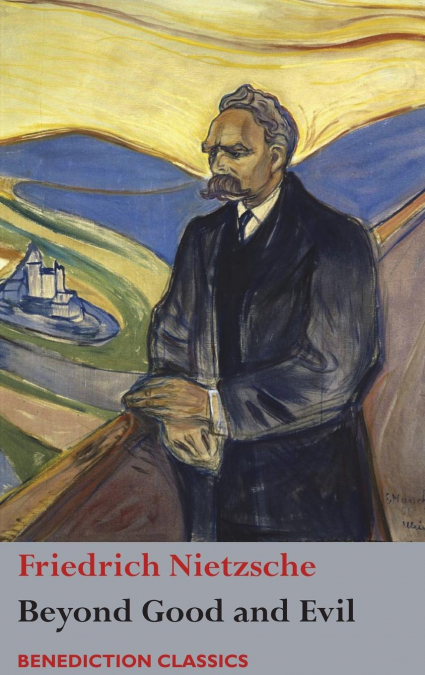
    Nietzsche, though primarily a philosopher, wrote widely on art, philology, history, religion, tragedy, culture, and science.  In 1886, at the height of his powers, he published Beyond Good and Evil.  Here he examines much of the best of human thought--dogmatic philosophy, Judeo-Christian morality, science and democracy – and finds it lacking.  Rejecting “slave-morality” he pres...
  • Beyond Good and Evil
    Friedrich Nietzsche
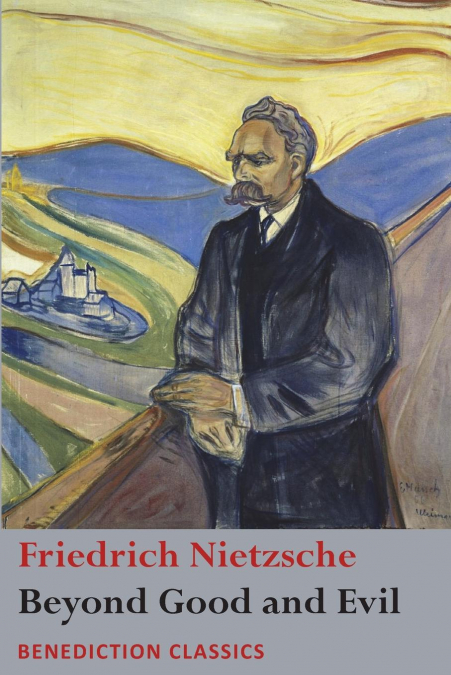
    Nietzsche, though primarily a philosopher, wrote widely on art, philology, history, religion, tragedy, culture, and science.  In 1886, at the height of his powers, he published Beyond Good and Evil.  Here he examines much of the best of human thought--dogmatic philosophy, Judeo-Christian morality, science and democracy – and finds it lacking.  Rejecting “slave-morality” he pres...
    Disponible

    9,99 €

Otros libros del autor

  • Platonismo
    Pons Malleus
    O platonismo, uma das tradições filosóficas mais duradouras e influentes do pensamento ocidental, teve início há mais de dois milênios no fervor intelectual da Atenas Clássica. O que começou como os ensinamentos de um único homem - Platão - logo se transformou em uma rica e complexa linhagem de investigação que atravessou séculos, inspirou gerações e deixou uma marca indelével ...
    Disponible

    13,09 €

  • Peripatetismo
    Pons Malleus
    O peripatetismo - derivado da palavra grega peripatos, que significa 'andar por aí' - era mais do que um método de ensino ou uma nota histórica na vida de Aristóteles; era uma tradição filosófica dinâmica que buscava o conhecimento em movimento, a discussão ao ar livre e a sabedoria fundamentada tanto na razão quanto na experiência. A escola peripatética, fundada por Aristótele...
    Disponible

    13,06 €

  • Escolástica
    Pons Malleus
    Este livro é um convite a uma jornada por uma das tradições intelectuais mais formidáveis ​​e duradouras da filosofia ocidental: a escolástica. Surgida no início da Idade Média e florescendo durante os períodos da Alta e Baixa Idade Média, a escolástica não era meramente um método de discurso acadêmico ou um estilo de ensino - era uma profunda tentativa de reconciliar fé com ra...
    Disponible

    13,12 €

  • Pós-Estruturalismo
    Pons Malleus
    Este livro é um convite a um dos movimentos filosóficos mais desafiadores, provocativos e duradouros do final do século XX: o pós-estruturalismo. Surgindo na esteira da abordagem sistemática do estruturalismo à linguagem, cultura e sociedade, o pós-estruturalismo não rejeitou seu predecessor, mas questionou suas certezas fundamentais. Reorientou a investigação filosófica para a...
    Disponible

    11,72 €

  • Estruturalismo
    Pons Malleus
    Este livro explora um dos movimentos mais influentes, porém frequentemente mal compreendidos, da filosofia e das ciências humanas do século XX: o estruturalismo. Nascido da intersecção da linguística, antropologia, psicanálise e teoria literária, o estruturalismo é menos uma doutrina rígida do que um modo de investigação - uma forma de ver o mundo que privilegia sistemas, relaç...
    Disponible

    13,12 €

  • Racionalismo
    Pons Malleus
    O racionalismo é um dos grandes pilares da investigação filosófica. Em sua essência, reside uma afirmação ousada e duradoura: a de que a razão, independente da experiência sensorial, é a principal fonte e o teste do conhecimento. Para o racionalista, a verdade não é algo meramente visto ou sentido, mas algo que pode ser apreendido pelo intelecto - algo deduzido, explicado e com...
    Disponible

    13,03 €