 Librería Samer Atenea
 Librería Aciertas (Toledo)
 Kálamo Books
 Librería Perelló (Valencia)
 Librería Elías (Asturias)
 Donde los libros
 Librería Kolima (Madrid)
 Librería Proteo (Málaga)
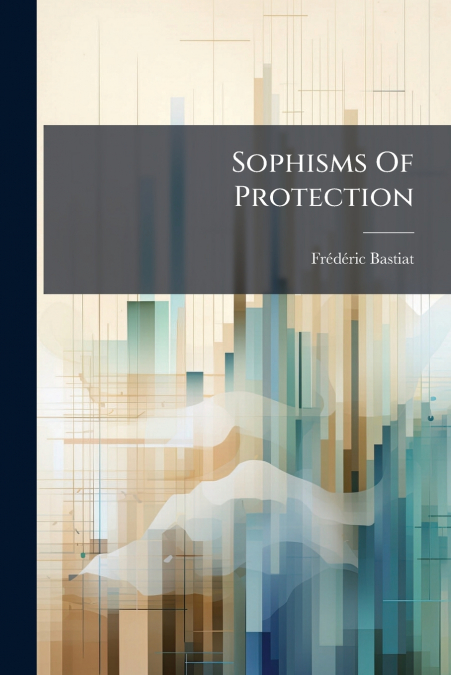
Sophisms of Protection, by Frédéric Bastiat, is a powerful critique of protectionist trade policies. This collection of essays systematically dismantles common arguments used to justify tariffs and other barriers to free trade. Bastiat uses clear, accessible language and clever examples to expose the fallacies underlying protectionism, demonstrating how such policies ultimately harm consumers and hinder economic progress.The book is divided into several parts, including 'Sophisms of Protection--First Series,' 'Sophisms of Protection--Second Series,' 'Spoliation and Law,' and 'Capital and Interest.' Each section builds upon the previous one, offering a comprehensive and compelling case for the benefits of free markets and the dangers of government intervention. Bastiat’s insights remain remarkably relevant today, making Sophisms of Protection an essential read for anyone interested in economics, political science, and the principles of sound economic policy.This work has been selected by scholars as being culturally important, and is part of the knowledge base of civilization as we know it. This work was reproduced from the original artifact, and remains as true to the original work as possible. Therefore, you will see the original copyright references, library stamps (as most of these works have been housed in our most important libraries around the world), and other notations in the work.This work is in the public domain in the United States of America, and possibly other nations. Within the United States, you may freely copy and distribute this work, as no entity (individual or corporate) has a copyright on the body of the work.As a reproduction of a historical artifact, this work may contain missing or blurred pages, poor pictures, errant marks, etc. Scholars believe, and we concur, that this work is important enough to be preserved, reproduced, and made generally available to the public. We appreciate your support of the preservation process, and thank you for being an important part of keeping this knowledge alive and relevant.