 Librería Samer Atenea
 Kálamo Books
 Librería Elías (Asturias)
 Librería Kolima (Madrid)
 Librería Proteo (Málaga)
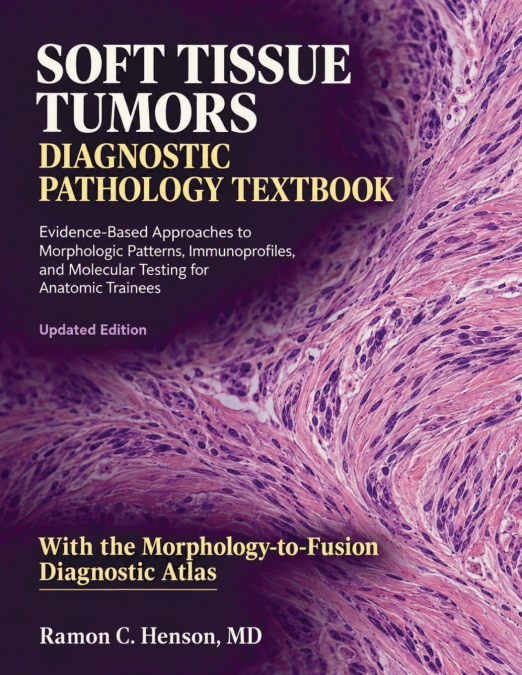
Move From the Pattern on the Slide to the Fusion That Settles the Diagnosis Sixteen chapters cover the full range of mesenchymal neoplasia, from adipocytic, fibroblastic, smooth muscle, skeletal muscle, vascular, and nerve sheath tumors to synovial sarcoma, small round cell sarcomas, and pleomorphic sarcomas. Built on the fifth edition of the WHO classification with later refinements, the book teaches how a lineage of differentiation produces an architecture, how immunostains narrow the field, and how a defining gene fusion or mutation confirms the diagnosis. It is written for anatomic pathology residents, bone and soft tissue fellows, and surgical pathologists who see sarcoma only occasionally. Every chapter gives you three five-part pattern entries and a chapter-end pattern index, so a difficult case at the microscope leads to a specific stain, a specific test, and a specific trap to avoid. What You Will Be Able to Do Biopsy strategy, frozen section, grossing, inking, and tissue triage - protect the specimen and margins before any slide is cut Immunohistochemistry, FISH, RT-PCR, and sequencing principles - choose the informative test and interpret surrogate markers correctly Liposarcoma subtypes with MDM2 amplification and DDIT3 rearrangement - separate well-differentiated, dedifferentiated, and myxoid tumors from lipomatous mimics Fibroblastic, smooth muscle, and vascular tumors - recognize desmoid-type fibromatosis, solitary fibrous tumor, leiomyosarcoma, and angiosarcoma patterns Gastrointestinal stromal tumor biology, KIT and PDGFRA signaling, and SDH deficiency - apply risk stratification and understand targeted therapy resistance Synovial sarcoma, epithelioid sarcoma, and clear cell sarcoma - resolve fusion-driven spindle cell tumors with the right ancillary study Ewing sarcoma, CIC-rearranged and BCOR-altered sarcomas, and desmoplastic small round cell tumor - work through the small round cell diagnostic algorithm Grading, AJCC staging, synoptic reporting, and post-neoadjuvant assessment - write reports the tumor board can act on Add this textbook to your sign-out room and diagnose soft tissue tumors with a method that holds up as the classification changes.