 Librería Samer Atenea
 Kálamo Books
 Librería Elías (Asturias)
 Librería Kolima (Madrid)
 Librería Proteo (Málaga)
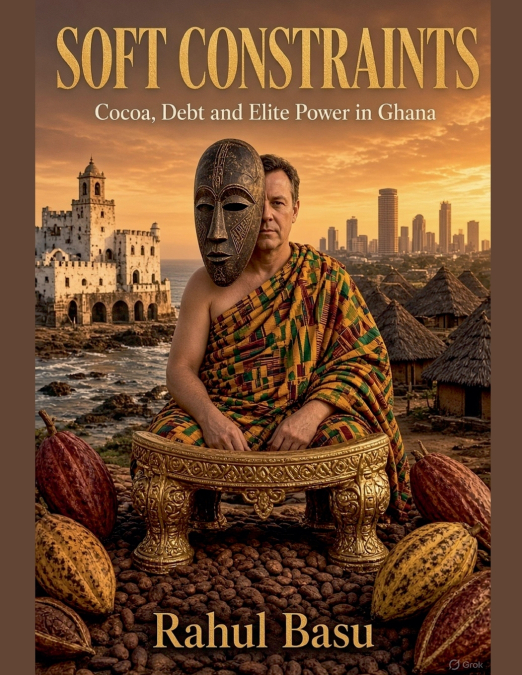
Why did Ghana’s promise of industrial transformation remain so difficult to realise, despite decades of development planning, international assistance and substantial natural resources?Prof Rahul Basu examines the less visible forces that have shaped Ghana’s post-independence economic and institutional development. Moving beyond conventional explanations based on inadequate capital, poor planning or administrative inefficiency, the book investigates the influence of informal networks, personal loyalties, elite relationships and institutional practices that constrain economic progress.At the centre of the analysis is the concept of soft constraints: the informal rules, social relationships, organisational loyalties and networks of influence that can determine how institutions actually function, often irrespective of their formal structures and stated objectives.Drawing on Ghana’s industrial and administrative experience, the book explores the relationships between political authority, international technical assistance, managerial appointments and state-owned enterprises. It revisits important episodes in Ghana’s industrial development and examines how seemingly informal arrangements can influence institutional performance, accountability and national economic priorities.The historical discussion also considers the contribution of international experts and management theories, including the application of behavioural and organisational approaches to understanding managerial performance. These experiences provide a lens through which to examine the gap between formal development policies and the realities of institutional behaviour.The book raises important questions:Why do development institutions sometimes fail to deliver their intended outcomes?How do old-boy networks and informal loyalties influence managerial and political decisions?Can corruption operate through institutional relationships without always appearing as an identifiable financial transaction?How do political patronage and international dependencies affect industrial development?Why do formal reforms frequently fail to overcome deeply embedded organisational constraints?Combining historical investigation, institutional analysis and political economy, this book offers a critical perspective on Ghana’s development experience and raises wider questions about governance and industrialisation across postcolonial Africa.This is not simply a story of corruption. It is an examination of the hidden structures of influence that can undermine institutions, distort development priorities and perpetuate economic dependency.An important read for scholars, historians, economists, development professionals, policymakers and readers interested in Ghana, African political economy, corruption, institutional governance and the unfinished project of postcolonial economic transformation.