Inicio > Humanidades > Historia > Social Stratification in Central Mexico, 1500-2000
Social Stratification in Central Mexico, 1500-2000

Social Stratification in Central Mexico, 1500-2000

Hugo G. Nutini / Hugo GNutini

37,56 €
IVA incluido
Disponible
Editorial:
Univ of Chicago behalf of University of Texas
Año de edición:
2009
Materia
Historia
ISBN:
9780292723511
37,56 €
IVA incluido
Disponible

Selecciona una librería:

  • Librería Samer Atenea
  • Librería Aciertas (Toledo)
  • Kálamo Books
  • Librería Perelló (Valencia)
  • Librería Elías (Asturias)
  • Donde los libros
  • Librería Kolima (Madrid)
  • Librería Proteo (Málaga)

In Aztec and colonial Central Mexico, every individual was destined for lifelong placement in a legally defined social stratum or estate. Social mobility became possible after independence from Spain in 1821 and increased after the 1910-1920 Revolution. By 2000, the landed aristocracy that was for long Mexico’s ruling class had been replaced by a plutocracy whose wealth derives from manufacturing, commerce, and finance-but rapid growth of the urban lower classes reveals the failure of the Mexican Revolution and subsequent agrarian reform to produce a middle-class majority. These evolutionary changes in Mexico’s class system form the subject of Social Stratification in Central Mexico, 1500-2000, the first long-term, comprehensive overview of social stratification from the eve of the Spanish Conquest to the end of the twentieth century. The book is divided into two parts. Part One concerns the period from the Spanish Conquest of 1521 to the Revolution of 1910. The authors depict the main features of the estate system that existed both before and after the Spanish Conquest, the nature of stratification on the haciendas that dominated the countryside for roughly four centuries, and the importance of race and ethnicity in both the estate system and the class structures that accompanied and followed it. Part Two portrays the class structure of the post-revolutionary period (1920 onward), emphasizing the demise of the landed aristocracy, the formation of new upper and middle classes, the explosive growth of the urban lower classes, and the final phase of the Indian-mestizo transition in the countryside.


Artículos relacionados

  • Raising Freedom's Banner
    Paul Harris
    World wide history of peaceful street demonstrations from their earliest beginning in eighteenth century England to their use throughout the world in the twenty-first century. Describes why some demonstration movements succeeded and others failed. Contrasts demonstrations within the law with civil disobedience demonstrations. Describes Peterloo, the Chartists, the Suffragettes,...
    Disponible

    23,59 €

  • Waipi’o Valley
    Jeffrey L. Gross
    Waipi’o Valley: A Polynesian Journey from Eden to Eden recounts the remarkable migrations of the Polynesians across a third of the circumference of the earth. Their amazing journey began from Kalana i Hau’ola, the biblical “Garden of Eden” located along the shore of the Persian Gulf, extended to the Indus River Valley of ancient Vedic India, to Egypt where some ancestors of the...
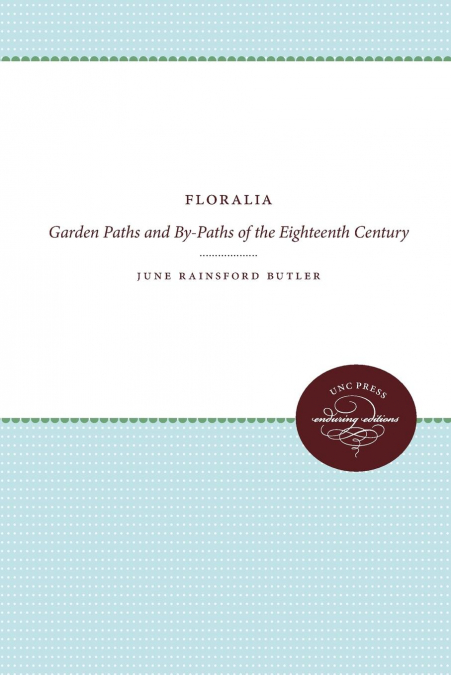
  • Floralia
    June Rainsford Butler
    A century characterized by a growing interest in science, the opportunity for travel, and leisure for gardening furnishes the setting for Butler’s book. The rise of landscape gardening in England is traced, and the origin and history of its most famous gardens are given. The close relation between England and America in the field of horticulture is also discussed.Originally pub...
    Disponible

    61,20 €

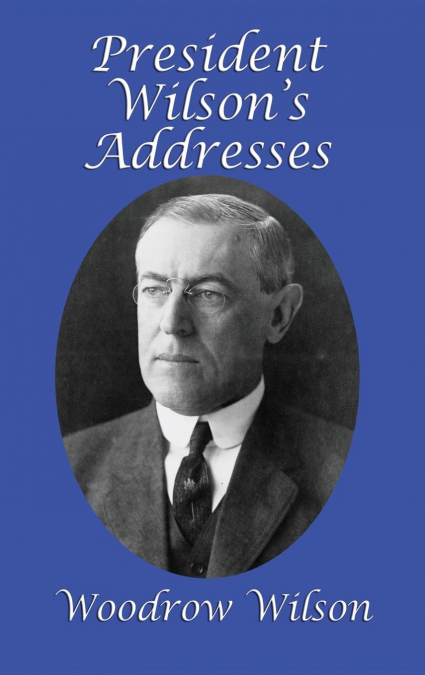
  • President Wilson’s Addresses
    Woodrow Wilson
    'These addresses of President Woodrow Wilson are almost entirely concerned with political affairs, and more specifically with defining Americanism. Yet they also show that even as he moved from academia to the heights of politics, Wilson retained something of the teacher’s interest in showing the relation between specific instances and the general forms of thought or action of ...
  • The Story of my Life
    John Albert Macy
    The Story of My Life, is Helen Keller’s autobiography detailing her early life, especially her experiences with Anne Sullivan. The book is dedicated to inventor Alexander Graham Bell. The dedication reads, 'To ALEXANDER GRAHAM BELL Who has taught the deaf to speak and enabled the listening ear to hear speech from the Atlantic to the Rockies, I dedicate this Story of My Life.' ...
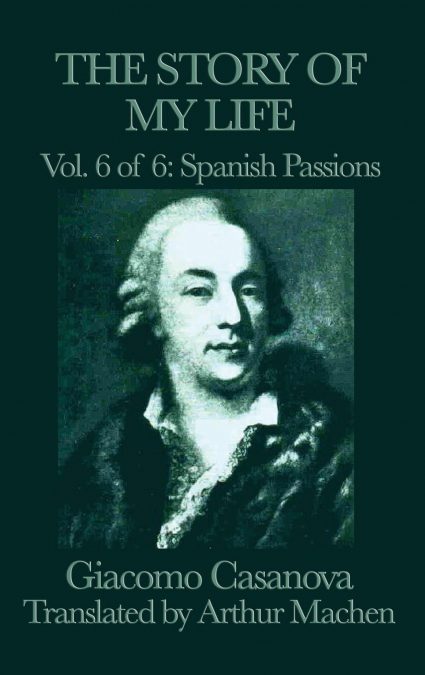
  • The Story of My Life Vol. 6 Spanish Passions
    Giacomo Casanova
    Casanova was an Italian adventurer and author from the Republic of Venice. His autobiography, Histoire de ma vie (Story of My Life), is regarded as one of the most authentic sources of the customs and norms of European social life during the 18th century. He has become so famous for his often complicated and elaborate affairs with women that his name is now synonymous with 'wom...

Otros libros del autor

  • Native Evangelism in Central Mexico
    Hugo G. Nutini / Hugo GNutini
    Evangelical Christianity is Mexico’s fastest-growing religious movement, with about ten million adherents today. Most belong to Protestant denominations introduced from the United States (e.g., Jehovah’s Witnesses, Seventh-day Adventists), but perhaps as many as 800,000 are members of homegrown, 'native' evangelical sects. These native Mexican sects share much with the American...
    Disponible

    33,71 €

  • Social Stratification and Mobility in Central Veracruz
    Hugo G. Nutini / Hugo GNutini
    Since the Revolution of 1910, Mexican society has undergone a profound transformation, characterized by the disempowerment of the landed aristocracy and the rise of a new ruling class of plutocrats and politicians; the development of a middle class of white-collar professionals; and the upward mobility of formerly disenfranchised Indians who have become urban, working-class Mes...
    Disponible

    26,84 €

  • The Mexican Aristocracy
    Hugo G. Nutini / Hugo GNutini
    The Mexican aristocracy today is simultaneously an anachronism and a testimony to the persistence of social institutions. Shut out from political power by the democratization movements of the twentieth century, stripped of the basis of its great wealth by land reforms in the 1930s, the aristocracy nonetheless maintains a strong sense of group identity through the deeply held be...
    Disponible

    50,92 €