Social Participation in Water Governance and Management

Social Participation in Water Governance and Management


64,60 €
IVA incluido
Disponible
Editorial:
Taylor & Francis Ltd
Año de edición:
2019
ISBN:
9781138380127
64,60 €
IVA incluido
Disponible

Selecciona una librería:

  • Librería Samer Atenea
  • Librería Aciertas (Toledo)
  • Kálamo Books
  • Librería Perelló (Valencia)
  • Librería Elías (Asturias)
  • Donde los libros
  • Librería Kolima (Madrid)
  • Librería Proteo (Málaga)

Social participation in water management and governance recently became a reality in many economies and societies. Yet the dimensions in which power regulation, social equity and democracy-building are connected with participation have been only tangentially analyzed for the water sector. Understanding the growing interest in social participation involves appreciating the specificity of the contemporary period within its historic and geographic contexts as well as uncovering larger political, economic and cultural trends of recent decades which frame participatory actions. Within a wide variety of cases presented from around the world, the reader will find critical analyses of participation and an array of political ecological processes that influence water governance. Sixteen chapters from a diverse group of scholars and practitioners examine water rights definition, hydropower dam construction, urban river renewal, irrigation organizations, water development NGOs, river basin management, water policy implementation and judicial decision-making in water conflicts. Yet there are commonalities in participatory experiences across this spectrum of water issues. The book’s five sections highlight key dimensions of contemporary water management that influence, and in turn are influenced by, social participation. These sections are: participation and indigenous water governance; participation and the dynamics of gender in water management; participation and river basin governance; participation and implementation of water management and participation and the politics of water governance.

Artículos relacionados

  • Technological Change and the British Iron Industry, 1700-1870
    Charles K. Hyde
    This book describes technological change in an industry that played a central role in the Indsutrial Revolution. While earlier scholars have examined isolated aspects of ironmaking in the eighteenth- and nineteenth-century Britain, Charles Hyde surveys all aspects of its development. Costs, prices, profits, shrewd leaders, competition, new inventions, and productivity all figur...
    Disponible

    71,94 €

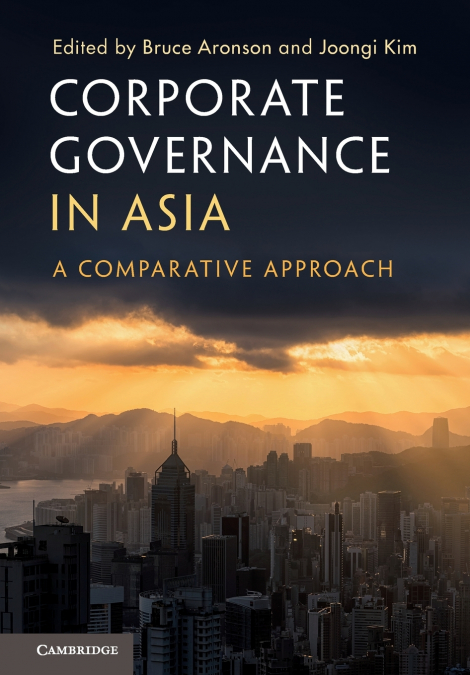
  • Corporate Governance in Asia
    ...
    Disponible

    72,99 €

  • The European Guilds
    Sheilagh Ogilvie
    A comprehensive analysis of European craft guilds through eight centuries of economic historyGuilds ruled many crafts and trades from the Middle Ages to the Industrial Revolution, and have always attracted debate and controversy. They were sometimes viewed as efficient institutions that guaranteed quality and skills. But they also excluded competitors, manipulated markets, and ...
  • Technological Change and the British Iron Industry, 1700-1870
    Charles K. Hyde
    This book describes technological change in an industry that played a central role in the Indsutrial Revolution. While earlier scholars have examined isolated aspects of ironmaking in the eighteenth- and nineteenth-century Britain, Charles Hyde surveys all aspects of its development. Costs, prices, profits, shrewd leaders, competition, new inventions, and productivity all figur...
  • Technology Differences over Space and Time
    Francesco Caselli
    Technology Differences over Space and Time looks at how countries use their productive resources-such as workers, skills, equipment and structures, and natural resources. Francesco Caselli develops methods to assess the efficiency with which productive inputs are used, and how these efficiencies vary across countries and over time.Caselli finds that richer countries use skilled...
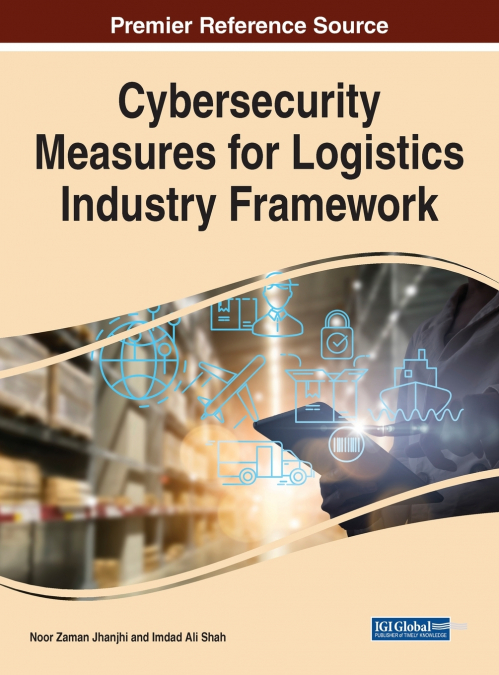
  • Cybersecurity Measures for Logistics Industry Framework
    Global supply chains are becoming more customer-centric and sustainable thanks to next-generation logistics management technologies. Automating logistics procedures greatly increases the productivity and efficiency of the workflow. There is a need, however, to create flexible and dynamic relationships among numerous stakeholders and the transparency and traceability of the supp...