
Inicio > Derecho > Derecho internacional > Small States and the New Security Environment
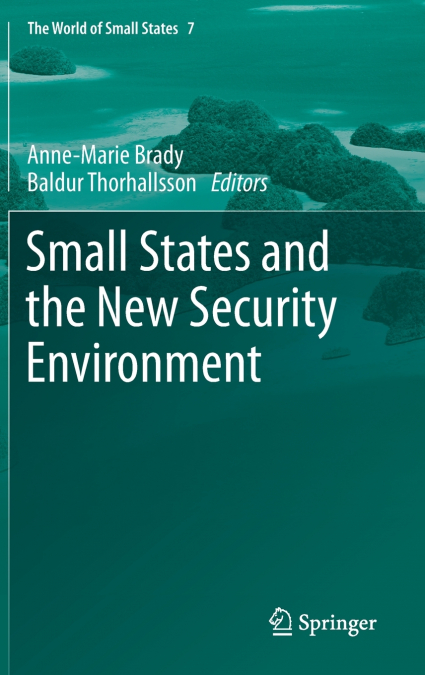
Small States and the New Security Environment

Small States and the New Security Environment


196,23 €
IVA incluido
Consulta disponibilidad
Editorial:
Springer Nature B.V.
Año de edición:
2020
Materia
Derecho internacional
ISBN:
9783030515287

Selecciona una librería:

  • Librería Samer Atenea
  • Librería Aciertas (Toledo)
  • Kálamo Books
  • Librería Perelló (Valencia)
  • Librería Elías (Asturias)
  • Donde los libros
  • Librería Kolima (Madrid)
  • Librería Proteo (Málaga)

This book examines the security, defence and foreign policy choices and challenges of small states in NATO and its small partner states in the new security environment. The main aim of the book is to analyse how these states are dealing with current and emerging security challenges and how they might better prepare for these challenges. A special focus is on ’new’ security threats and solutions, such as drones and hybrid warfare. Simultaneously, the book focusses on how small states are responding to emerging ’old threats’, such as Russian aggression in its neighbouring states and increased activity in the North Atlantic. The book makes an attempt to answer questions like: How are the small states of NATO and its small partner states adjusting to the new geo-political and geo-economic environment? Do small states in NATO manage the tension between alliance commitments differently from small states that are not members of NATO? What are the core strategic interests of the NATO and non-NATO partner small states? The book is about the external dimension of inherent size-related difficulties in states and how small states compensate for their inbuilt structural weaknesses compared with their larger neighbouring states. One third of the member states of NATO are small and most NATO partner states are small states too.  Small states frequently have a disproportionate effect on global politics and they are more often affected by global shifts of power, yet they have less resources available to address security challenges. The aim of the book is to enhance the understanding of the role of small states in the changing global international security environment.   The book presents the theory of shelter (which is derived from the diverse and extensive literature on small states) and uses it to examine how small states respond to new and old security threats. Shelter theory addresses three interrelated issues of common concerns to small states: the reduction of risk before a possible crisis event, assistance in absorbing shocks in times of crises, and help in recovering after such an event. In short, shelter theory claims that small states need external shelter in order to survive and prosper. They are dependent on the economic, political, and societal shelter provided by larger states, as well as regional and international organizations.

Artículos relacionados

  • Comparative regulation, economic analysis, and applications of private equity in the united states and european union
    Irini Liakopoulou
    The present work examines the economics and legal doctrine of private equity. After a consideration of private equity’s origins, the book will explore the evolution of private equity in the United States and Europe. The reference economic model then will be reconstructed, with particular attention to financial flows to and from private equity firms and funds. This reconstructio...
  • Complicity in International Law
    Dimitris Liakopoulous
    Complicity in International Law aims to analyze questions arising from a state’s complicity in conflict with another state or an international organization. On the basis of international legal provisions, a state that assists the illicit fact of another state or an international organization in turn commits an offense if it is aware of the main fact and is bound by the same obl...
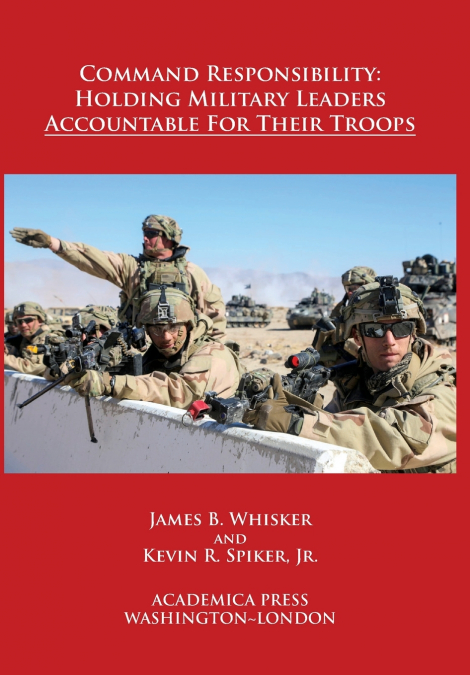
  • Command responsibility
    James B Whisker / Kevin R Spiker
    Command responsibility, or executive accountability, assumes that leaders are responsible for the actions of their subordinates. If subordinates misbehave, violate basic moral laws, transgress international law, or thwart international standards of behavior, their leader may be called before to justice. Standards that set the boundaries of human action have been evolving for ma...
  • International Organizations and Reparations
    Dimitris Liakopoulos
    In the first part of this book, noted legal scholar Dimtris Liakopoulos deals with reconstructing the legal regulatory framework governing human rights violations in the activities of organizations. After identifying rules that are generally applicable to organizations’ offenses and govern the profile of reparations, this study assesses primary rules that guarantee the right to...
  • International Organizations and Legal Sanctions Against Governments
    Dimitris Liakopoulos
    This book examines the relationship between governments and international organizations under international law. After surveying the policing powers of international organizations under international law, it illustrates some normative aspects of law that distinguish regulation from enforcement via study of recent legal cases before international judicial bodies. According to Di...
  • The EU Foreign Subsidies Regulation
    Andreas Reindl / Isabelle Van Damme
    'The EU Foreign Subsidies Regulation' is a pioneering manual authored by legal experts Andreas Reindl and Isabelle Van Damme. This essential guide, the first of its kind, is tailored for legal practitioners, offering a thorough exploration of the tools and mechanisms embedded within this novel European regulatory framework. The authors meticulously dissect the EU Foreign Subsid...