

J. (John) d. 1797? Marjoribanks
 Librería Samer Atenea
 Kálamo Books
 Librería Elías (Asturias)
 Librería Kolima (Madrid)
 Librería Proteo (Málaga)
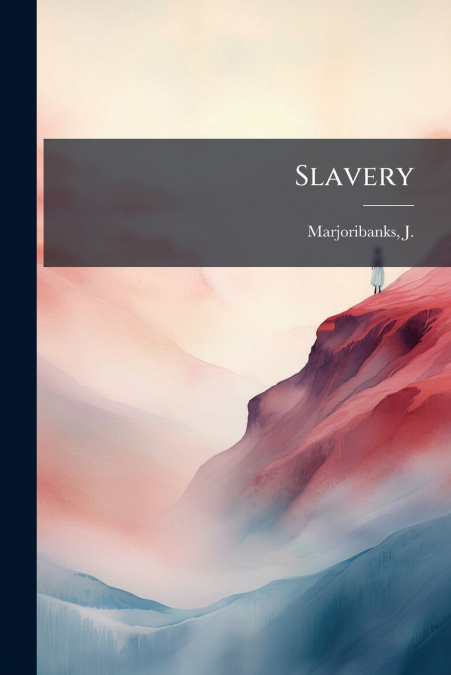
'Slavery: An Essay In Verse,' by J. Marjoribanks, offers a rare glimpse into the moral and social debates surrounding slavery in the late 18th century. Written in verse and dedicated to planters and merchants involved in the slave trade, this work provides a unique perspective on the institution of slavery. The poem likely aims to engage its contemporary audience through emotive language and vivid descriptions, prompting reflection on the ethical implications of slavery. This edition preserves the original text, allowing modern readers to engage directly with the language and sentiments of the period. It serves as a valuable resource for understanding historical attitudes toward slavery and the complex economic and social forces that sustained it. This essay in verse is a powerful historical document that sheds light on a dark chapter in human history.This work has been selected by scholars as being culturally important, and is part of the knowledge base of civilization as we know it. This work was reproduced from the original artifact, and remains as true to the original work as possible. Therefore, you will see the original copyright references, library stamps (as most of these works have been housed in our most important libraries around the world), and other notations in the work.This work is in the public domain in the United States of America, and possibly other nations. Within the United States, you may freely copy and distribute this work, as no entity (individual or corporate) has a copyright on the body of the work.As a reproduction of a historical artifact, this work may contain missing or blurred pages, poor pictures, errant marks, etc. Scholars believe, and we concur, that this work is important enough to be preserved, reproduced, and made generally available to the public. We appreciate your support of the preservation process, and thank you for being an important part of keeping this knowledge alive and relevant.





