
Inicio > Humanidades > Historia > Historia regional y nacional > Historia de Europa > Slavery, Abolitionism, and the Ethics of Biblical Scholarship
Slavery, Abolitionism, and the Ethics of Biblical Scholarship

Slavery, Abolitionism, and the Ethics of Biblical Scholarship

Hector Avalos

153,84 €
IVA incluido
Consulta disponibilidad
Editorial:
Sheffield Phoenix Press
Año de edición:
2011
Materia
Historia de Europa
ISBN:
9781907534287

Selecciona una librería:

  • Librería Samer Atenea
  • Librería Aciertas (Toledo)
  • Kálamo Books
  • Librería Perelló (Valencia)
  • Librería Elías (Asturias)
  • Donde los libros
  • Librería Kolima (Madrid)
  • Librería Proteo (Málaga)

In this immensely wide-ranging and fascinating study, Avalos critiquesthe common claim that the abolition of slavery was due in large part tothe influence of biblical ethics. Such a claim, he argues, ischaracteristic of a broader phenomenon in biblical scholarship, whichfocuses on defending, rather than describing, the ethical normsencountered in biblical texts.The first part of Avalos’s critique explores how modern scholars havepraised the supposed superiority of biblical ethics at the cost ofdiminishing or ignoring many similar features in ancient Near Easterncultures. These features include manumission, fixed terms of service,familial rights, and egalitarian critiques of slavery. At the same time,modern scholarship has used the standard tools of biblical exegesis inorder to minimize the ethically negative implications of many biblicalreferences to slavery.The second part of the book concentrates on how the Bible has beenused throughout Christian history both to maintain and to extendslavery. In particular, Avalos offers detailed studies of papal documentsused to defend the Church’s stance on slavery. Discussions of Gregoryof Nyssa, Aquinas and Luther, among others, show that they are notsuch champions of freedom as they are often portrayed.Avalos’s close readings of the writings of major abolitionists such asGranville Sharp, William Wilberforce and Frederick Douglass show anincreasing shift away from using the Bible as a support forabolitionism. Biblical scholars have rarely recognized that pro-slaveryadvocates could use the Bible just as effectively. According to Avalos,one of the complex mix of factors leading to abolition was theabandonment of the Bible as an ethical authority. The case of thebiblical attitude to slavery is just one confirmation of how unsuitablethe Bible is as a manual of ethics in the modern world.

Artículos relacionados

Otros libros del autor

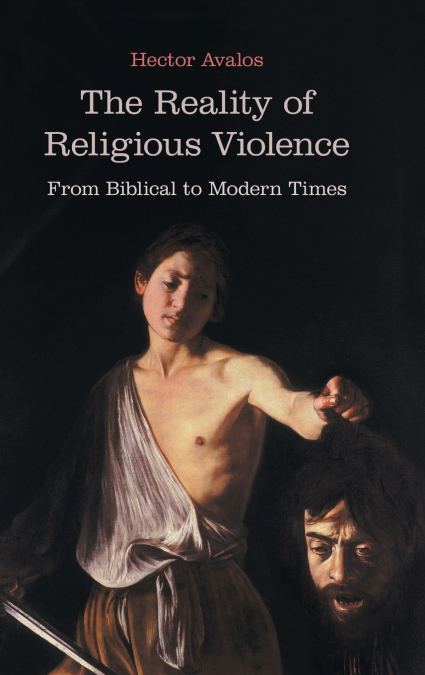
  • The Reality of Religious Violence
    Hector Avalos
    Violence and religion have been interacting from the beginning of recorded history according to The Reality of Religious Violence: From Biblical to Modern Times. This book addresses two major questions: 1. Does religious violence exist? 2. If so, how is it different from other types of violence?The first question is a reaction to a whole stream of scholarship led by William T. ...
  • The Bad Jesus
    Hector Avalos
    Did Jesus ever do anything wrong? Judging by the vast majority of books on New Testament ethics, the answer is a resounding No. Writers on New Testament ethics generally view Jesus as the paradigm of human standards and behaviour. But since the his-torical Jesus was a human being, must he not have had flaws, like everyone else?The notion of a flawless human Jesus is a paradoxic...
    Disponible

    56,59 €

  • The Bad Jesus
    Hector Avalos
    Did Jesus ever do anything wrong? Judging by the vast majority of books on New Testament ethics, the answer is a resounding No. Writers on New Testament ethics generally view Jesus as the paradigm of human standards and behaviour. But since the his-torical Jesus was a human being, must he not have had flaws, like everyone else?The notion of a flawless human Jesus is a paradoxic...
  • Slavery, Abolitionism, and the Ethics of Biblical Scholarship
    Hector Avalos
    In this immensely wide-ranging and fascinating study, Avalos critiques the common claim that the abolition of slavery was due in large part to the influence of biblical ethics. Such a claim, he argues, is characteristic of a broader phenomenon in biblical scholarship, which focuses on defending, rather than describing, the ethical norms encountered in biblical texts.The first p...
    Disponible

    44,14 €

  • Se Puede Saber Si Dios Existe?
    Hector Avalos
    This primer on biblical criticism and key problems in religion and philosophy is intended as an introduction to these complex subjects for Spanish-speaking laypersons with little or no prior scientific training in the area. Professor Avalos critically reviews the classic arguments for the existence of God, alleged miracles and faith-healing, the belief that the Bible is the ine...
    Disponible

    21,49 €