Sin Perdón

Sin Perdón

Sin Perdón

David R. Stevens / David RStevens

40,31 €
IVA incluido
Consulta disponibilidad
Editorial:
AuthorHouse
Año de edición:
2008
Materia
Historia
ISBN:
9781434393128

Selecciona una librería:

  • Librería Samer Atenea
  • Librería Aciertas (Toledo)
  • Kálamo Books
  • Librería Perelló (Valencia)
  • Librería Elías (Asturias)
  • Donde los libros
  • Librería Kolima (Madrid)
  • Librería Proteo (Málaga)

While fire-eaters, both North & South, fanned controversial flames into open, armed hostilities, the political situation south of the 1860 US-Mexico border also quickly deteriorated. Prior to opening shots at Fort Sumter, Liberal Republican President Benito Juárez wrested power away from the clerical Conservatives who had held the country in a oppressive grip since before Spain’s embarrassing evacuation. Juárez’s election, and subsequent persecution, prompted affluent expatriate Conservatives to flee to Europe, where, as political refugees, they gained the sympathies of France’s Napoleón III. Seeing the turmoil brewing in the US, Napoleón, backed by some of Europe’s most influential bankers, gambled and embarked on a mission of regaining a foot-hold on the western continent that had been lost since the publication of the US’s Monroe Doctrine. This Napoleón accomplished by convincing Austria’s Archduke Maximilian in accepting the 'Throne of Mexico,' which would be propped-up by French expeditionary forces. However, when the devastating US turmoil concluded with the subjugation of the South, US Secretary of State, William Seward, issued a threatening ultimatum demanding Napoleón to withdraw French troops from Mexico, or face the consequences of war with the United States. With the final French Foreign Legion embarking from the coastal port of Vera Cruz, it was only a matter of time before Maximilian realized his puppet government could not survive without exterior military support. Convinced that forging peaceful, political alliances with the victorious North was his only formula for successful existence, Maximilian spurned the overtures of displaced, unrepentant southern generals offering their services. Seward, however, rejected Maximilian’s proposals. With his stunningly beautiful bride having returned to Europe to seek the reestablishment of withdrawn monetary and military support from governments and the Vatican, Maximilian made his last stand against converging loyal Juaristas at an old Spanish town north of the nation’s capital.


Artículos relacionados

  • Raising Freedom's Banner
    Paul Harris
    World wide history of peaceful street demonstrations from their earliest beginning in eighteenth century England to their use throughout the world in the twenty-first century. Describes why some demonstration movements succeeded and others failed. Contrasts demonstrations within the law with civil disobedience demonstrations. Describes Peterloo, the Chartists, the Suffragettes,...
    Disponible

    23,59 €

  • Waipi’o Valley
    Jeffrey L. Gross
    Waipi’o Valley: A Polynesian Journey from Eden to Eden recounts the remarkable migrations of the Polynesians across a third of the circumference of the earth. Their amazing journey began from Kalana i Hau’ola, the biblical “Garden of Eden” located along the shore of the Persian Gulf, extended to the Indus River Valley of ancient Vedic India, to Egypt where some ancestors of the...
  • Floralia
    June Rainsford Butler
    A century characterized by a growing interest in science, the opportunity for travel, and leisure for gardening furnishes the setting for Butler’s book. The rise of landscape gardening in England is traced, and the origin and history of its most famous gardens are given. The close relation between England and America in the field of horticulture is also discussed.Originally pub...
    Disponible

    61,20 €

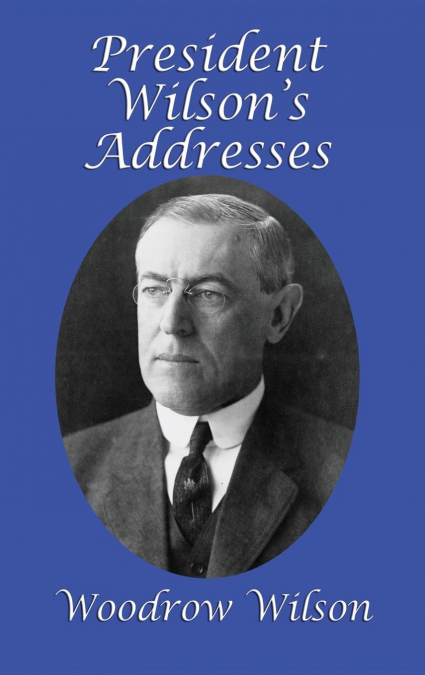
  • President Wilson’s Addresses
    Woodrow Wilson
    'These addresses of President Woodrow Wilson are almost entirely concerned with political affairs, and more specifically with defining Americanism. Yet they also show that even as he moved from academia to the heights of politics, Wilson retained something of the teacher’s interest in showing the relation between specific instances and the general forms of thought or action of ...
  • The Story of my Life
    John Albert Macy
    The Story of My Life, is Helen Keller’s autobiography detailing her early life, especially her experiences with Anne Sullivan. The book is dedicated to inventor Alexander Graham Bell. The dedication reads, 'To ALEXANDER GRAHAM BELL Who has taught the deaf to speak and enabled the listening ear to hear speech from the Atlantic to the Rockies, I dedicate this Story of My Life.' ...
  • The Story of My Life Vol. 6 Spanish Passions
    Giacomo Casanova
    Casanova was an Italian adventurer and author from the Republic of Venice. His autobiography, Histoire de ma vie (Story of My Life), is regarded as one of the most authentic sources of the customs and norms of European social life during the 18th century. He has become so famous for his often complicated and elaborate affairs with women that his name is now synonymous with 'wom...

Otros libros del autor

  • Sin Perdón
    David R. Stevens / David RStevens
    While fire-eaters, both North & South, fanned controversial flames into open, armed hostilities, the political situation south of the 1860 US-Mexico border also quickly deteriorated. Prior to opening shots at Fort Sumter, Liberal Republican President Benito Juárez wrested power away from the clerical Conservatives who had held the country in a oppressive grip since before Spai...
    Disponible

    28,14 €

  • Sin Perdón
    David R. Stevens / David RStevens
    While fire-eaters, both North & South, fanned controversial flames into open, armed hostilities, the political situation south of the 1860 US-Mexico border also quickly deteriorated. Prior to opening shots at Fort Sumter, Liberal Republican President Benito Juarez wrested power away from the clerical Conservatives who had held the country in a oppressive grip since before Spai...
  • Sin Perdón
    David R. Stevens / David RStevens
    While fire-eaters, both North & South, fanned controversial flames into open, armed hostilities, the political situation south of the 1860 US-Mexico border also quickly deteriorated. Prior to opening shots at Fort Sumter, Liberal Republican President Benito Juarez wrested power away from the clerical Conservatives who had held the country in a oppressive grip since before Spai...
    Disponible

    25,20 €