E. Jane Doering / EJane Doering
 Librería Samer Atenea
 Kálamo Books
 Librería Elías (Asturias)
 Librería Kolima (Madrid)
 Librería Proteo (Málaga)
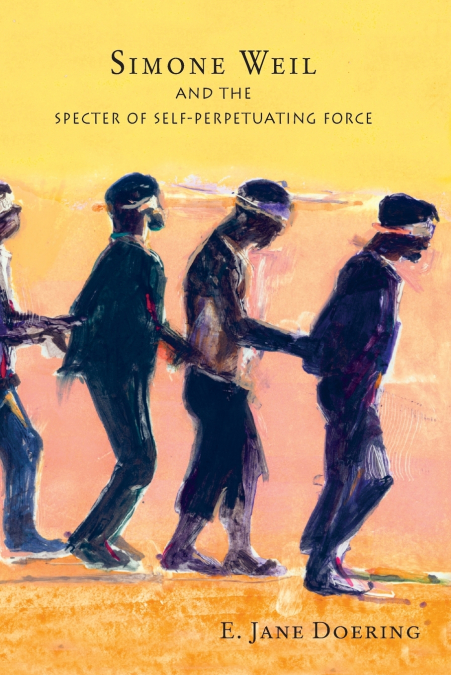
Simone Weil’s philosophical and social thought during her short life (1909-1943) was intimately engaged with the nature of power and force, both human and natural, and the problems inherent in the use of force. Weil argued vehemently for pacifism, then moved toward a guarded acceptance of the use of force under very specific circumstances, in the context of the rise of Nazism. Ultimately she came to a nuanced and unique perspective on force and on the preservation of human dignity, in the aftermath of several profound mystical experiences during the last years of her life. E. Jane Doering carefully examines and analyzes the material in Weil’s notebooks and lesser-known essays to illuminate her evolving thought on violence, war, and injustice. In addition, Doering addresses Weil’s engagement with the Bhagavad Gita during her final years, a text that reoriented and enlightened Weil’s activist and intellectual search for moral value in a violent world. Apart from small excerpts, none of the four volumes of Weil’s notebooks, only recently published in French, have been translated into English. Simone Weil and the Specter of Self-Perpetuating Force contains Doering’s expert translations of numerous notebook entries. The book will interest Weil scholars, those in French studies, and those who explore interdisciplinary topics in philosophy, religious studies, history, and political science. 'Simone Weil and the Specter of Self-Perpetuating Force is a definitive contribution not only to Weil studies, but to any effort to understand the problem of violence and the sources of peace. The study seamlessly blends narratives of Weil’s life and thought during the early twentieth century with those of people, political movements, and events pivoting on the world stage. E. Jane Doering helps to frame a plausible case for the optimism Weil forged in the fire of her own suffering: there is a counterforce to violence, and it is available when we attend to life beyond the delusions we habitually cultivate.' -- Ann Pirruccello, University of San Diego 'E. Jane Doering’s book provides us a new, more penetrating focus on the central message of Simone Weil. The ’mine of pure gold’ that Weil referred to in her last days is sharply delineated here: the possibility of grace as the countervailing power that may efficaciously oppose oppressive force. Doering’s research is impeccable and opens new perspectives for Weil scholars for years to come.' --John Marson Dunaway, Mercer University 'E. Jane Doering deals in a novel and insightful way with the concept of force (and self-perpetuating violence) in the thought of Simone Weil particularly as this was elaborated in the anguished writings of the last years of her life (1938-43) after her mystical experience and her renunciation of pacifism.' --Lawrence Schmidt, University of Toronto 'Jane Doering has done a great service in bringing to light many of Weil’s writings that have received scant attention. These especially include numerous untranslated early works on the degenerating political situation in Europe in the 1930s, works that have been left aside as having narrow historical interest. But Prof. Doering in bringing them to light has done us all in our present situation an even greater service in using these work to expose Weil’s eternally valid insights into the empire of force, and its alternatives to it.' -- The Rev. Dr. Eric O. Springsted, President of the American Weil Society 'Doering reveals the evolution of our French philosopher’s thought concerning the ’spirit of justice’ as the fruit of meditation on classical texts from different civilizations as well as purely philosophical reflection. The author of this work brings together in an innovative way the thought of Albert Camus and Simone Weil on force and justice. Doering persuasively shows that Simone Weil offers a spiritual and political key to resolving some of the thor