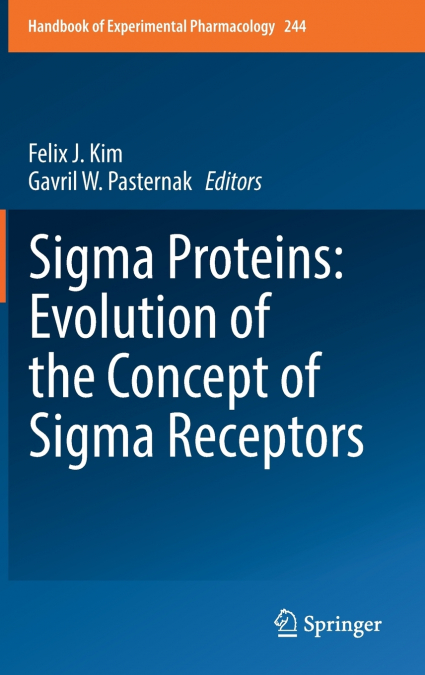

Sigma Proteins

Sigma Proteins


405,60 €
IVA incluido
Consulta disponibilidad
Editorial:
Springer Nature B.V.
Año de edición:
2017
Materia
Neurología y neurofisiología clínicas
ISBN:
9783319658513

Selecciona una librería:

  • Librería Samer Atenea
  • Librería Aciertas (Toledo)
  • Kálamo Books
  • Librería Perelló (Valencia)
  • Librería Elías (Asturias)
  • Donde los libros
  • Librería Kolima (Madrid)
  • Librería Proteo (Málaga)

Two sigma receptor subtypes have been proposed, sigma1 and 2. Much of our understanding of this system is based on biochemical and pharmacological characterization of the cloned sigma1 receptor subtype (Sigma1). It has become clear that sigma receptors are not canonical receptors. Sigma1 is highly conserved among mammalian species, however, it does not share significant homology with any other mammalian protein. Although a range of structurally diverse small molecules bind Sigma1 with high affinity, and it has been associated with a broad range of signaling systems, Sigma1 itself has no known signaling or enzymatic activity. The evolution of this field over nearly four decades has more recently led to a fundamental shift in the concept of 'sigma receptors' to what may more accurately and generally be called sigma proteins. Largely based on traditional pharmacologic approaches, the Sigma1 protein has been associated with a broad range of signaling systems, including G-protein coupled receptors, NMDA receptors, and ion channels. Sigma proteins have been linked to a range of physiological processes, including intracellular calcium signaling, neuroprotection, learning, memory, and cognition. Emerging genetic, clinical, and mechanism focused molecular pharmacology data demonstrate the involvement of proteins in a range of pathophysiologies and disorders including neurodegenerative disease, pain, addiction, psychomotor stimulant abuse, and cancer. However, an understanding of the physiological role of sigma proteins has remained elusive. Emerging data associate Sigma1 with chaperone-like activities or molecular scaffold functions. This book aims to provide an updated perspective on this rapidly evolving field undergoing changes in fundamental concepts of key importance to the discipline of pharmacology. It focusses on the reported roles of sigma proteins in pathophysiology and on emergent therapeutic initiatives.
Artículos relacionados

  • Handbook of Research on Innovations in the Diagnosis and Treatment of Dementia
    Ionnis Tarnanas / Leontios Hadjileontiadis / Panagiotis D Bamidis
    Technology is playing an increasing role in the lives of the elderly. One of the most prevalent developments for the aging population is the use of technological innovations for intervention and treatment of individuals with mental impairments. The Handbook of Research on Innovations in the Diagnosis and Treatment of Dementia offers empirical research and theoretical analyses o...
  • Biomedical Engineering and Cognitive Neuroscience for Healthcare
    Jinglong Wu
    New developments in medical technology have paved the way for the ongoing studies of cognitive neuroscience and biomedical engineering for healthcare. Their different but interconnected aspects of science and technology seek to provide new solutions for difficult healthcare problems and impact the future of the quality of life. Biomedical Engineering and Cognitive Neuroscience ...
  • Handbook of Functional MRI Data Analysis
    Jeanette A. Mumford / Russell A. Poldrack / Thomas E. Nichols
    ...
    Disponible

    63,88 €

  • How Do You Feel?
    A. D. Craig
    A book that fundamentally changes how neuroscientists and psychologists categorize sensations and understand the origins and significance of human feelingsHow Do You Feel? brings together startling evidence from neuroscience, psychology, and psychiatry to present revolutionary new insights into how our brains enable us to experience the range of sensations and mental states kno...
    Disponible

    47,73 €

  • Deep Learning Approaches for Early Diagnosis of Neurodegenerative Diseases
    Within the context of global health challenges posed by intractable neurodegenerative diseases like Alzheimer’s and Parkinson’s, the significance of early diagnosis is critical for effective intervention, and scientists continue to discover new methods of detection. However, actual diagnosis goes beyond detection to include a significant analysis of combined data for many cases...
  • Ignite Global Change
    Alessandro Crimi
    Your essential guide to global entrepreneurship and activism. From Accra and Mumbai to Milan and New York, a vibrant new generation of activist entrepreneurs turn visionary ideas into impactful realities. Ignite Global Change offers a roadmap for crafting wealth from minimal resources, from ideation to implementation. Its practical, real-world approach provides strategies that ...
    Disponible

    23,34 €