
Inicio > Humanidades > Historia > Historia: primitiva hasta la actualidad > Historia antigua: hasta c. 500 e. c. > Sexually Ambiguous Imagery in Cyprus from the Neolithic to the Cypro-Archaic Period
Sexually Ambiguous Imagery in Cyprus from the Neolithic to the Cypro-Archaic Period

Sexually Ambiguous Imagery in Cyprus from the Neolithic to the Cypro-Archaic Period

Sexually Ambiguous Imagery in Cyprus from the Neolithic to the Cypro-Archaic Period

Sandra Christou

55,30 €
IVA incluido
Disponible
Editorial:
British Archaeological Reports (Oxford) Ltd
Año de edición:
2012
Materia
Historia antigua: hasta c. 500 e. c.
ISBN:
9781407309125
Páginas:
304
Encuadernación:
Rústica
55,30 €
IVA incluido
Disponible

Selecciona una librería:

  • Librería Samer Atenea
  • Librería Aciertas (Toledo)
  • Kálamo Books
  • Librería Perelló (Valencia)
  • Librería Elías (Asturias)
  • Donde los libros
  • Librería Kolima (Madrid)
  • Librería Proteo (Málaga)

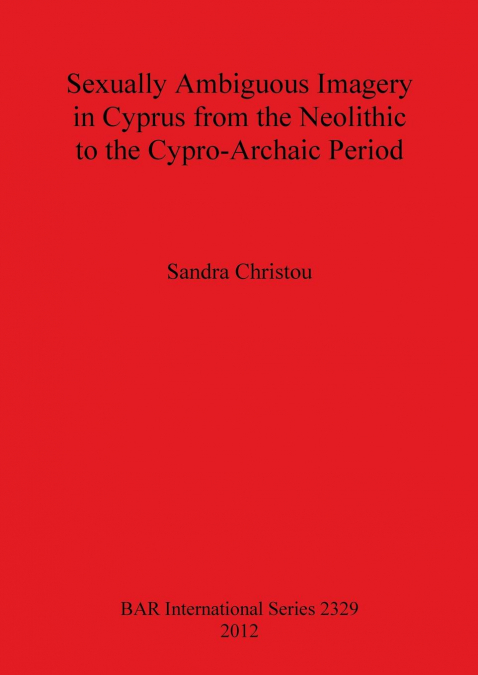
Although the earliest known literary evidence for a dual-sexed divinity on Cyprus dates to the fifth century BCE, archaeological evidence indicates there was a tradition on the island of sexually ambiguous imagery which predates the literary sources. This information prompted the present research, which traces the tradition back to the earliest known examples on Late Neolithic Cyprus, and tracks its evolution through to the Cypro-Archaic period. Rather than rely upon descriptions, photographs and drawings presented in consulted publications, the various international museums that house the figures were visited by the writer in order to physically examine the images. A catalogue of the sexually ambiguous imagery for Cyprus from the Neolithic to the Cypro-Archaic period has been compiled and is included in this work. It is proposed that the imagery is of Cypriot innovation, and consists of proto-anthropomorphic, anthropomorphic and half-animal, half-human representations. The genre is influenced from its earliest period by the figurative art of the Syro-Anatolian mainland, but from the Late Bronze Age onwards, influences from the western Mediterranean and Aegean are also evident. Despite the periods in which there is little evidence for figurine production, sexually ambivalent imagery re-emerges when figurative evidence is once more apparent in the archaeological records. Furthermore, stylistic continuity of the genre from one period to the next is also apparent. This continuity is regardless of the cultural changes which occur intermittently during the seven millennia period relevant to this study. Although it is not until the Cypro-Geometric period that there is firm evidence to support a religious interpretation of sexually equivocal imagery, it is suggested that the genre from the earliest period was at least associated with fertility, and perhaps religious cult.
Artículos relacionados

  • Iron Age Societies in the Severn-Cotswolds
    Tom Moore
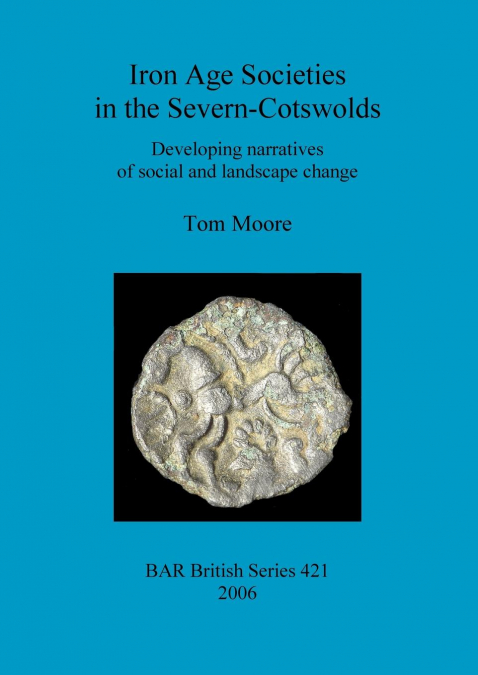
    The central theme of this study is an examination of the processes of change in Iron Age social organisation and identity on a regional scale using the Severn-Cotswolds area in England as a case study. It aims to provide a coherent narrative of the period in the region based on the wealth of current data now available, providing a basic storyboard against which future studies c...
    Disponible

    144,57 €

  • Somewhere Beyond The Sea Les îles bretonnes (France)
    The Seminar on the Archaeology of Western France, which focused on the islands of Brittany, was held on 1 April 2014 at the University of Rennes 1. The desire to organize this seminar arose spontaneously from the dynamism which currently animates archaeological research on island spaces of the western seaboard of France. Indeed, the seminar took place during a pivotal period of...
    Disponible

    86,11 €

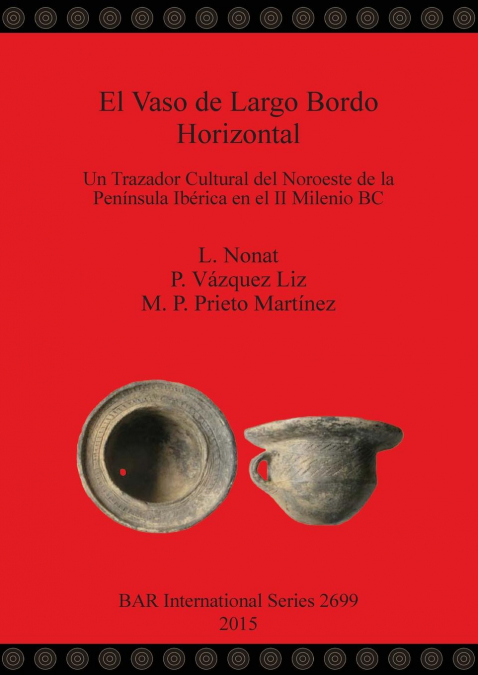
  • El Vaso de Largo Bordo Horizontal
    L. Nonat / LNonat / M. P. Prieto Martínez / MPPrieto Martínez / P. Vázquez Liz / PVázquez Liz
    In this paper the authors study a specific type of pottery from the northwest Iberian Peninsula, known as the Wide Horizontal Rim (WHR) vessel. One of its distinctive aspects is precisely the fact that it is exclusively found in this region, which now comprises the Spanish region of Galicia and northern Portugal, as far south as the River Duero. This type of pottery, of which t...
    Disponible

    115,71 €

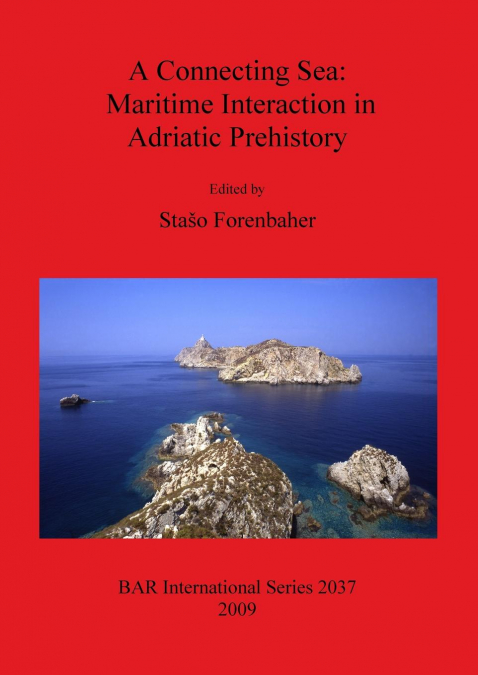
  • A Connecting Sea
    Stašo Forenbaher
    This book includes papers stemming from a session at the EAA conference held in Zadar in September 2007.                          ...
    Disponible

    79,97 €

  • The Roman Pottery Production Site at Wickham Barn, Chiltington, East Sussex
    Chris Butler / Malcolm Lyne
    The excavations undertaken at Chiltington in East Sussex revealed two Roman pottery kilns, as well as remains from prehistory and from medieval period.The kilns are well documented, and all the finds were examined and catalogued. Three phases were identified. The pottery produced on the site indicate a strong New Forest influence. ...
    Disponible

    55,62 €

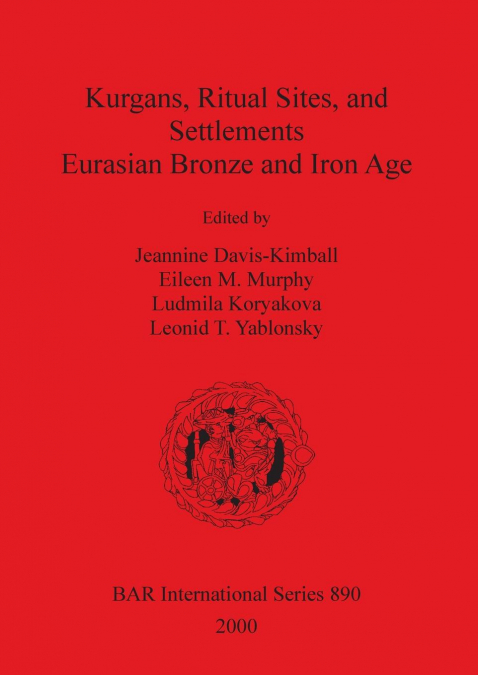
  • Kurgans, Ritual Sites, and Settlements
    Edited by: Jeannine Davis-Kimball, Eileen M. Murphy, Ludmila Koryakova and Leonid T. YablonskyThis richly illustrated volume adds immensely to the small but growing corpus of Eurasian Archaeology published in the English language. Comprised of thirty articles, the authors have focused on the Bronze Age, continuing to include the first millennium BC Early Iron Age, with a termin...
    Disponible

    158,26 €